Your message has been sent. Thank you!
 Your message has been sent. Thank you!
I'm ready to book
Hmm, I still need more information
My information
Detailed information
From $ USD
Ho Chi Minh Trail Motorcycle Tour – 12 Days

Duration:
12 Days/ 11 Nites

Destinations:
Hanoi - Nha Trang

Tour Level:
More offroad (>40%)

Highlight:
Destination:
Ha Noi
Mai Chau
Tan Ky
Phong Nha
Ke Bang National park
Khe Sanh
Vinh Moc tunnels
Hue
Da Nang
Hoi An
Kon Tum
Buon Me Thuat
Lak Lake
Nha Trang
Pickup from:
Hanoi, Airport or any hotel in Ha Noi city
Suitable Bikes:
Honda XR150L, Honda CRF300L,





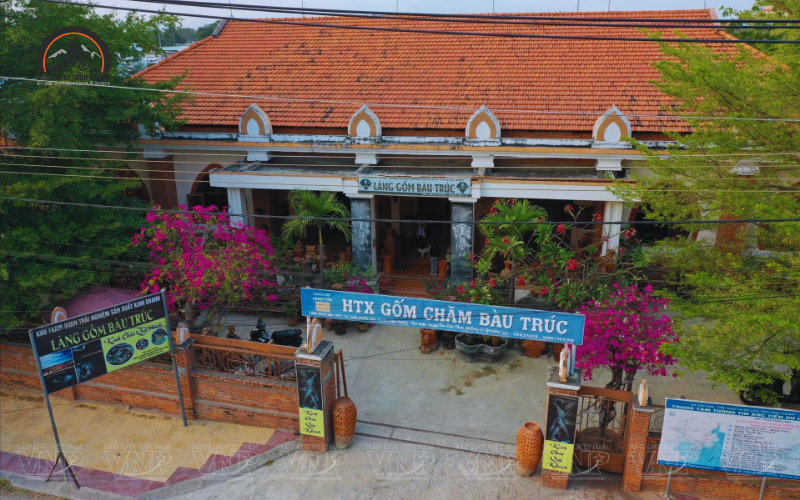
Bau Truc pottery village is Southeast Asia’s oldest pottery village, located 10km south of Phan Rang in Ninh Thuan Province, Vietnam. Home to over 500 Cham families preserving 1,000-year-old hand-molding techniques without potter’s wheels, this UNESCO-recognized heritage site offers authentic cultural experiences. Vietnam Motorbike Tour Expert has guided countless travelers through this living museum where ancient traditions meet modern tourism.
| Category | Keypoints |
|---|---|
| Official Name | Làng Gốm Bàu Trúc (Vietnamese) / Bau Truc Pottery Village (English) |
| Location | Phuoc Dan Town, Ninh Phuoc District, Ninh Thuan Province, Vietnam |
| Distance from City | ~10 km south of Phan Rang-Thap Cham City |
| Ethnic Group | Cham people (ethnic minority) |
| Total Population | 500+ families |
| Pottery Artisans | Over 80-85% of families actively involved in pottery-making |
| Primary Craftspeople | Women (matriarchal tradition passed from mothers to daughters) |
| Historical Age | Nearly 1,000 years old (since reign of King Po K’long Giarai, 1151-1205) |
| Founder | Po K’long Chank (Po Klaong Can), advisor to King Po K’long Giarai |
| UNESCO Recognition | November 29, 2022 – “Art of pottery-making of Chăm people” added to List of Intangible Cultural Heritage in Need of Urgent Safeguarding |
Bau Truc pottery village is located in Phuoc Dan Town, Ninh Thuan Province, approximately 10 kilometers south of Phan Rang-Thap Cham city.. This village stands as one of the most remarkable cultural treasures in Southeast Asia. Recognized by UNESCO in November 2022 when “Art of pottery-making of Chăm people” was added to the List of Intangible Cultural Heritage in Need of Urgent Safeguarding, it represents centuries of unbroken tradition.
What makes Bau Truc pottery village truly exceptional is its population’s dedication to ancestral crafts. More than 500 families call this village home, with over 80% actively involved in pottery-making. During our Vietnam Motorbike Tour Expert visits, we’ve witnessed how this isn’t merely a tourist attraction—it’s a living community where pottery-making remains integral to daily life and cultural identity.
The history of Bau Truc pottery village stretches back nearly a millennium. According to local legend and historical records, the village’s pottery tradition was founded by Po K’long Chank (Po Klaong Can), a close friend and trusted advisor to King Po K’long Giarai who ruled from 1151 to 1205. Po K’long Chank taught villagers the sacred art of gathering clay from riverbanks, shaping it with their hands, and firing it into essential household items.
This founding figure holds such reverence that the village built Danaok Po Klaong Can temple in his honor. The temple stands in the center of the village field as a spiritual anchor, where artisans pay respects to their craft’s ancestor. Travelers who visit with Vietnam Motorbike Tour Expert often describe the temple visit as a profound moment that contextualizes the deep spiritual connection Cham people maintain with their pottery traditions
The village wasn’t always at its current location. Originally known as Palei Hamu Craok, the settlement relocated after a devastating 1964 flood forced residents to move to higher ground. Despite this displacement, the community refused to let their pottery traditions wash away with the floodwaters—they rebuilt and continued firing clay exactly as their ancestors had for centuries.
>>READ MORE: Phu Lang Pottery Village: Complete Travel Guide For Tourists
Bau Truc Pottery Village is easily accessible from Phan Rang-Thap Cham. The journey is short, taking only 15 minutes by car or 25 minutes by motorbike. Simply head south on National Highway 1A (QL1A). Look for clear signage directing you to Phuoc Dan Town or Bau Truc Village just off the main highway.
Transportation options:
| Starting Point | Method | Duration | Notes |
|---|---|---|---|
| Phan Rang Center | Car/Taxi | 15 minutes | Most comfortable option |
| Phan Rang Center | Motorbike | 25 minutes | Scenic, flexible stopping |
| Phan Rang Center | Bicycle | 45-60 minutes | Flat terrain, manageable for fit cyclists |
| Nha Trang | Car/Tour | 1.5 hours | Often combined with coastal sightseeing |
| Ho Chi Minh City | Flight to Phan Rang + Car | 3 hours total | Domestic flights available |
| Hanoi | Flight to Phan Rang + Car | 5 hours total | Most convenient for northern travelers |
What distinguishes Bau Truc pottery village from every other pottery center in Vietnam—and arguably Southeast Asia—is its steadfast commitment to pre-wheel pottery techniques. While modernization swept through other Vietnamese pottery villages like Bat Trang or Thanh Ha, Bau Truc artisans continue working exactly as their tenth-century ancestors did.
Bau Truc employs an extraordinary, labor-intensive technique known locally as “shaped by hand, rotated by buttocks.”
One traveler on a Vietnam Motorbike Tour Expert journey described watching an elderly woman transform a lump of clay into a perfectly symmetrical water jar in under 20 minutes using nothing but her calloused hands and a piece of bamboo. “I couldn’t believe she was walking backward in circles while shaping—it looked like some kind of meditative dance,” they shared. This technique demands extraordinary spatial awareness and muscle memory developed over decades of daily practice.
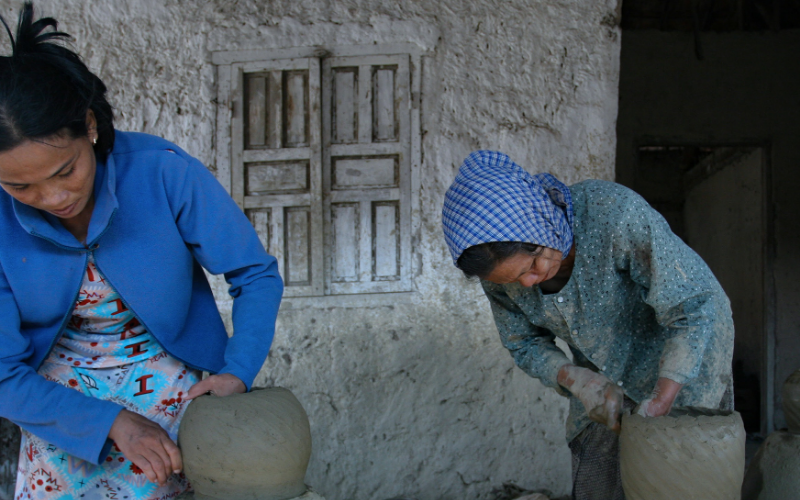
The pottery-making process follows four essential stages:
This adherence to tradition isn’t stubbornness—it’s cultural preservation. The Cham people recognize that the moment they adopt wheels and molds, something essential and irreplaceable disappears. Their pottery carries the literal fingerprints of its makers, making every piece genuinely one-of-a-kind.
The soul of Bau Truc pottery village flows from the banks of the Quao River. Artisans have sourced their clay from this specific location for centuries, and the unique properties of Quao River clay directly influence the pottery’s distinctive characteristics.
The clay itself is only part of the formula. Bau Truc artisans mix the clay with fine sand collected from mountain streams near the river. This isn’t random—the sand contains a rich mineral composition that transforms during firing. When exposed to temperatures between 600-800 degrees Celsius, certain minerals burn away while others remain, leaving behind faint golden particles that give fired pottery its signature shimmer.
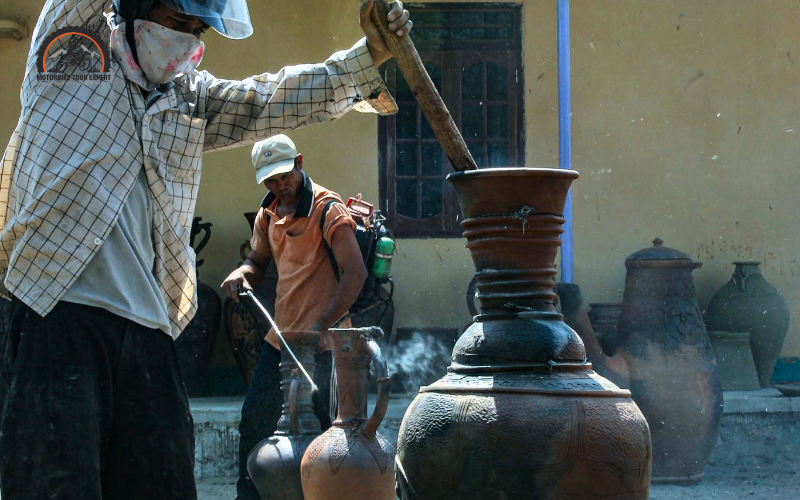
This “gold dust” effect isn’t merely decorative. The sand-clay mixture creates a porous ceramic body with remarkable thermal properties. Water jars crafted in Bau Truc pottery village keep their contents approximately one degree Celsius cooler than ambient temperature. In Ninh Thuan’s harsh, dry climate, this cooling property made Bau Truc water jars highly prized commodities throughout Vietnamese history.
The skill lies in knowing exact sand-to-clay ratios for different pottery types. Too much sand and the piece crumbles during firing; too little and it cracks as it dries. These ratios remain closely guarded knowledge passed from mothers to daughters over generations—the matriarchal inheritance that preserves these secrets.
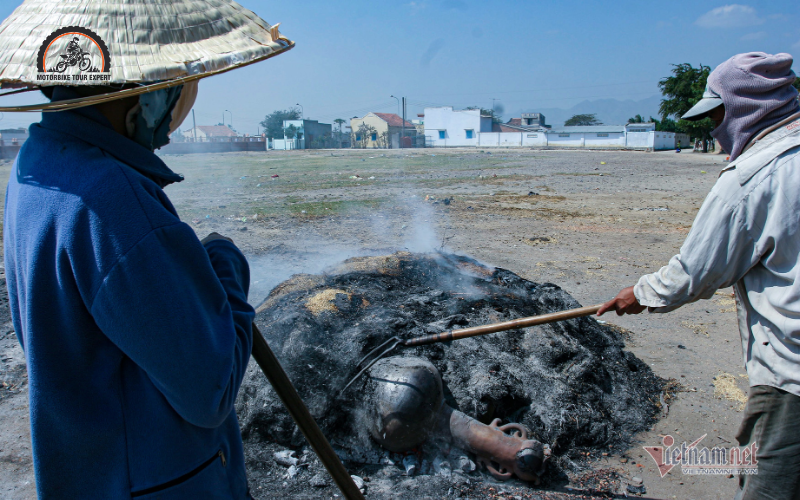
The most visually striking element of Bau Truc’s process is its open-air firing . Unlike modern enclosed kilns, the pottery is simply stacked on the ground, covered with fuel, and ignited.
The firing method integrates centuries of agricultural practice:
The outdoor firing ensures that no two pieces are identical. The fire patterns, heat variations, and external environmental factors introduce natural variables that affect the surface texture and color distribution. While industrial pottery values uniformity, Bau Truc pottery village fundamentally celebrates the individuality of each unique, flame-touched piece.
Travelers researching Vietnamese pottery frequently ask Vietnam Motorbike Tour Expert about differences between Bau Truc pottery village and Bat Trang, Vietnam’s most famous pottery center near Hanoi. While both produce beautiful ceramics, they represent entirely different philosophical approaches to the craft.
| Feature | Bau Truc Pottery Village | Bat Trang Pottery Village |
|---|---|---|
| Technique | Entirely hand-molded; artisans walk backward around clay | Potter’s wheels, molds, and mechanical aids |
| Firing Method | Open-air firing using wood, straw, rice husks | Enclosed gas or coal kilns with controlled temperatures |
| Aesthetic | Rough, natural terracotta; asymmetrical; golden mineral flecks | Glazed, polished, symmetrical; painted decorative patterns |
| Temperature | 600-800°C | 1000-1300°C |
| Cultural Heritage | Cham matriarchal tradition; women as primary artisans | Kinh patriarchal guild system; family workshops |
| Product Focus | Household items (water jars, pots), religious statuary, ritual objects | Dinnerware, export ceramics, decorative vases, commercial products |
| Surface Finish | Unglazed terracotta with natural mineral coloring | Glazed surfaces with enamel paintings |
| Production Scale | Small-batch, artisan-level production | Large-scale production for domestic and international markets |
Neither approach is superior—they serve different purposes. Bat Trang produces beautiful, affordable ceramics for everyday use. Bau Truc creates cultural artifacts that carry stories, traditions, and the literal touch of Cham heritage. Visitors to Vietnam often appreciate experiencing both villages to understand the full spectrum of Vietnamese ceramic arts.
Bau Truc pottery village offers far more than passive observation. This living cultural center invites meaningful engagement with artisans, hands-on participation, and authentic cultural exchange.
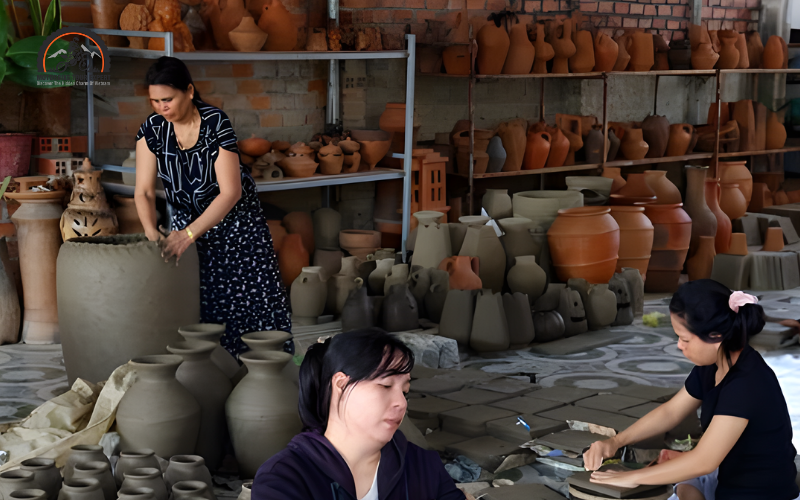
Unlike industrialized pottery factories, Bau Truc pottery village production happens in family homes. Over 400 families maintain home-based workshops where multiple generations work side by side. During Vietnam Motorbike Tour Expert tours, we guide visitors through residential lanes where nearly every household doubles as a pottery studio.
The experience feels intimate rather than commercial. You’ll watch grandmothers teaching granddaughters the precise hand movements for shaping clay, see fathers digging clay from riverbanks, observe mothers painting traditional patterns. Many families have created small display areas showcasing their best work, but these feel more like living rooms than retail spaces.
A common traveler sentiment: “I expected a touristy crafts village, but this was completely different. People were genuinely working, not performing for tourists. The woman I watched was so focused on her pot that she barely noticed me standing there for 20 minutes.”
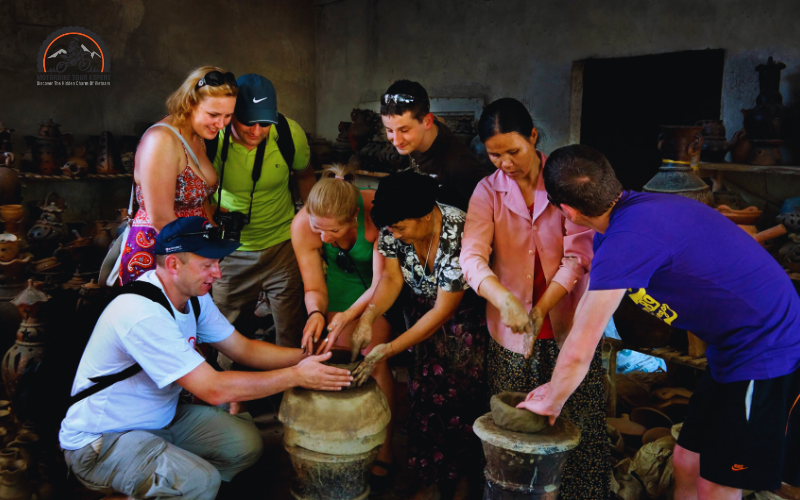
The highlight for many visitors is rolling up their sleeves and attempting Bau Truc techniques themselves. Local artisans welcome beginners with patient guidance, helping visitors understand just how difficult this “simple” hand-molding actually is.
During hands-on sessions, travelers sit beside experienced potters who demonstrate fundamental techniques. You’ll learn to wedge clay, form basic coils, and attempt the backward-walking shaping method (though don’t expect mastery in one session—Cham potters train for years).
The experience provides profound appreciation for artisan skill. What looks effortless when a master does it becomes comically difficult for beginners. Clay collapses, walls develop holes, shapes turn lopsided. Yet artisans respond with encouragement, gently correcting hand positions and demonstrating techniques repeatedly.
One Vietnam Motorbike Tour Expert guest shared: “My pot looked terrible compared to the artisan’s work, but she insisted it was beautiful and set it to dry alongside hers. That small act of inclusion meant more than perfectly shaped pottery ever could.”
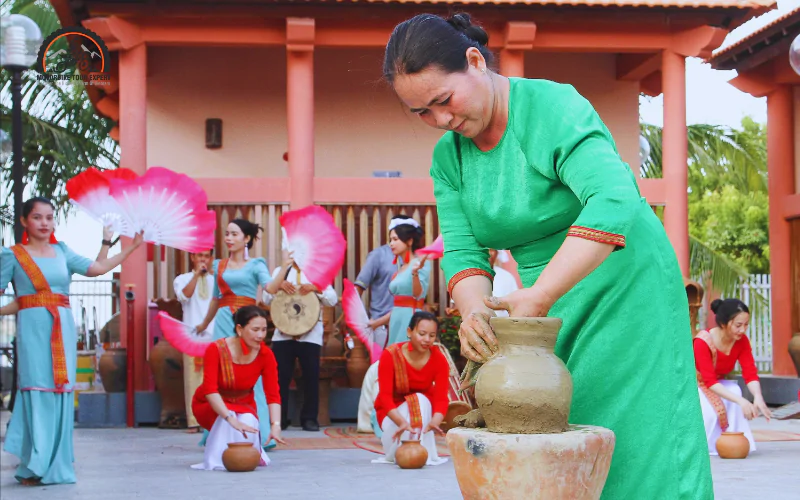
Bau Truc pottery village preserves performing arts alongside ceramic traditions. During special occasions or arranged visits, local women perform traditional Cham dances accompanied by Ghi Nang drums and the haunting melodies of Saranai flutes.
These performances aren’t staged tourist shows—they’re authentic cultural expressions that Cham communities have maintained for centuries. The dances tell stories from Cham mythology, celebrate agricultural cycles, and honor ancestral spirits. Dancers wear traditional Cham dress, moving with graceful precision that reflects years of community teaching.
Watching Cham dances in their original cultural context—surrounded by pottery workshops, with temple grounds nearby—provides deeper understanding than isolated performance venues ever could.
Food represents another dimension of Cham cultural identity that Bau Truc pottery village proudly maintains. During festivals, travelers can taste traditional Cham dishes rarely available in mainstream Vietnamese restaurants.
Traditional Cham main dishes:
Traditional Cham desserts & Sweet treats:
Bau Truc pottery village welcomes visitors year-round, but timing significantly impacts your experience. The village operates as a living community rather than a museum with fixed hours, so visiting during active work periods and cultural events yields the richest experiences.
Purchasing pottery from Bau Truc pottery village supports artisan livelihoods while bringing home authentic cultural artifacts. However, smart buying requires understanding what you’re purchasing and how to transport it safely.
Best souvenirs to buy:
Pricing:
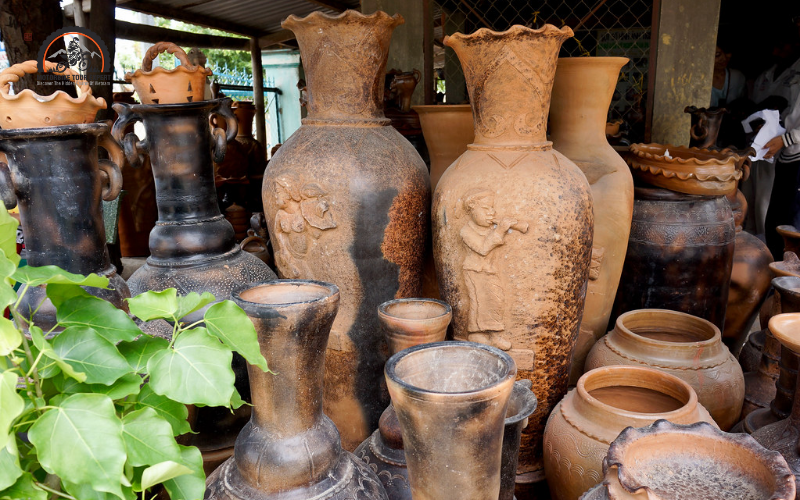
Successful Bau Truc pottery village visits require some practical preparation. These insights come from Vietnam Motorbike Tour Expert’s years guiding travelers through the village and learning what enhances versus hinders the experience.
Tickets & Timing:
Etiquette & Cultural Sensitivity:
Financial Considerations:
Language & Communication:
Bau Truc pottery village represents far more than a tourist destination—it’s a living cultural treasure where Cham traditions survive through dedication, skill, and community commitment to ancestral heritage. From hand-molding techniques unchanged for a millennium to the golden-flecked pottery fired in open flames, every aspect of this village tells stories of cultural resilience and artistic excellence.
Ready to experience authentic Cham culture and witness pottery-making traditions that predate the modern era? Contact Vietnam Motorbike Tour Expert to plan your journey to Bau Truc pottery village and discover Ninh Thuan’s hidden cultural treasures.
LET'S RIDE WITH US
 Duration:
4 Days/ 3 Nites
Destinations:
Hanoi - Vu Linh - Phu Yen - Moc Chau - Mai Chau - Hanoi.
Tour Level:
Chill Level Tours
Duration:
4 Days/ 3 Nites
Destinations:
Hanoi - Vu Linh - Phu Yen - Moc Chau - Mai Chau - Hanoi.
Tour Level:
Chill Level Tours
 Duration:
10 Days/ 9 Nights
Destinations:
Hanoi - Dien Bien Phu
Tour Level:
Chill Level Tours
Duration:
10 Days/ 9 Nights
Destinations:
Hanoi - Dien Bien Phu
Tour Level:
Chill Level Tours
 Duration:
7 Days / 6 Nites
Destinations:
Sai Gon - Phan Thiet
Tour Level:
Chill Level Tours
Duration:
7 Days / 6 Nites
Destinations:
Sai Gon - Phan Thiet
Tour Level:
Chill Level Tours
 Duration:
3 Days / 2 Nites
Destinations:
Hanoi - Mai Chau
Tour Level:
Chill Level Tours
Duration:
3 Days / 2 Nites
Destinations:
Hanoi - Mai Chau
Tour Level:
Chill Level Tours
 Duration:
9 Days / 8 Nites
Destinations:
Hanoi - Hoi An
Tour Level:
Chill Level Tours
Duration:
9 Days / 8 Nites
Destinations:
Hanoi - Hoi An
Tour Level:
Chill Level Tours
 Duration:
4 Days/ 3 Nites
Destinations:
Hoi An - Nha Trang
Tour Level:
Chill Level Tours
Duration:
4 Days/ 3 Nites
Destinations:
Hoi An - Nha Trang
Tour Level:
Chill Level Tours
 Duration:
5 Days/4 Nights
Destinations:
Hanoi
Tour Level:
Chill Level Tours
Duration:
5 Days/4 Nights
Destinations:
Hanoi
Tour Level:
Chill Level Tours
 Duration:
5 Days / 4 Nights
Destinations:
Hanoi - Hanoi
Tour Level:
Chill Level Tours
Duration:
5 Days / 4 Nights
Destinations:
Hanoi - Hanoi
Tour Level:
Chill Level Tours
4-Day Northern Vietnam Motorbike Tour From Hanoi
 Duration:
4 Days/ 3 Nites
Duration:
4 Days/ 3 Nites
 Tour Level:
Chill Level Tours - Moderate Level Tours
Tour Level:
Chill Level Tours - Moderate Level Tours
Experience the authentic Vietnam
Ride off the beaten track
Visit beautiful Thac Ba Lake
Interact with lovely local people
Riding some scenic offroad tracks
Enjoy a variety of local foods
10-Day Special Ride Northwest Vietnam
Duration:
10 Days/ 9 Nights
Tour Level:
Challenging Level Tours - Moderate Level Tours
Experience the authentic Vietnam e
Interact with lovely local peopl
Ride fun offroad track
Ride off the beaten track
Visit beautiful Thac Ba lake
Discover the hidden beauty of Northwest
7-Day South Vietnam Motorbike Tour
Duration:
7 Days / 6 Nites
Tour Level:
Chill Level Tours
Experience authentic Vietnam
Explore Mekong delta
Interact with lovely local people
Enjoy a variety of Vietnamese food
Ride some scenic off-road trails
Ride off the beaten path
3-Day Short Northwest Vietnam Motorbike Tour
Duration:
3 Days / 2 Nites
Tour Level:
Chill Level Tours
Interact with lovely local people
Riding some fun offroad tracks
Ride off the beaten track
Stay at homestay with the local
Experience the authentic Vietnam
Enjoy a variety of local foods
9-Day Vietnam Motorbike Tour On Historical Trail
Duration:
9 Days / 8 Nites
Tour Level:
Chill Level Tours - Moderate Level Tours
Interact with lovely local people
Visit historical sites along the Ho Chi Minh trail
Ride off the beaten track
Ride beautiful coastlines
Experience the authentic Vietnam
Enjoy great Vietnamese food
4-Day Hoi An Motorbike Tour to Nha Trang
Duration:
4 Days/ 3 Nites
Tour Level:
Chill Level Tours
Ride off the beaten track
Visit hidden charms of central Vietnam
Visit historical sites
Experience the authentic Vietnam
Interact with lovely local people
Ride Historical Ho Chi Minh trail
5-Day Ha Giang Loop Motorbike Tour from Hanoi
Duration:
5 Days/4 Nights
Tour Level:
Challenging Level Tours - Moderate Level Tours
Explore amazing Ha Giang Loop
Ride off the beaten path
Interact with lovely local people
Visit Ba Be lake Lake & National Park
Enjoy scenic offroad trails
Experience authentic Vietnam
5-Day Great Sapa Motorbike Tour from Hanoi
Duration:
5 Days / 4 Nights
Tour Level:
Moderate Level Tours
Experience the authentic Vietnam
Interact with lovely local people
Beautiful view of rice terrace
Ride off the beaten track
See the largest lake of Thac Ba
Discover hidden beauty of Sapa