Your message has been sent. Thank you!
 Your message has been sent. Thank you!
I'm ready to book
Hmm, I still need more information
My information
Detailed information
From $ USD
Ho Chi Minh Trail Motorcycle Tour – 12 Days

Duration:
12 Days/ 11 Nites

Destinations:
Hanoi - Nha Trang

Tour Level:
More offroad (>40%)

Highlight:
Destination:
Ha Noi
Mai Chau
Tan Ky
Phong Nha
Ke Bang National park
Khe Sanh
Vinh Moc tunnels
Hue
Da Nang
Hoi An
Kon Tum
Buon Me Thuat
Lak Lake
Nha Trang
Pickup from:
Hanoi, Airport or any hotel in Ha Noi city
Suitable Bikes:
Honda XR150L, Honda CRF300L,


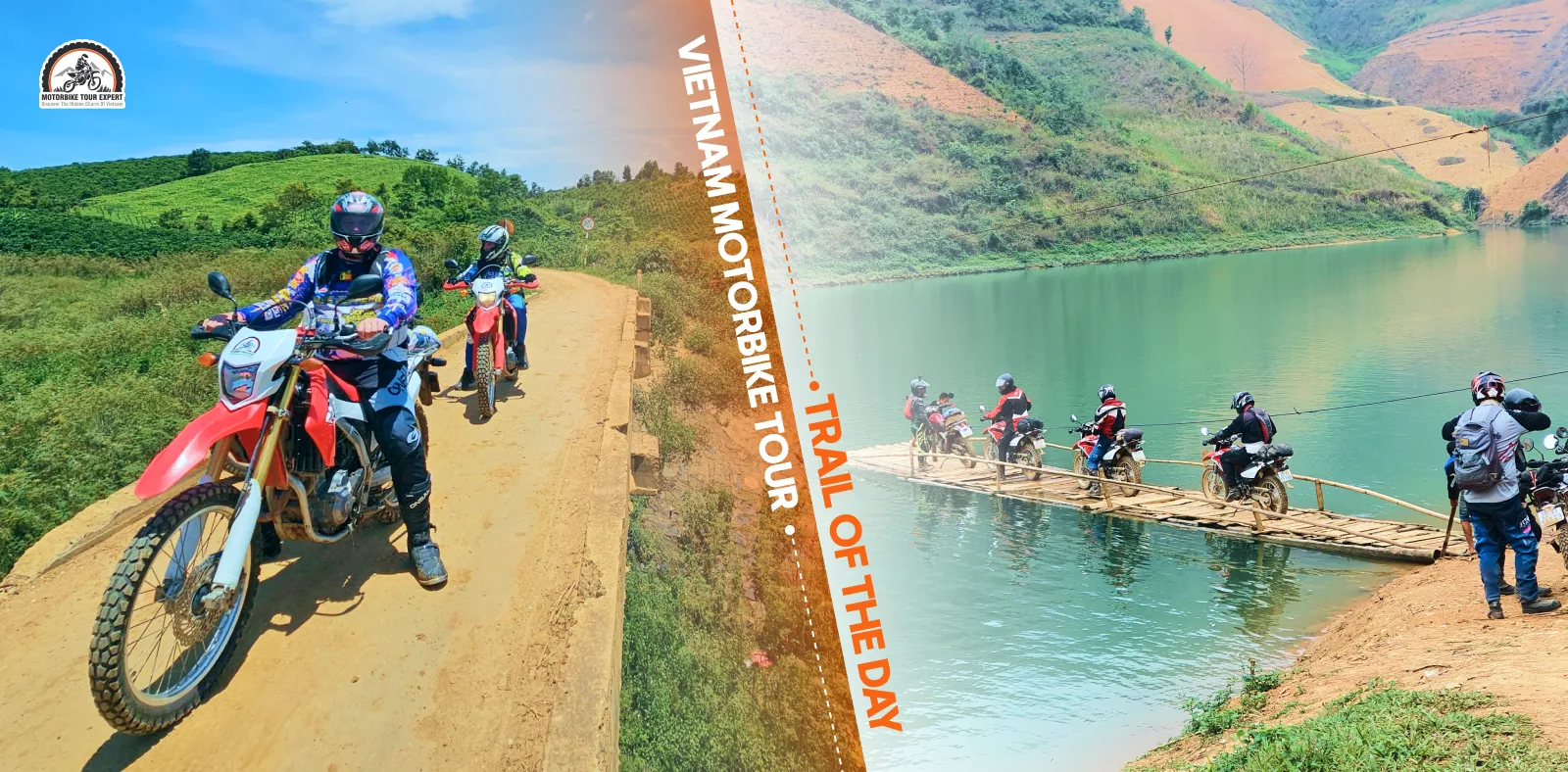

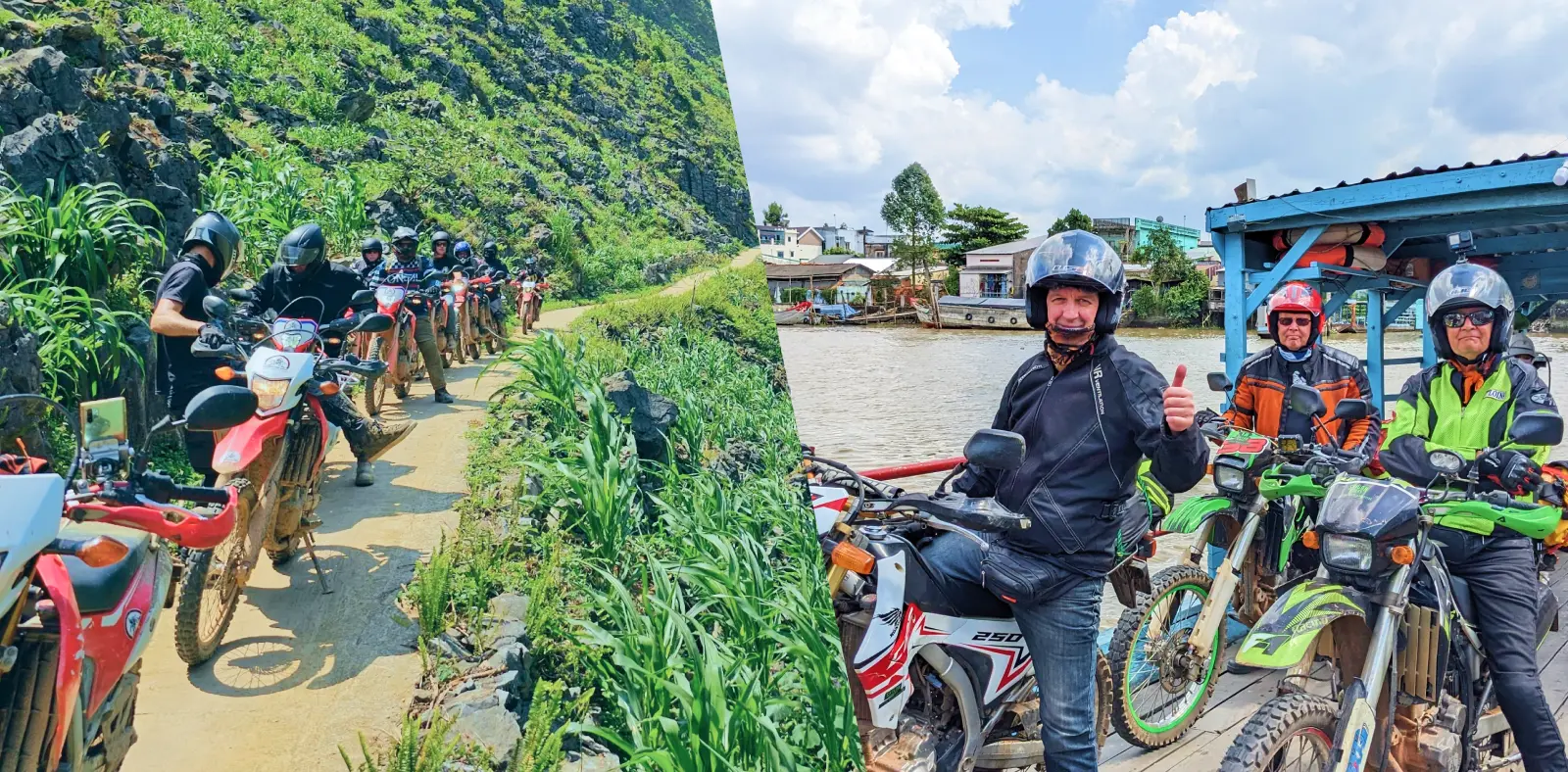

If you are searching for the ultimate Sapa Vietnam travel guide, you have found the right resource. Located in the Hoàng Liên Son Mountains of northwestern Vietnam, Sapa is the premier destination for travelers seeking misty rice terraces, ethnic minority culture, and world-class trekking. At Vietnam Motorbike Tour Expert, we have spent years guiding riders and adventurers through the northern mountains. We know that Sapa is not just a postcard; it is a region of deep valleys and complex weather. While we often explore these routes on two wheels, we understand the universal appeal of this highland town. This guide combines our on-the-ground expertise with real insights from the travel community to help you plan a safe and authentic trip.
Choosing the right time to visit is the most critical decision you will make. The weather here dictates your entire experience, from the visibility of the rice terraces to the safety of the trekking paths.
March to May and September to November are widely considered the best time to visit Sapa Vietnam. During these months, you are more likely to encounter stable weather and clear skies. However, Sapa is famous for having four seasons in a single day.
According to travelers, “The weather between day and night can differ greatly, so be cautious as you might get sick. It’s hot during the day and cold at night (59 – 82 degrees Fahrenheit).” This aligns with our experience: layers are essential.
Expert Insight: We often see riders disappointed by heavy fog in mid-summer (July-August), which is also the rainy season. One of our traveler noted, “Sapa weather can be fickle. Clouds can make or break the view… It was misty everyday so I didn’t wind up going [to Fansipan].” Always check the forecast before booking expensive excursions like the cable car.
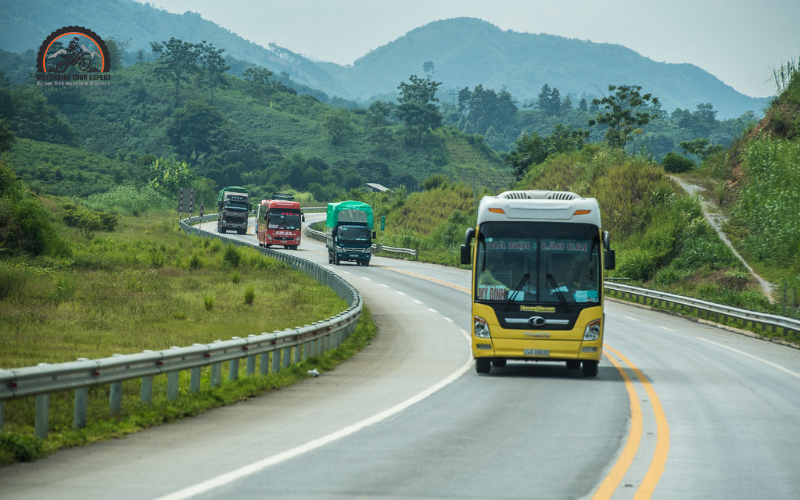
The journey from Hanoi to Sapa is part of the adventure. You have several options, but they vary significantly in comfort and safety.
>>READ MORE: Motorcycle Gear Guide: 10 Essential motorbike touring gear
Sapa offers a mix of strenuous adventure and cultural immersion. Whether you want to conquer peaks or stroll through villages, here are the top activities for your Sapa Vietnam travel guide.
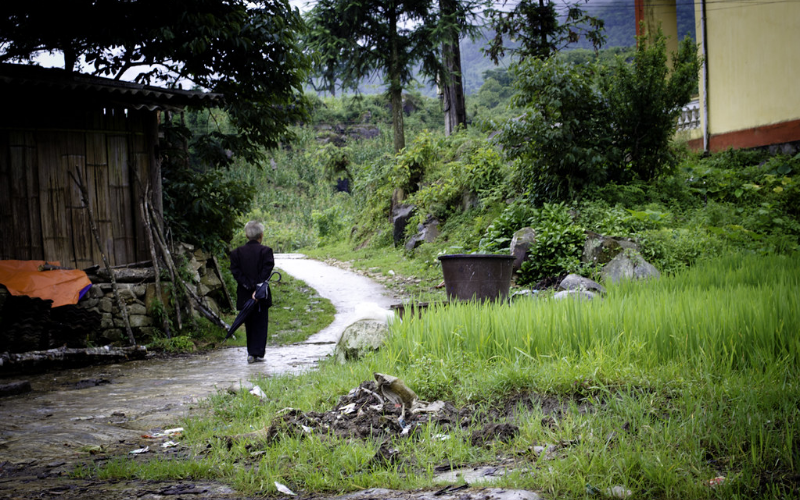
Trekking is the heart of any Sapa experience. The region is home to diverse ethnic minority groups, primarily the H’mong, Red Dao, and Tay people.
Popular routes include:
We advise you to find a local guide rather than booking large commercial tours. You can also ask your agency to book a guide from the villages directly, such as Ta Van or Nam Cang, to ensure an “authentic experience” and support the local economy directly.
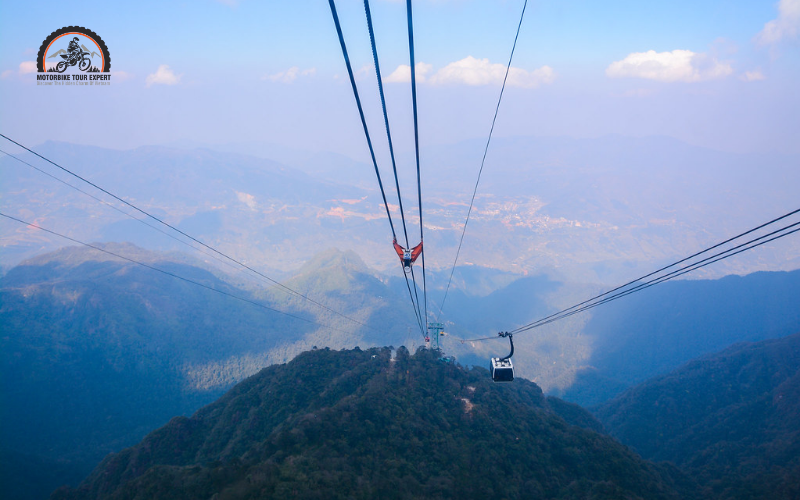
Mount Fansipan is known as the “Roof of Indochina.” While we love the challenge of a climb, the cable car system has made this accessible to everyone. For VND 800,000 roundtrip, a 15-20 minute cable car ride takes you up to the top of the mountain.
Once you reach the upper station, you can climb the final 600+ steps to the summit or take a funicular for an additional fee. Be sure to check the visibility cams before you go; there is no point in ascending if the peak is shrouded in white clouds.
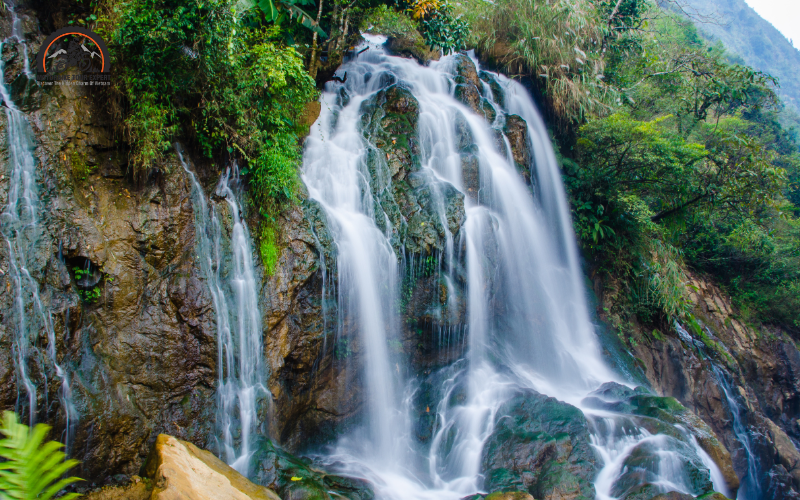
If you have a motorbike or hire a driver, these waterfalls are unmissable stops along the Tram Ton Pass.
Cat Cat is the nearest village to Sapa town, making it convenient for a half-day trip. Established in the 19th century, it is a hub of H’mong culture. However, managing expectations is key.
“Cat Cat Village is quite pretty but also very touristy” warns a travel guide. If you want a convenient look at local life, it is worth a visit, but for a raw, authentic connection, we recommend trekking further out to villages like Ta Van.
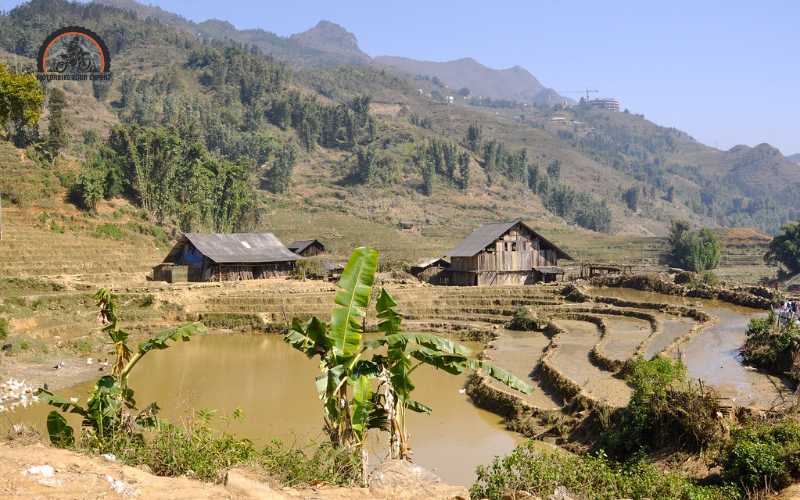
To help you plan, here is a structured 3-day itinerary that balances major sights with relaxation. This Sapa Vietnam travel guide itinerary is designed for first-timers.
Start your trip with the most iconic view by heading to the Sun Plaza station in the center of town and taking the Muong Hoa monorail to the cable car station in order to reach the Fansipan Peak
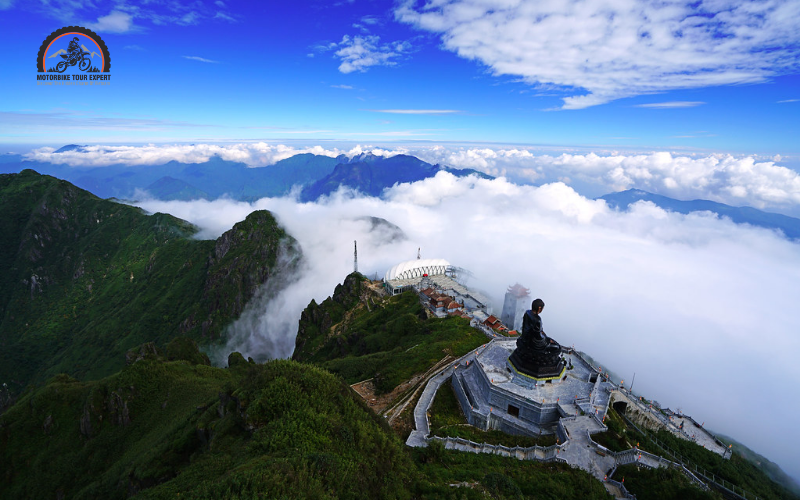
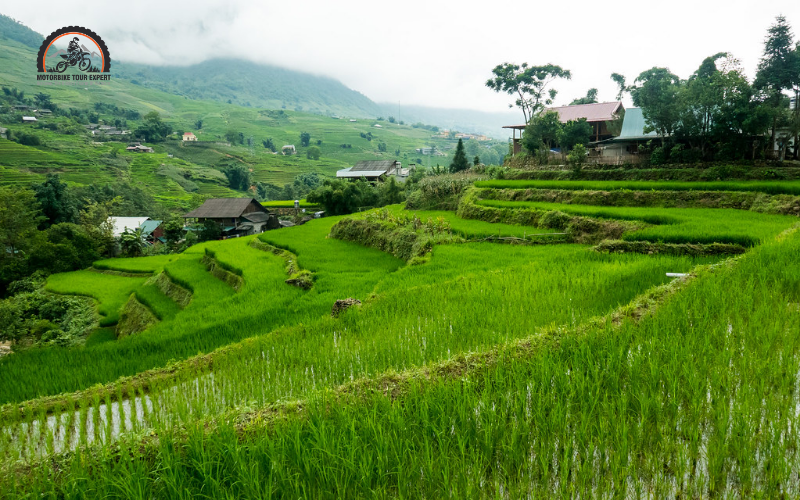
Dedicate your second day to the rice terraces.
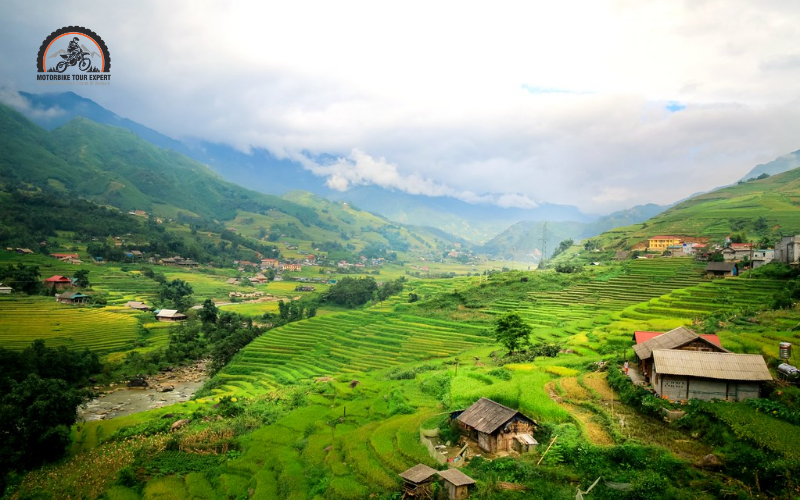
After two days of exertion, slow down before your return trip.
The cool climate of Sapa has given rise to a unique culinary scene that differs from Hanoi or Saigon.
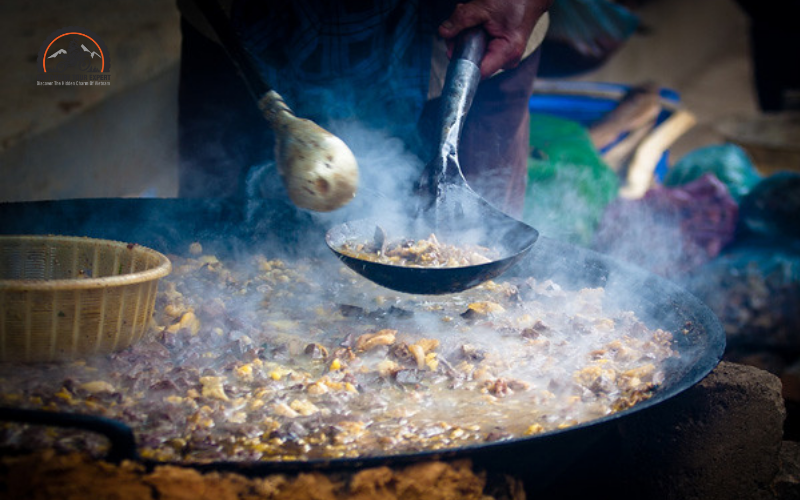
Your choice of accommodation will define your Sapa Vietnam travel guide experience. You generally have two choices: a hotel in the busy town center or a homestay in the quiet villages.
Sapa remains one of Vietnam’s most captivating destinations. From the heights of Fansipan to the warmth of a Red Dao herbal bath, this region offers an adventure for every type of traveler. By following this Sapa Vietnam travel guide, you can navigate the weather, avoid the tourist traps, and find the authentic beauty that makes this area so special. Whether you choose to trek the valleys on foot or explore the winding passes on a motorbike, the mountains are calling. If you are ready to take your adventure to the next level with a guided two-wheel journey, contact Vietnam Motorbike Tour Expert today.
>>READ MORE: Dalat Travel Guide: Essential Tips for Your Highland Adventure
LET'S RIDE WITH US
 Duration:
4 Days/ 3 Nites
Destinations:
Hanoi - Vu Linh - Phu Yen - Moc Chau - Mai Chau - Hanoi.
Tour Level:
Chill Level Tours
Duration:
4 Days/ 3 Nites
Destinations:
Hanoi - Vu Linh - Phu Yen - Moc Chau - Mai Chau - Hanoi.
Tour Level:
Chill Level Tours
 Duration:
11 Days / 10 Nites
Destinations:
Hanoi - Hoi An.
Tour Level:
Chill Level Tours
Duration:
11 Days / 10 Nites
Destinations:
Hanoi - Hoi An.
Tour Level:
Chill Level Tours
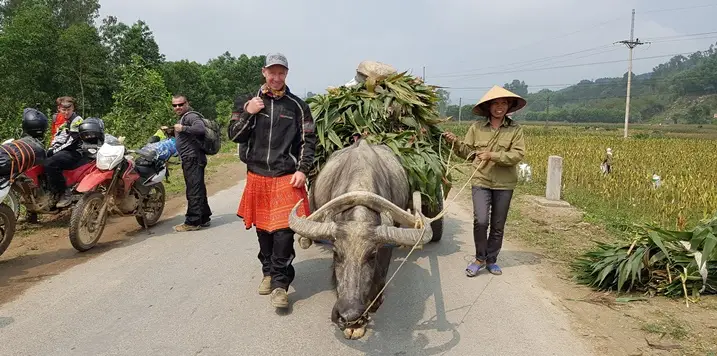 Duration:
4 Days / 3 Nites
Destinations:
Hanoi - Vu Linh
Tour Level:
Chill Level Tours
Duration:
4 Days / 3 Nites
Destinations:
Hanoi - Vu Linh
Tour Level:
Chill Level Tours
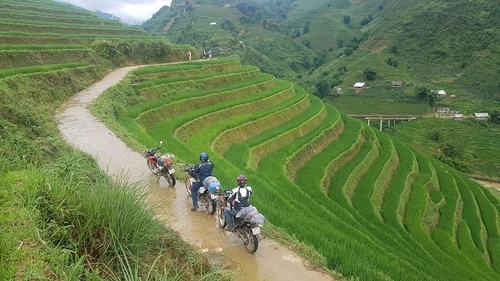 Duration:
6 Days/ 5 Nites
Destinations:
Hanoi - Thac Ba lake
Tour Level:
Chill Level Tours
Duration:
6 Days/ 5 Nites
Destinations:
Hanoi - Thac Ba lake
Tour Level:
Chill Level Tours
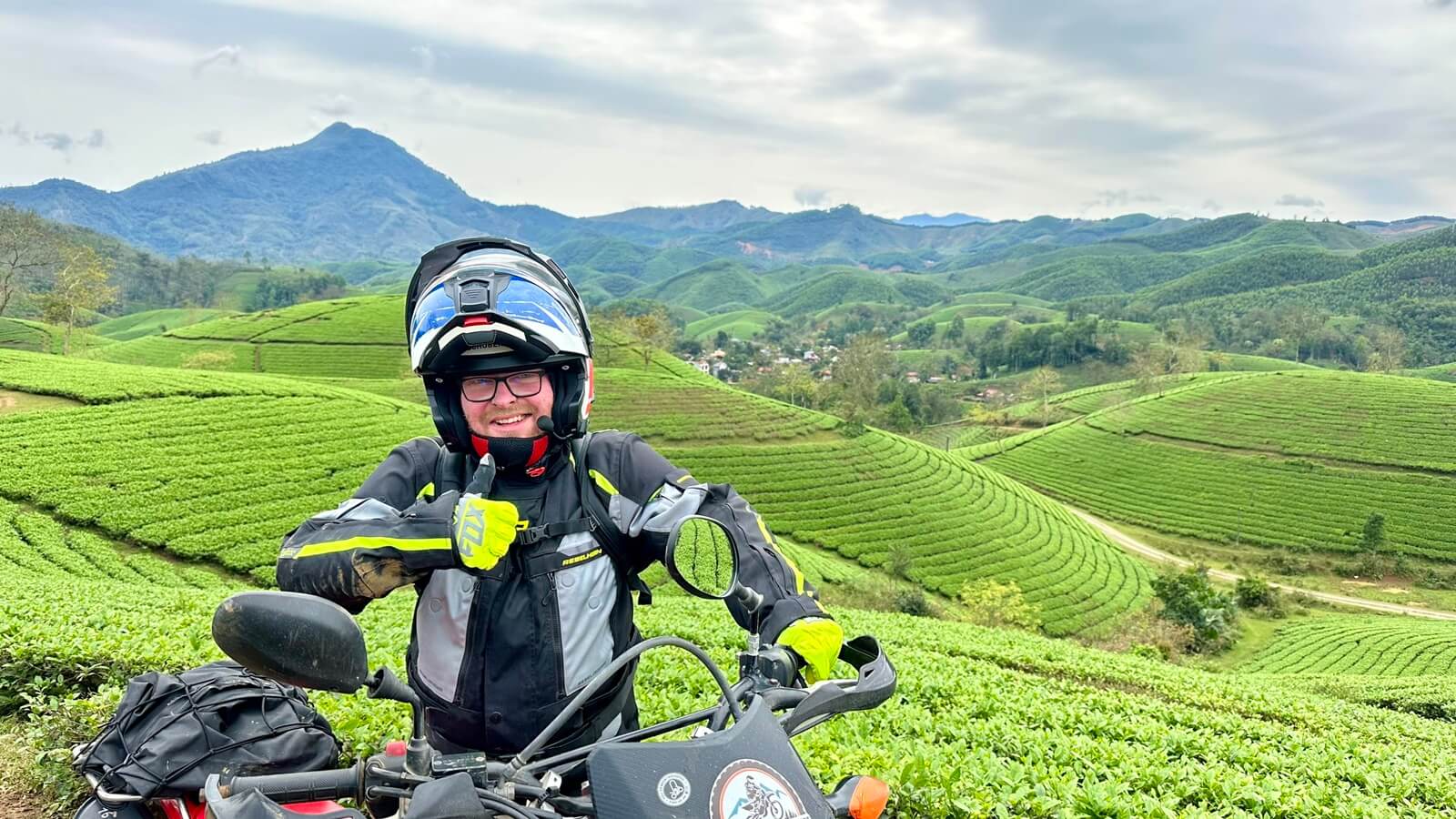 Duration:
7 Days / 6 Nites
Destinations:
Hanoi - Sapa
Tour Level:
Chill Level Tours
Duration:
7 Days / 6 Nites
Destinations:
Hanoi - Sapa
Tour Level:
Chill Level Tours
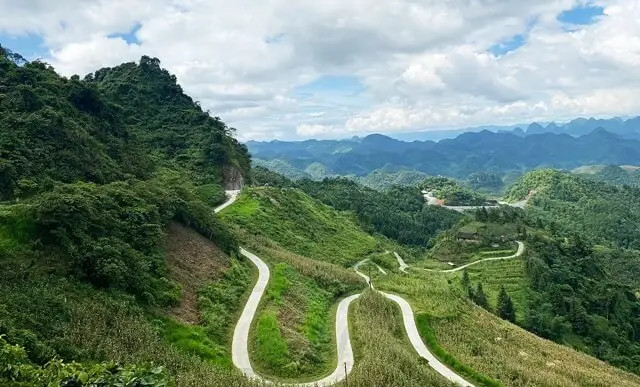 Duration:
7 Days/ 6 Nights
Destinations:
Hanoi - Moc Chau - Sapa
Tour Level:
Chill Level Tours
Duration:
7 Days/ 6 Nights
Destinations:
Hanoi - Moc Chau - Sapa
Tour Level:
Chill Level Tours
 Duration:
15 Days/ 14 Nites
Destinations:
Hanoi - Ha Long bay
Tour Level:
Chill Level Tours
Duration:
15 Days/ 14 Nites
Destinations:
Hanoi - Ha Long bay
Tour Level:
Chill Level Tours
 Duration:
4 Days/ 3 Nites
Destinations:
Hanoi - Thac Ba lake
Tour Level:
Chill Level Tours
Duration:
4 Days/ 3 Nites
Destinations:
Hanoi - Thac Ba lake
Tour Level:
Chill Level Tours
4-Day Northern Vietnam Motorbike Tour From Hanoi
 Duration:
4 Days/ 3 Nites
Duration:
4 Days/ 3 Nites
 Tour Level:
Chill Level Tours - Moderate Level Tours
Tour Level:
Chill Level Tours - Moderate Level Tours
Experience the authentic Vietnam
Ride off the beaten track
Visit beautiful Thac Ba Lake
Interact with lovely local people
Riding some scenic offroad tracks
Enjoy a variety of local foods
11-Day Top Vietnam Motorbike Tour
Duration:
11 Days / 10 Nites
Tour Level:
Chill Level Tours - Moderate Level Tours
Discover the legendary Ho Chi Minh trail
Learn a lot about Vietnam war history
Ride off the beaten track
Experience the authentic Vietnam
Interact with lovely local people
Ride some beautiful coastlines
4-Day Short North Vietnam Motorbike Tour
Duration:
4 Days / 3 Nites
Tour Level:
Chill Level Tours - Moderate Level Tours
Experience the authentic Vietnam
Interact with lovely local people
Visit beautiful Thac Ba lake
Ride off the beaten track
Enjoy a variety of local foods
Ride some scenic offroad tracks
6-Day Northwest Loop Motorbike Tour Vietnam
Duration:
6 Days/ 5 Nites
Tour Level:
Chill Level Tours - Moderate Level Tours
Experience the authentic Vietnam
Explore the hidden gems in Northwest
Visit beautiful Sapa
Ride off the beaten track
Enjoy great local food
Interact with lovely local people
7-Day Motorbike Tour In North Vietnam
Duration:
7 Days / 6 Nites
Tour Level:
Chill Level Tours - Moderate Level Tours
Experience authentic Vietnam
Interact with lovely local people
Ride off the beaten path
Visit all the "Must-See" in North
Enjoy scenic off-road trails
Learn about Vietnamese culture
7-Day Amazing Motorbike Tour To The Hidden Lands Vietnam
Duration:
7 Days/ 6 Nights
Tour Level:
Chill Level Tours - Moderate Level Tours
Discover hidden charms of Northwest Vietnam
Ride fun offroad
Experience the authentic Vietnam
Experience beautiful Sapa
Interact with lovely local people
Ride off the beaten track
Hanoi Street Food Tour
Duration:
15 Days/ 14 Nites
Tour Level:
Experience the authentic Vietnam
Explore beautiful nature in North Vietnam
Interact with lovely local people
Ride scenic offroad trails
Ride off the beaten track
Visit Natural Heritage Ha Long Bay
4-Day Northwest Vietnam Motorbike Tour
Duration:
4 Days/ 3 Nites
Tour Level:
Chill Level Tours - Moderate Level Tours
Experience the authentic Vietnam
Visit beautiful Thac Ba lake
Interact with lovely local people
See the quiet countryside Vietnam
Ride off the beaten track E
Enjoy great local food