Your message has been sent. Thank you!
 Your message has been sent. Thank you!
I'm ready to book
Hmm, I still need more information
My information
Detailed information
From $ USD
Ho Chi Minh Trail Motorcycle Tour – 12 Days

Duration:
12 Days/ 11 Nites

Destinations:
Hanoi - Nha Trang

Tour Level:
More offroad (>40%)

Highlight:
Destination:
Ha Noi
Mai Chau
Tan Ky
Phong Nha
Ke Bang National park
Khe Sanh
Vinh Moc tunnels
Hue
Da Nang
Hoi An
Kon Tum
Buon Me Thuat
Lak Lake
Nha Trang
Pickup from:
Hanoi, Airport or any hotel in Ha Noi city
Suitable Bikes:
Honda XR150L, Honda CRF300L,


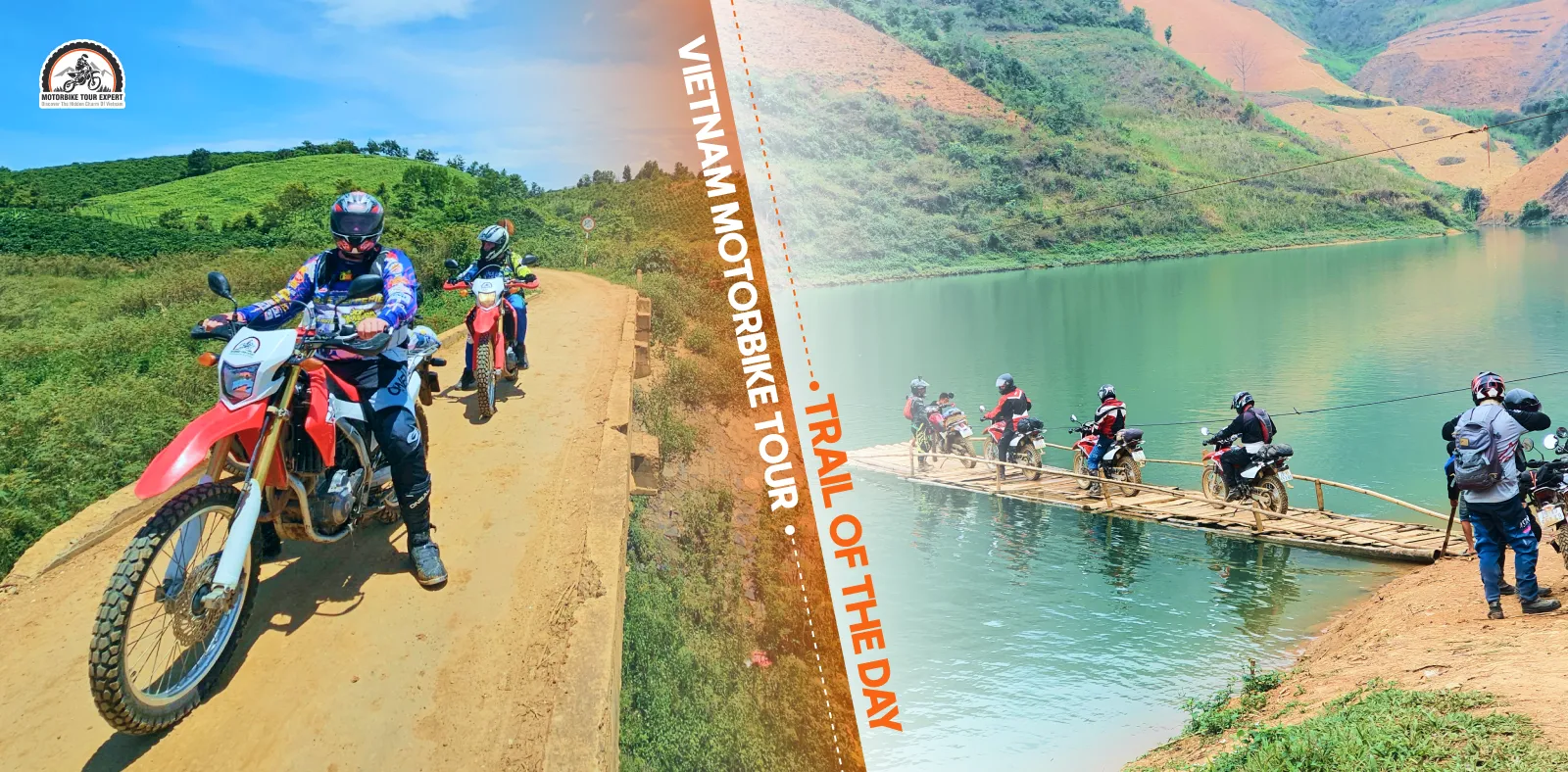
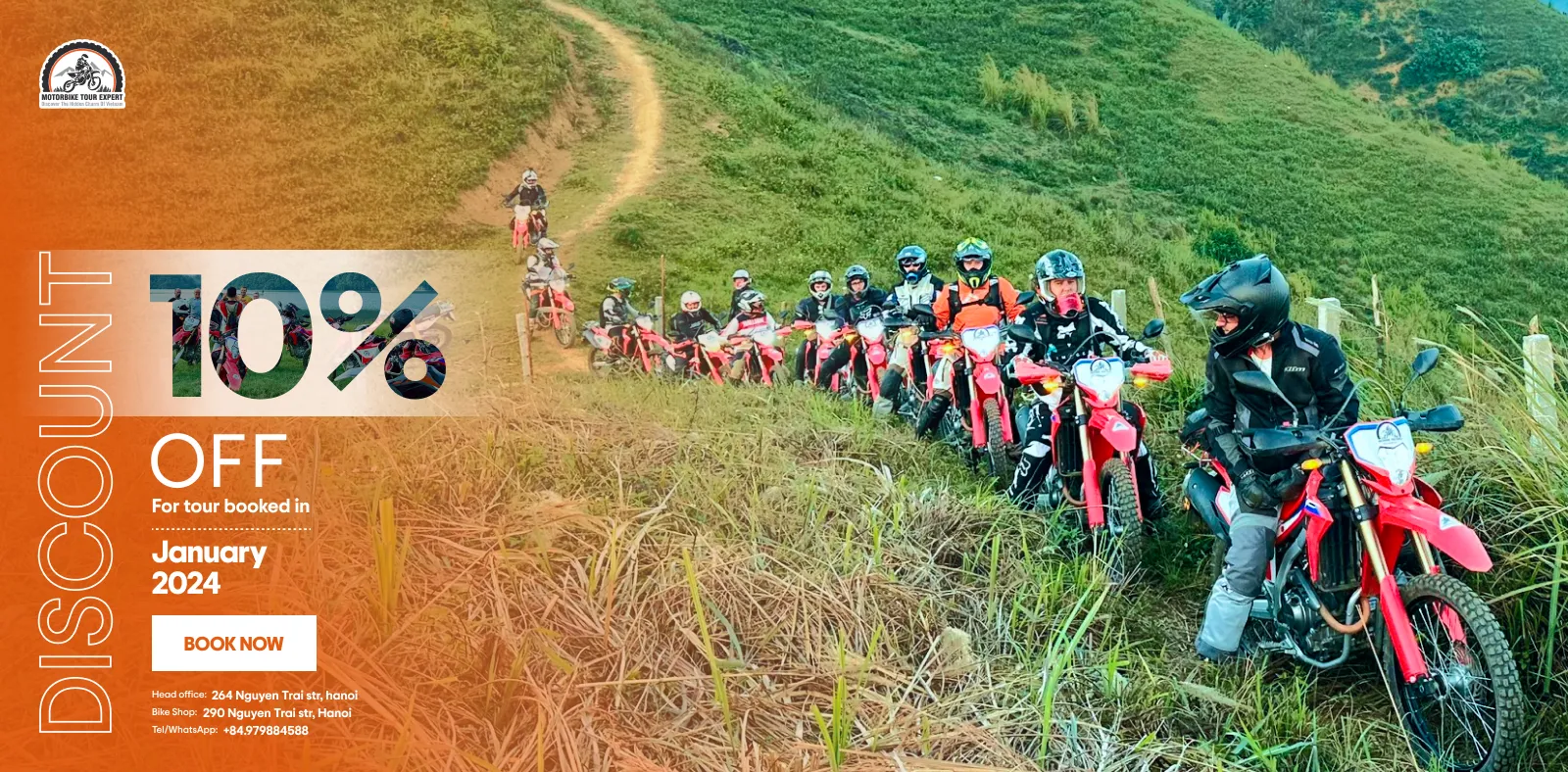
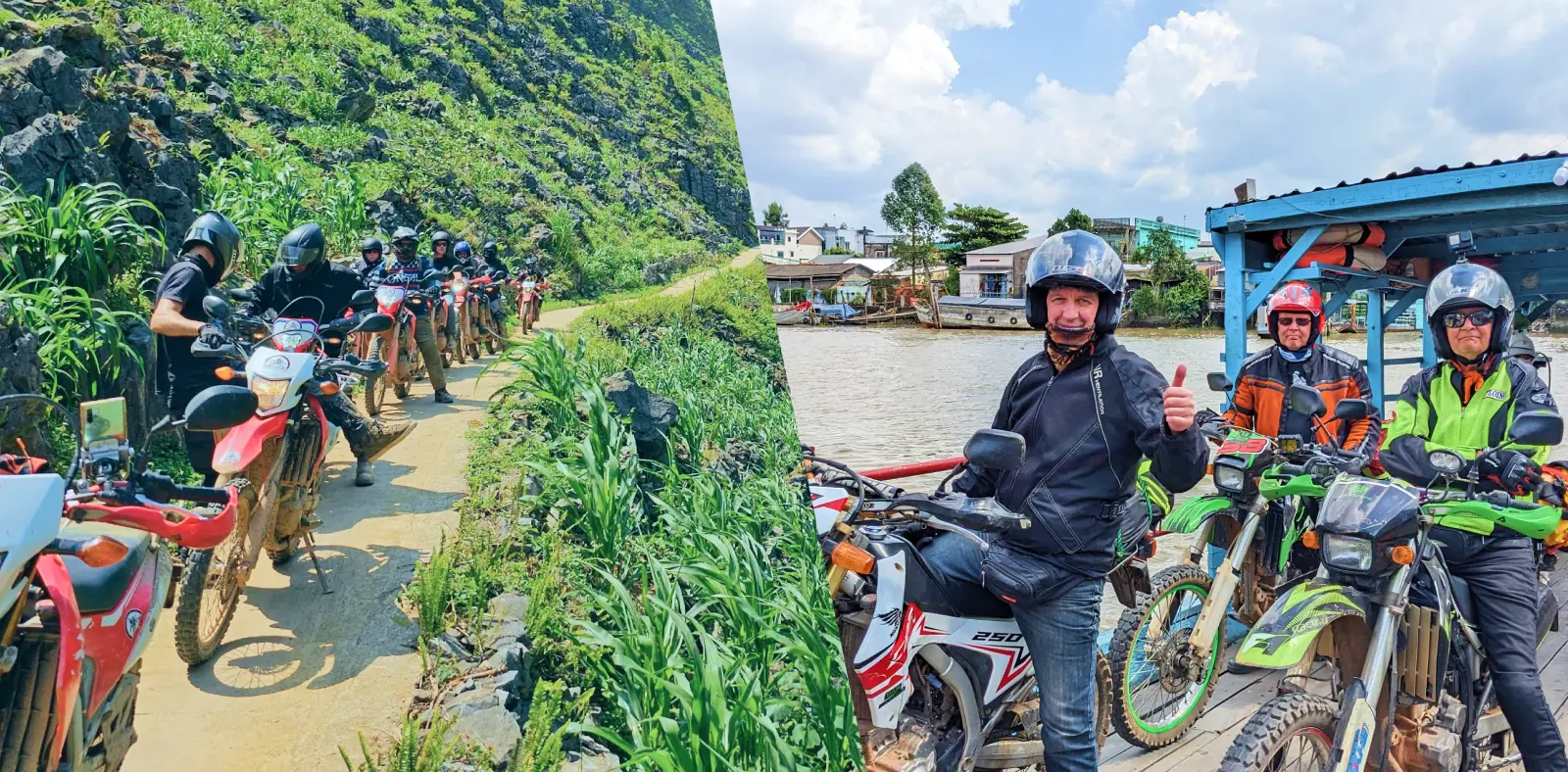

The size of your motorcycle tour group affects more than just how many people you ride with. It also shapes your riding pace, waiting time, level of support, and flexibility along the way. Small groups tend to offer smoother coordination and more room for personalization, while larger groups bring a livelier atmosphere and more opportunities to socialize. Let’s explore the key differences to help you decide which group size suits your travel style.
Regardless of group size, standard all-inclusive motorcycle tours share several essential features, from planned routes and core services to safety procedures and group riding arrangements.
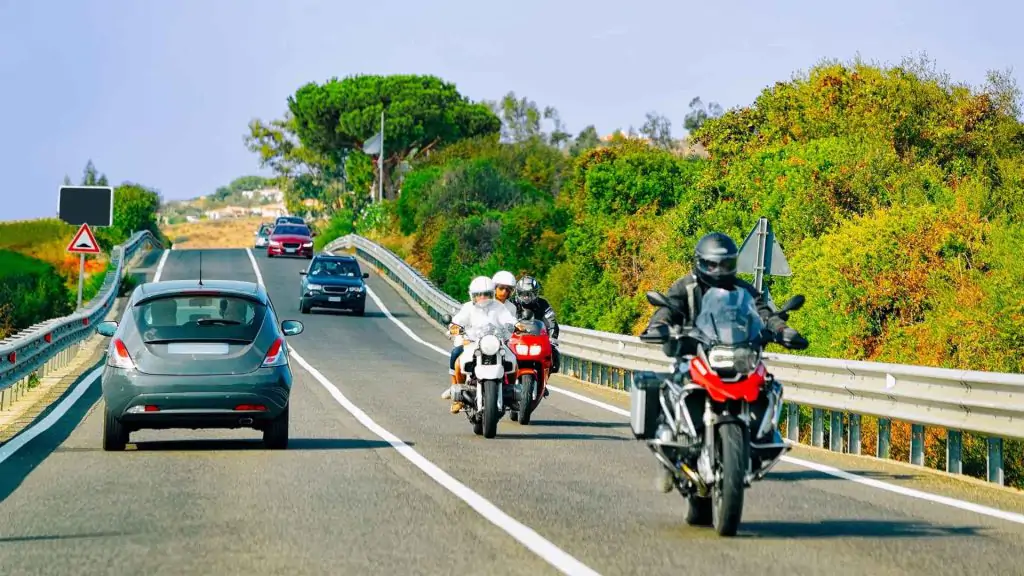
While all guided motorcycle tours share standard operational basics, the actual daily riding experience transforms dramatically once you compare how small and large group sizes operate on the open road.
The proportion of crew members to participants fundamentally alters your daily ride, small groups benefit from focused, one-on-one guide attention, whereas larger convoys require staff to prioritize high-level crowd management.
Small group:
Large group:
Note: Specific staffing models and guide assignments vary depending on the tour operator, total participant headcount, and route characteristics.
On-road protection and personal coaching hinge directly on group scale: tight squads allow road captains to actively monitor individual riding techniques, while massive departures must rely on rigid, standardized safety protocols.
Small group:
Large group:
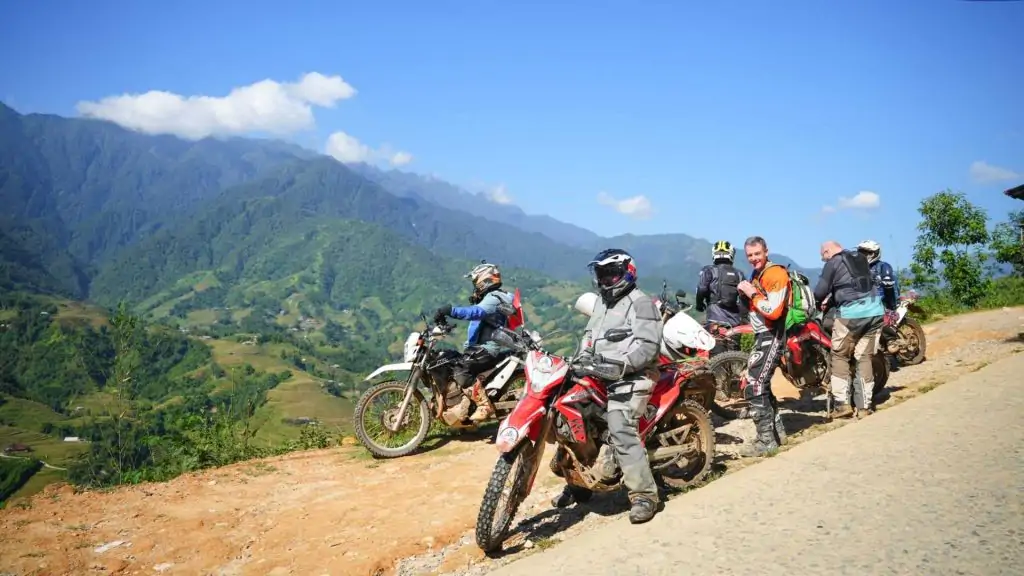
Nothing shapes the daily tempo of a trip quite like tour size. Compact groups carve through mountain twists with fluid momentum and minimal downtime, whereas long lines of motorbikes endure constant stop-and-go delays and lengthy regrouping stops.
Small group:
Large group:
Your squad’s physical footprint dictates where you can go and stay. Fewer motorbikes unlock spontaneous mountain detours and charming local guesthouses, while big groups remain tethered to major highways and large tourist hotels capable of handling heavy volume.
Small group:
Large group:
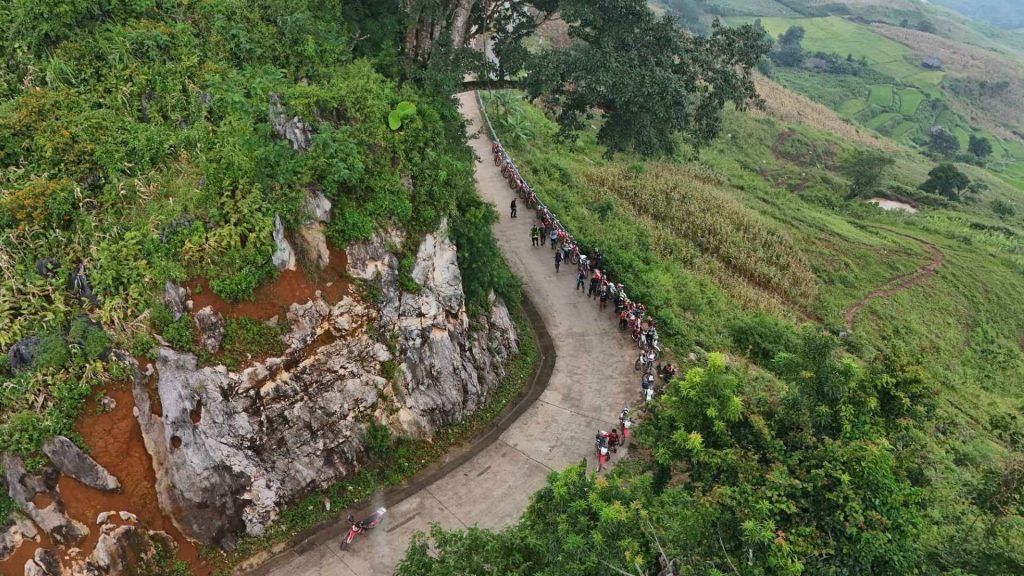
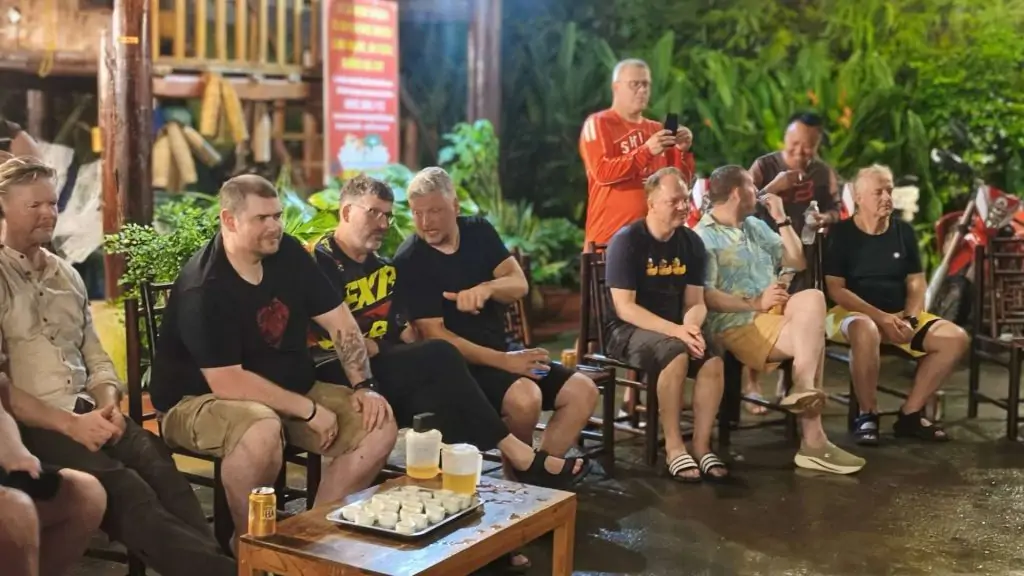
The social vibe shifts dramatically depending on participant count, intimate departures build close-knit teamwork and genuine cultural immersion, whereas expansive tours offer a buzzing, high-energy party atmosphere with total social freedom.
Small group:
Large group:
Deciding between group sizes ultimately comes down to balancing upfront price against overall value: large departures maximize budget affordability by spreading overhead, whereas small tours command a higher daily rate in exchange for high-touch service and bundled premium inclusions.
Small group:
Large group:
Selecting the best format comes down to assessing your experience, expectations, financial flexibility, and desired level of support on the road.
Step 1 – Compare your riding level to the group
Your confidence on two wheels should align seamlessly with group dynamics and pacing demands on the route.
Step 2 – Decide what you want from the trip
Clarify whether your ideal holiday focuses on immersive local exploration or high-energy social connection.
Step 3 – Set your budget, including hidden costs
Look beyond initial ticket prices to evaluate overall value, inclusive services, and personal out-of-pocket expenses.
Step 4 – Check the guide ratio, not just the group size
Evaluate the actual density of staff support on the road rather than relying solely on total participant numbers.
Tour recommendations based on your needs
|
Tour Format |
Ideal Rider Profile & Needs |
Key Reasons |
|
Small Group Tour |
– Solo travelers, couples, or photographers. – Beginners needing coaching or riders wanting steady pace. – Travelers prioritizing boutique stays and local access. |
– Highly adaptable routes and flexible schedules. – High guide-to-rider ratio for tailored safety. – Minimal waiting time and smooth group coordination. |
|
Large Group Tour |
– Budget-conscious travelers and backpackers. – Outgoing individuals seeking a vibrant social party. – Riders who prefer structured, predictable itineraries. |
– Lower baseline ticket prices per person. – High-energy social scene with diverse companions. – Fixed schedules and standardized group logistics. |
Essential pre-booking checklist: 6 questions to ask your tour operator
Before placing your deposit, confirm these operational details to ensure the tour structure matches your expectations:
Choosing between a small group and a large group motorcycle tour depends on what matters most to you – a flexible riding experience with more personal attention or a lively journey with more fellow riders. Whichever you choose, the right tour should let you enjoy the ride, feel supported on the road, and make the most of your time exploring Vietnam.
At Vietnam Motorbike Tour Expert, we offer both small and large group tours, backed by 15+ years of experience and a local team who know the roads inside out. With English-speaking guides, protective gear, mechanical support, and convenient airport or hotel transfers, you can focus on the journey while we take care of the details.
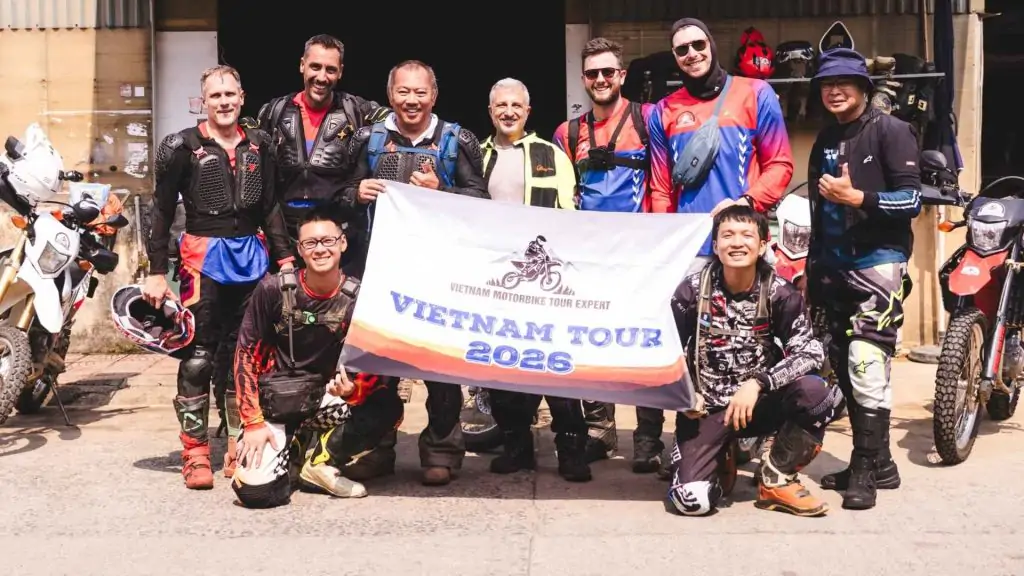
Contact Vietnam Motorbike Tour Expert Today to discuss your travel plans and find a group tour that matches your riding experience, budget, and travel style!
LET'S RIDE WITH US
 Duration:
4 Days/ 3 Nites
Destinations:
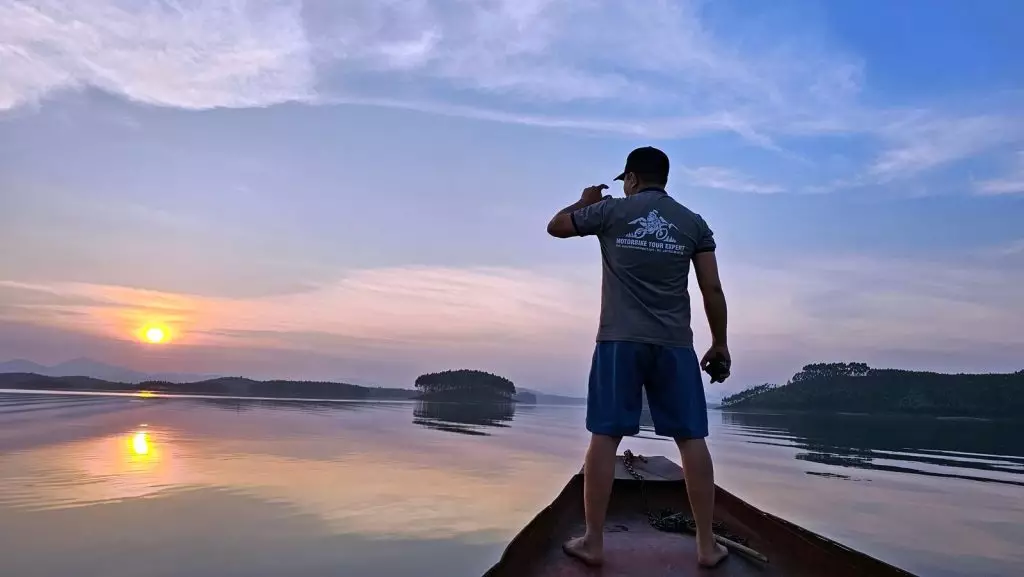
Hanoi - Vu Linh - Phu Yen - Moc Chau - Mai Chau - Hanoi.
Tour Level:
Chill Level Tours
 Duration:
4 Days/ 3 Nites
Destinations:
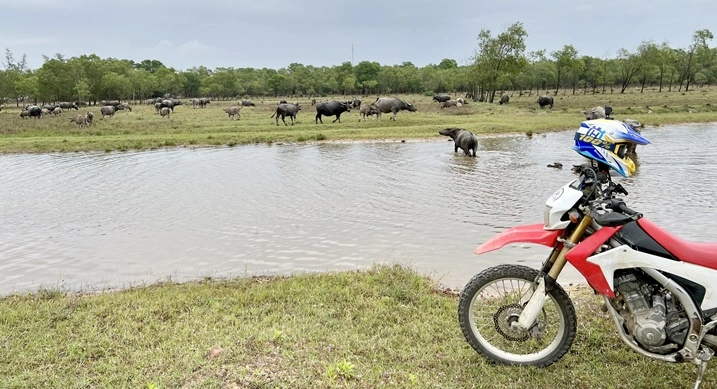
Hoi An - Nha Trang
Tour Level:
Chill Level Tours
 Duration:
5 Days/4 Nights
Destinations:
Hanoi
Tour Level:
Chill Level Tours
 Duration:
5 Days / 4 Nights
Destinations:
Hanoi - Hanoi
Tour Level:
Chill Level Tours
 Duration:
5 Days/ 4 Nites
Destinations:
Hanoi - Lao Cai
Tour Level:
Chill Level Tours
 Duration:
11 Days / 10 Nites
Destinations:
Hanoi - Hoi An.
Tour Level:
Chill Level Tours
 Duration:
4 Days / 3 Nites
Destinations:
Hanoi - Vu Linh
Tour Level:
Chill Level Tours
 Duration:
6 Days/ 5 Nites
Destinations:
Hanoi - Thac Ba lake
Tour Level:
Chill Level Tours
4-Day Northern Vietnam Motorbike Tour From Hanoi
 Duration:
4 Days/ 3 Nites
 Tour Level:
Chill Level Tours - Moderate Level Tours
Experience the authentic Vietnam
Ride off the beaten track
Visit beautiful Thac Ba Lake
Interact with lovely local people
Riding some scenic offroad tracks
Enjoy a variety of local foods
4-Day Hoi An Motorbike Tour to Nha Trang
Duration:
4 Days/ 3 Nites
Tour Level:
Chill Level Tours
Ride off the beaten track
Visit hidden charms of central Vietnam
Visit historical sites
Experience the authentic Vietnam
Interact with lovely local people
Ride Historical Ho Chi Minh trail
5-Day Ha Giang Loop Motorbike Tour from Hanoi
Duration:
5 Days/4 Nights
Tour Level:
Challenging Level Tours - Moderate Level Tours
Explore amazing Ha Giang Loop
Ride off the beaten path
Interact with lovely local people
Visit Ba Be lake Lake & National Park
Enjoy scenic offroad trails
Experience authentic Vietnam
5-Day Great Sapa Motorbike Tour from Hanoi
Duration:
5 Days / 4 Nights
Tour Level:
Moderate Level Tours
Experience the authentic Vietnam
Interact with lovely local people
Beautiful view of rice terrace
Ride off the beaten track
See the largest lake of Thac Ba
Discover hidden beauty of Sapa
5-Day Vietnam Motorbike Tour to Ha Giang
Duration:
5 Days/ 4 Nites
Tour Level:
Chill Level Tours - Moderate Level Tours
Experience authentic Vietnam
Ride off the beaten path
Explore Ha Giang Loop & more
Interact with lovely local people
Enjoy a variety of Vietnamese food
Ride some scenic off-road trails
11-Day Top Vietnam Motorbike Tour
Duration:
11 Days / 10 Nites
Tour Level:
Chill Level Tours - Moderate Level Tours
Discover the legendary Ho Chi Minh trail
Learn a lot about Vietnam war history
Ride off the beaten track
Experience the authentic Vietnam
Interact with lovely local people
Ride some beautiful coastlines
4-Day Short North Vietnam Motorbike Tour
Duration:
4 Days / 3 Nites
Tour Level:
Chill Level Tours - Moderate Level Tours
Experience the authentic Vietnam
Interact with lovely local people
Visit beautiful Thac Ba lake
Ride off the beaten track
Enjoy a variety of local foods
Ride some scenic offroad tracks
6-Day Northwest Loop Motorbike Tour Vietnam
Duration:
6 Days/ 5 Nites
Tour Level:
Chill Level Tours - Moderate Level Tours
Experience the authentic Vietnam
Explore the hidden gems in Northwest
Visit beautiful Sapa
Ride off the beaten track
Enjoy great local food
Interact with lovely local people