Your message has been sent. Thank you!
 Your message has been sent. Thank you!
I'm ready to book
Hmm, I still need more information
My information
Detailed information
From $ USD
Ho Chi Minh Trail Motorcycle Tour – 12 Days

Duration:
12 Days/ 11 Nites

Destinations:
Hanoi - Nha Trang

Tour Level:
More offroad (>40%)

Highlight:
Destination:
Ha Noi
Mai Chau
Tan Ky
Phong Nha
Ke Bang National park
Khe Sanh
Vinh Moc tunnels
Hue
Da Nang
Hoi An
Kon Tum
Buon Me Thuat
Lak Lake
Nha Trang
Pickup from:
Hanoi, Airport or any hotel in Ha Noi city
Suitable Bikes:
Honda XR150L, Honda CRF300L,






The Hoi An yellow walls are the iconic, defining feature of Vietnam’s ancient town, creating a picturesque backdrop that tells stories of history and culture. These vibrant walls are not just a color but a symbol of the city’s soul, attracting visitors from around the world. To learn more about this unique characteristic, read the guide below from Vietnam Motorbike Tour Expert.
The historical origin of the Hoi An yellow walls are deeply rooted in the town’s architectural heritage, which is a blend of Vietnamese, Chinese, Japanese, and French influences. Hoi An features nearly 1,000 ancient houses, with 844 recognized as UNESCO cultural heritage sites . These structures, dating back to the 17th and 18th centuries, have been strictly conserved.
The town’s houses are typically tube-shaped, narrow in width but long in depth, and stand close together, forming distinctive alleys. The characteristic dark yellow color was applied to the majority of these houses, a feature that has remained largely unchanged for hundreds of years. This consistent color scheme across traditional wooden architecture, temples, and bridges creates the unified and iconic look known as the Hoi An yellow walls.
>>Read more: Check Out These Top 10 Amazing Things To Do In Hoi An
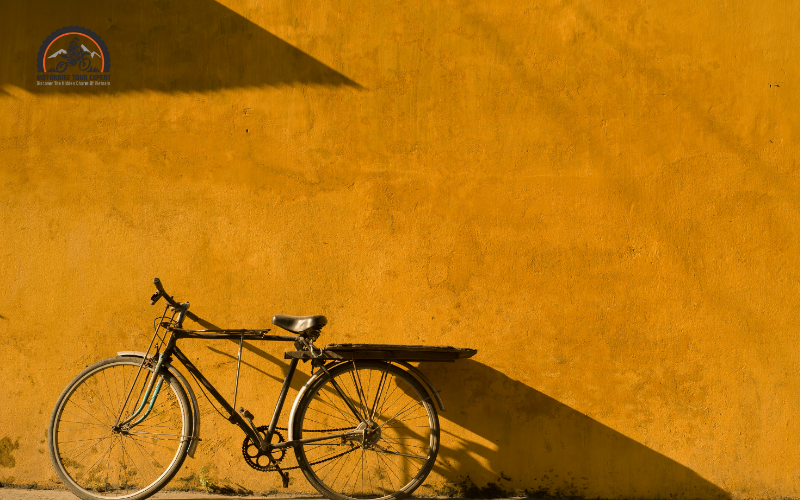
The Hoi An yellow walls are not a single location but are found on nearly every street and alley throughout Hoi An Ancient Town . Each wall radiates a golden hue that has become synonymous with the city’s identity. While these picturesque backdrops are ubiquitous, some areas are particularly favored by visitors for photography.
Notably, the streets that lead to Tran Phu Street and the areas near the iconic Japanese Bridge are popular spots. Another prime location is a long, unobstructed yellow wall situated along the waterfront on Bạch Đằng Street, on the opposite side of the Old House of Tan Ky. This spot is especially open, making it easier to capture photos of daily life against the vibrant backdrop.
>>Read more: Hoi An Vietnam Map: Navigate Ancient Town and Top Sights
The fame of the Hoi An yellow walls stems from their deep cultural symbolism and the timeless, nostalgic beauty they lend to the ancient town. They are more than just a decorative choice; they are an integral part of Hoi An’s identity.
The distinctive yellow hue of Hoi An’s walls carries significant cultural and symbolic weight in Vietnamese culture, alongside practical benefits.
Symbol of Royalty and Prosperity: In Vietnamese culture, yellow is often seen as a symbol of royalty, pride, good fortune, and prosperity. This is reflected in its common use on ancestral altars, which are often decorated with yellow flowers and gilt ornaments.
Practical for Climate: From a practical standpoint, the yellow color absorbs less heat, making it well-suited for Vietnam’s humid, tropical climate and helping to keep interiors cooler during hot summer months.
Feng Shui Beliefs: Many also believe the color choice is tied to ancient architectural styles and feng shui principles. In this context, yellow symbolizes prosperity and is believed to ward off negative energy. Its earthy, muted tone represents endurance and the passage of time.
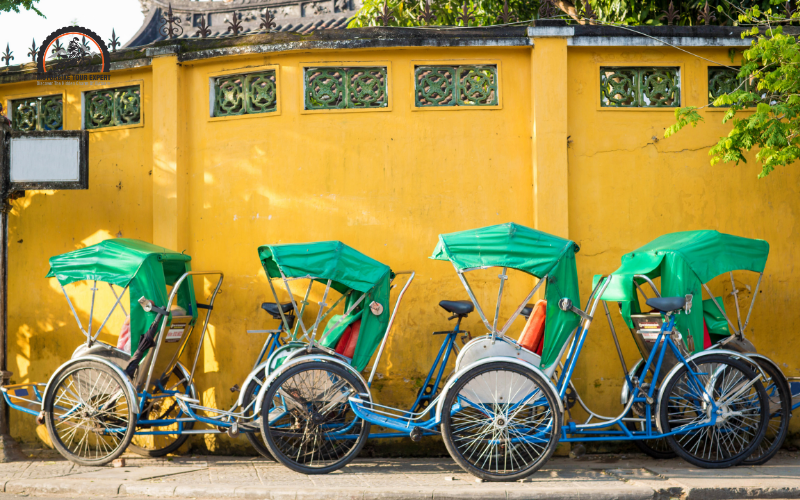
The yellow walls of Hoi An create a nostalgic and timeless charm that captivates artists and travelers alike. The interplay of light and color on these surfaces produces a constantly changing visual landscape. French photographer Rehahn described Hoi An as an “outdoor gallery,” noting that “the light and yellow walls create the perfect backdrop for any photographic topic” .
During the day, sunlight illuminates the walls, creating a “ravishing morning scene” . At night, the soft glow from thousands of lanterns reflects off the yellow surfaces, transforming the town into a shimmering, magical space. This ever-present, warm color, combined with the aged texture of the walls, evokes a sense of history and tranquility that is unique to Hoi An.
>>Read more: Hoi An Travel Tips: Essential Insights for First-Timers
To fully appreciate and capture the beauty of the Hoi An yellow walls, it helps to know the best techniques, locations, and what to wear.
To capture the best photos, timing and composition are key.
The ideal time for photography is either early in the morning or in the afternoon when the light is soft and even. It is best to avoid midday, around 12:00 PM to 1:00 PM, when harsh overhead sunlight can wash out the colors.
Wearing contrasting colors like light blue or purple can make the subject stand out against the warm yellow background.
Don’t be afraid to wander and get lost in the pedestrian-only old town. Many of the most beautiful corners, featuring colorful blue windows and decorated cafes against the yellow walls, are found by exploring the narrow alleys.
While beautiful yellow walls are everywhere, some spots are particularly iconic for photos.
The Yellow Wall on Bạch Đằng Street: This is one of the longest and “cleanest” yellow walls, located along the Thu Bon River. Its open setting makes it perfect for capturing photos of passersby and local life.
Alleys of the Old Town: The narrow alleys offer a sense of discovery and lead to quiet, picturesque scenes away from the main crowds. They provide a perfect frame for capturing the authentic atmosphere of Hoi An.
Faifo Cafe Rooftop: For a different perspective, the rooftop of Faifo Cafe offers a stunning view over the yellow walls and terracotta-tiled roofs of the ancient town, especially at sunset.
Near the Japanese Bridge: The areas around this iconic landmark are rich with photo opportunities, blending historic architecture with the signature yellow backdrop.
Choosing the right outfit can enhance photos taken against the Hoi An yellow walls.
Soft dresses, shorts with crop tops, or off-the-shoulder tops are popular choices that complement the relaxed, charming vibe of the town.
The traditional Vietnamese áo dài is another excellent option, capturing a sense of timeless elegance that fits perfectly with the historical setting.
For color coordination, consider outfits in earthy orange, pastel blue, or even a matching yellow. Simple white or black dresses also create a classic, charming look.

1. Why are the houses in Hoi An painted yellow?
The yellow color in Hoi An symbolizes royalty, luck, and prosperity in Vietnamese culture. It is also practical, as the light color absorbs less heat in the tropical climate. This tradition creates the town’s warm and iconic aesthetic.
2. Can you visit the yellow walls for free?
Yes, the yellow walls are a public feature of Hoi An’s Ancient Town, and you can see and photograph them for free by simply walking through the streets and alleys. However, an entrance ticket is required to enter the official Ancient Town area and visit specific heritage sites within it.
3. What is the best time of day to see the yellow walls?
The best time to see the walls is in the early morning or late afternoon. The soft, golden light during these times enhances the warm yellow tones beautifully and is ideal for photography. The town is also less crowded, offering a more serene experience.
The Hoi An yellow walls are a cherished element of Vietnam’s cultural heritage, offering a glimpse into the town’s history and aesthetic soul. We hope this guide from Vietnam Motorbike Tour Expert has helped you appreciate the beauty and significance of this iconic feature.
LET'S RIDE WITH US
 Duration:
4 Days/ 3 Nites
Destinations:
Hanoi - Vu Linh - Phu Yen - Moc Chau - Mai Chau - Hanoi.
Tour Level:
Chill Level Tours
Duration:
4 Days/ 3 Nites
Destinations:
Hanoi - Vu Linh - Phu Yen - Moc Chau - Mai Chau - Hanoi.
Tour Level:
Chill Level Tours
 Duration:
11 Days / 10 Nites
Destinations:
Hanoi - Hoi An.
Tour Level:
Chill Level Tours
Duration:
11 Days / 10 Nites
Destinations:
Hanoi - Hoi An.
Tour Level:
Chill Level Tours
 Duration:
4 Days / 3 Nites
Destinations:
Hanoi - Vu Linh
Tour Level:
Chill Level Tours
Duration:
4 Days / 3 Nites
Destinations:
Hanoi - Vu Linh
Tour Level:
Chill Level Tours
 Duration:
6 Days/ 5 Nites
Destinations:
Hanoi - Thac Ba lake
Tour Level:
Chill Level Tours
Duration:
6 Days/ 5 Nites
Destinations:
Hanoi - Thac Ba lake
Tour Level:
Chill Level Tours
 Duration:
7 Days / 6 Nites
Destinations:
Hanoi - Sapa
Tour Level:
Chill Level Tours
Duration:
7 Days / 6 Nites
Destinations:
Hanoi - Sapa
Tour Level:
Chill Level Tours
 Duration:
7 Days/ 6 Nights
Destinations:
Hanoi - Moc Chau - Sapa
Tour Level:
Chill Level Tours
Duration:
7 Days/ 6 Nights
Destinations:
Hanoi - Moc Chau - Sapa
Tour Level:
Chill Level Tours
 Duration:
15 Days/ 14 Nites
Destinations:
Hanoi - Ha Long bay
Tour Level:
Chill Level Tours
Duration:
15 Days/ 14 Nites
Destinations:
Hanoi - Ha Long bay
Tour Level:
Chill Level Tours
 Duration:
4 Days/ 3 Nites
Destinations:
Hanoi - Thac Ba lake
Tour Level:
Chill Level Tours
Duration:
4 Days/ 3 Nites
Destinations:
Hanoi - Thac Ba lake
Tour Level:
Chill Level Tours
4-Day Northern Vietnam Motorbike Tour From Hanoi
 Duration:
4 Days/ 3 Nites
Duration:
4 Days/ 3 Nites
 Tour Level:
Chill Level Tours - Moderate Level Tours
Tour Level:
Chill Level Tours - Moderate Level Tours
Experience the authentic Vietnam
Ride off the beaten track
Visit beautiful Thac Ba Lake
Interact with lovely local people
Riding some scenic offroad tracks
Enjoy a variety of local foods
11-Day Top Vietnam Motorbike Tour
Duration:
11 Days / 10 Nites
Tour Level:
Chill Level Tours - Moderate Level Tours
Discover the legendary Ho Chi Minh trail
Learn a lot about Vietnam war history
Ride off the beaten track
Experience the authentic Vietnam
Interact with lovely local people
Ride some beautiful coastlines
4-Day Short North Vietnam Motorbike Tour
Duration:
4 Days / 3 Nites
Tour Level:
Chill Level Tours - Moderate Level Tours
Experience the authentic Vietnam
Interact with lovely local people
Visit beautiful Thac Ba lake
Ride off the beaten track
Enjoy a variety of local foods
Ride some scenic offroad tracks
6-Day Northwest Loop Motorbike Tour Vietnam
Duration:
6 Days/ 5 Nites
Tour Level:
Chill Level Tours - Moderate Level Tours
Experience the authentic Vietnam
Explore the hidden gems in Northwest
Visit beautiful Sapa
Ride off the beaten track
Enjoy great local food
Interact with lovely local people
7-Day Motorbike Tour In North Vietnam
Duration:
7 Days / 6 Nites
Tour Level:
Chill Level Tours - Moderate Level Tours
Experience authentic Vietnam
Interact with lovely local people
Ride off the beaten path
Visit all the "Must-See" in North
Enjoy scenic off-road trails
Learn about Vietnamese culture
7-Day Amazing Motorbike Tour To The Hidden Lands Vietnam
Duration:
7 Days/ 6 Nights
Tour Level:
Chill Level Tours - Moderate Level Tours
Discover hidden charms of Northwest Vietnam
Ride fun offroad
Experience the authentic Vietnam
Experience beautiful Sapa
Interact with lovely local people
Ride off the beaten track
Hanoi Street Food Tour
Duration:
15 Days/ 14 Nites
Tour Level:
Experience the authentic Vietnam
Explore beautiful nature in North Vietnam
Interact with lovely local people
Ride scenic offroad trails
Ride off the beaten track
Visit Natural Heritage Ha Long Bay
4-Day Northwest Vietnam Motorbike Tour
Duration:
4 Days/ 3 Nites
Tour Level:
Chill Level Tours - Moderate Level Tours
Experience the authentic Vietnam
Visit beautiful Thac Ba lake
Interact with lovely local people
See the quiet countryside Vietnam
Ride off the beaten track E
Enjoy great local food