Your message has been sent. Thank you!
 Your message has been sent. Thank you!
I'm ready to book
Hmm, I still need more information
My information
Detailed information
From $ USD
Ho Chi Minh Trail Motorcycle Tour – 12 Days

Duration:
12 Days/ 11 Nites

Destinations:
Hanoi - Nha Trang

Tour Level:
More offroad (>40%)

Highlight:
Destination:
Ha Noi
Mai Chau
Tan Ky
Phong Nha
Ke Bang National park
Khe Sanh
Vinh Moc tunnels
Hue
Da Nang
Hoi An
Kon Tum
Buon Me Thuat
Lak Lake
Nha Trang
Pickup from:
Hanoi, Airport or any hotel in Ha Noi city
Suitable Bikes:
Honda XR150L, Honda CRF300L,


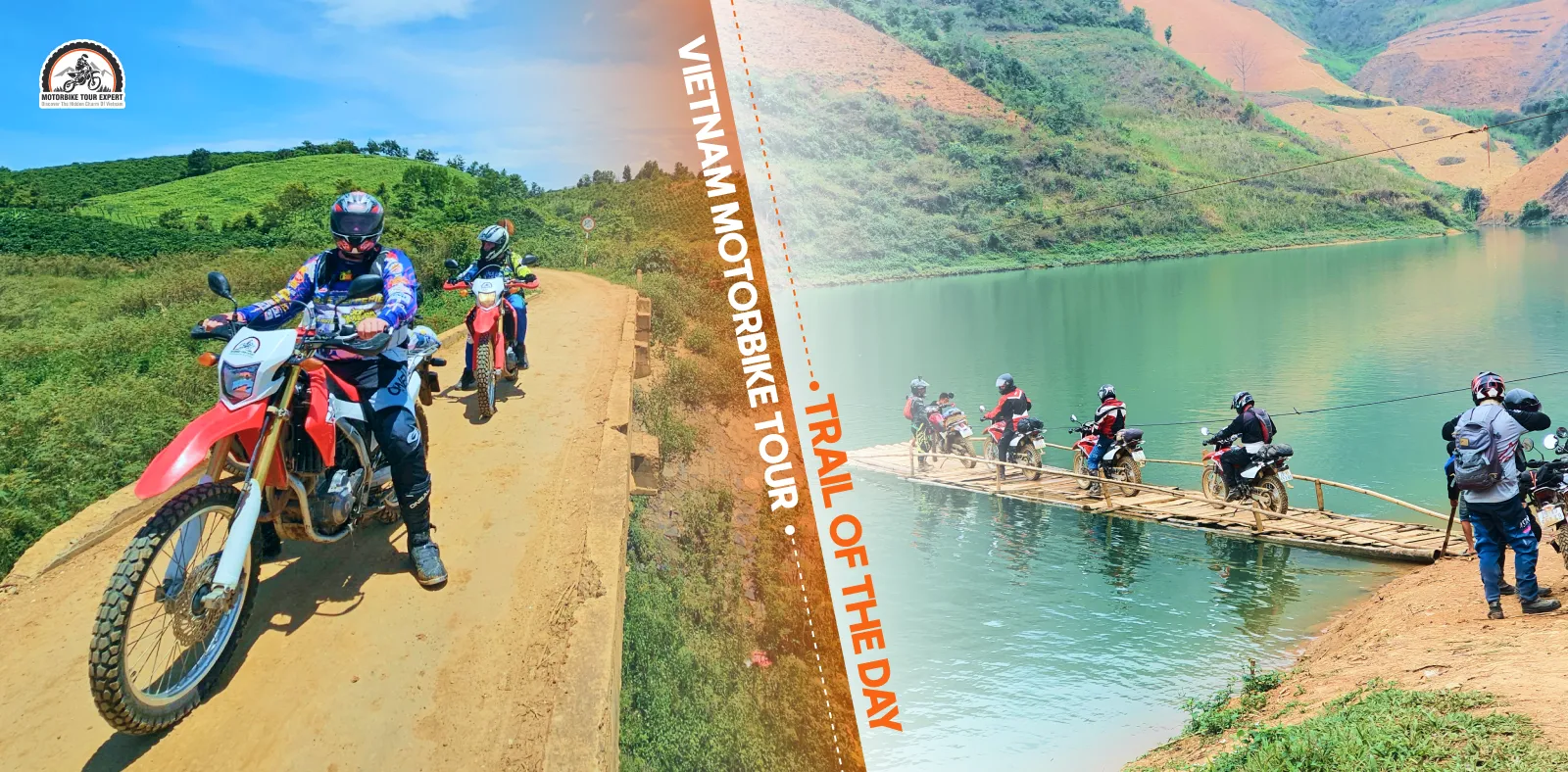
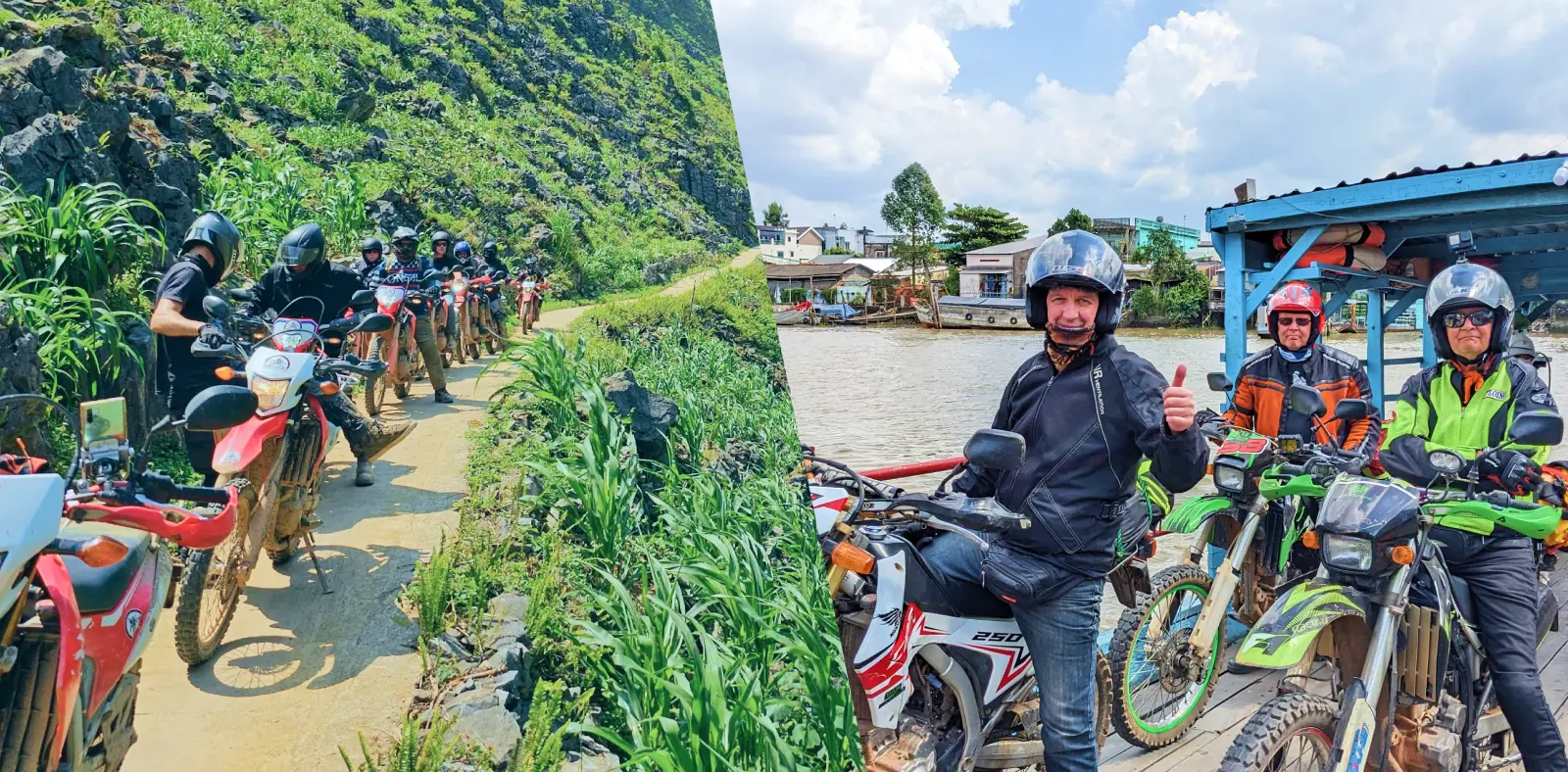

The right riding gear for Vietnam weather keeps you safe and comfortable through tropical heat, sudden downpours and chilly mountain passes. The formula is simple: breathable protective gear, a good rain suit and a few light thermal layers. This guide shows what to wear by region and season, so you can pack smart and skip gear you don’t need.
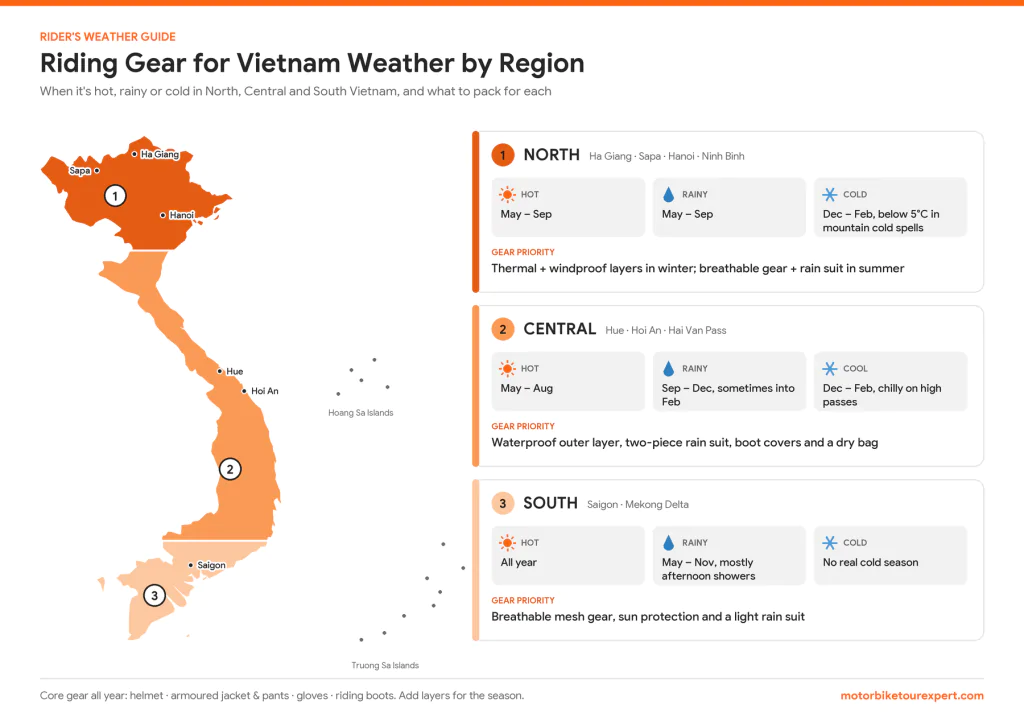
The table below shows Vietnam’s weather by region and the riding gear to focus on in each.
Vietnam Weather and Riding Gear by Region
|
Region |
Hot months |
Rainy months |
Cold months |
Gear focus |
|
North mountains (Ha Giang, Sapa) |
May – Aug, especially in lower valleys |
May – Sep |
Dec – Feb, sometimes below 5°C in cold spells |
Thermal layers + windproof gear |
|
North lowlands (Hanoi, Ninh Binh) |
May – Sep |
May – Sep |
Dec – Feb, with drizzle in Feb – Mar |
Breathable gear + rain suit |
|
Central coast (Hue, Hoi An, Hai Van Pass) |
May – Aug |
Sep – Dec, sometimes into Jan – Feb |
Cooler Dec – Feb, especially in Hue and on high passes |
Waterproof gear + rain protection |
|
South (Saigon, Mekong Delta) |
All year |
May – Nov, often afternoon showers |
No real cold season |
Mesh gear + sun protection |
Before thinking about extra layers, get the basics right. These seven essentials keep you protected and comfortable on long rides.
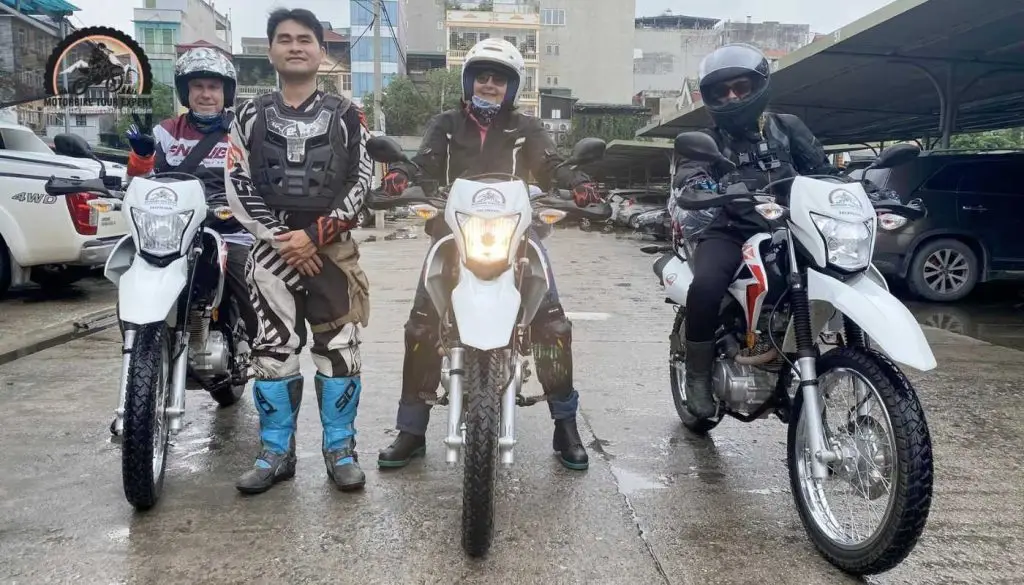
If you ride with Vietnam Motorbike Tour Expert, quality helmets, gloves, knee and elbow pads, body armour and a riding jersey are included in the tour price. That means you mainly need to pack boots, rain gear and layers for the season.
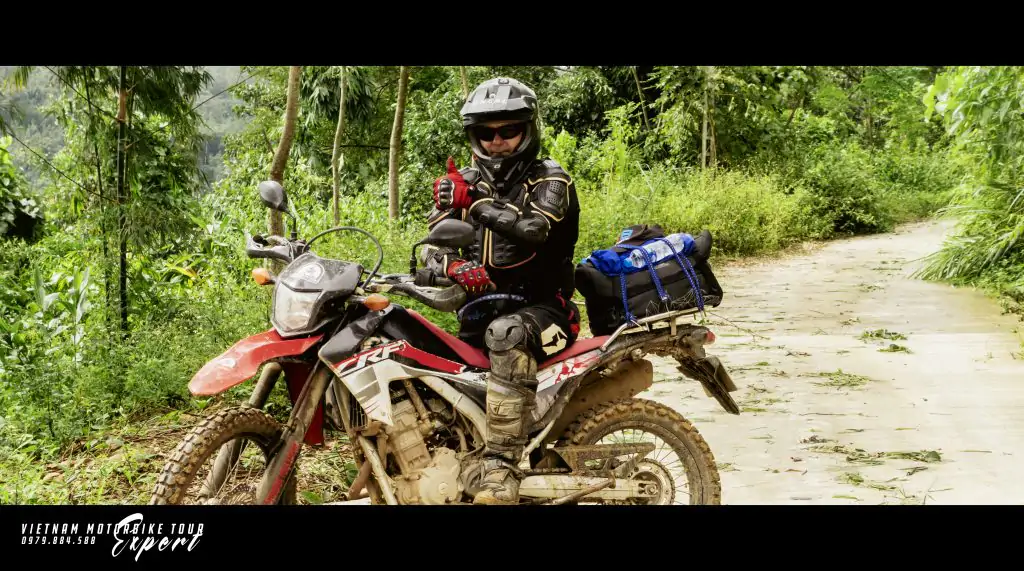
Sun, sudden rain and mountain fog can change your visibility quickly. A well-fitting helmet with good airflow and a clear visor helps you stay cool and see clearly.
Choose a safety-certified full-face or adventure helmet with adjustable vents. A clear, anti-fog visor is a must on mountain roads, while dark-tinted visors are best avoided in fog or low light.
Before you set off, check that the visor closes tightly and that you can adjust the vents while wearing gloves.
|
Bring or rent: Many guided tours provide helmets, so you may not need your own. Just check that it’s safety-certified, fits well and is in good condition. If you already have a comfortable certified helmet, it’s worth bringing. |
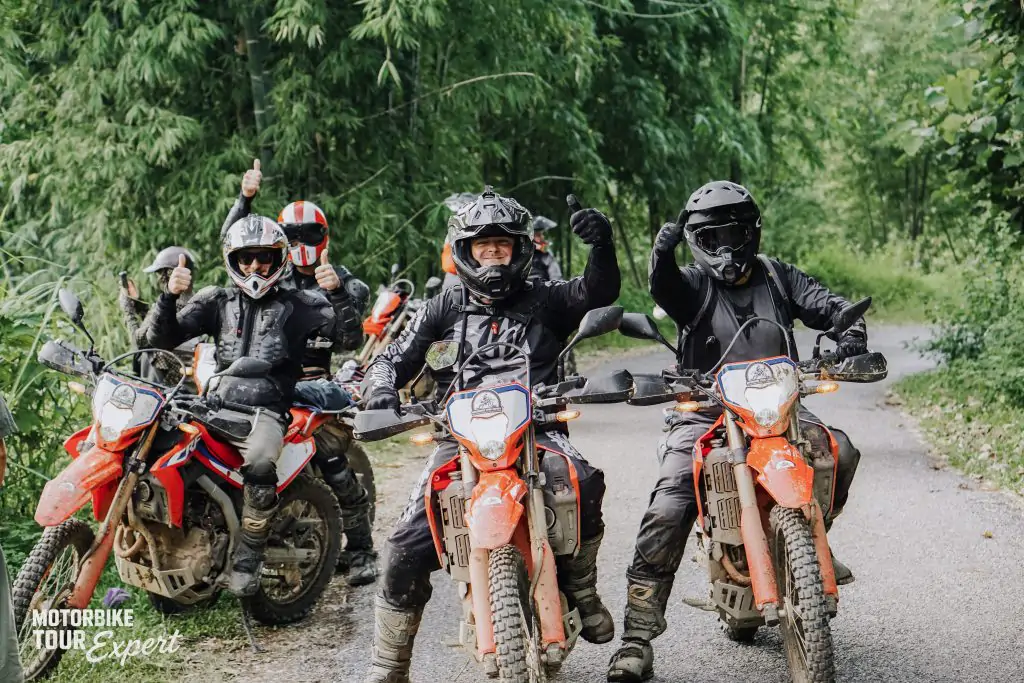
Vietnam is hot and humid, so your jacket needs plenty of airflow. But mountain rides can also bring cold wind and rain.
A breathable mesh or textile riding jacket with shoulder and elbow armour gives you a good balance of comfort and safety. For trips across different climates, pick one with removable thermal or windproof liners.
Even if your jacket is water-resistant, carry a separate waterproof layer for heavy rain.
|
Bring or rent: If you own a well-fitting riding jacket, bring it. If not, ask your tour operator what body armour is provided and whether your size is available. |
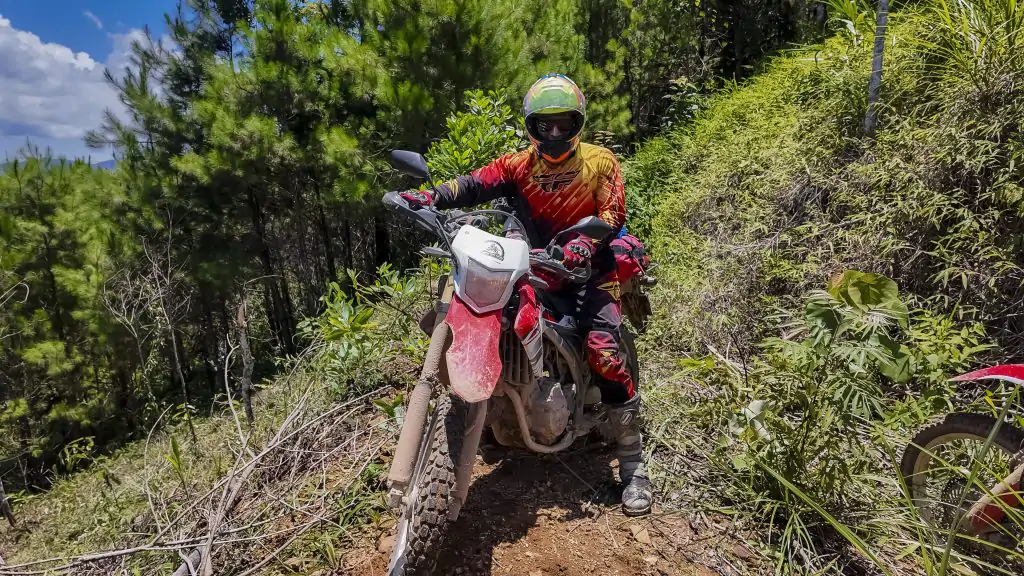
Hours in the saddle under tropical heat get uncomfortable without good ventilation. Your trousers still need to protect you on winding mountain roads and wet surfaces.
Look for abrasion-resistant textile or mesh riding pants with knee and hip armour. A comfortable fit and good vents help you move freely. When it’s cooler or wetter, simply add thermal leggings or waterproof overtrousers instead of packing a second pair.
|
Bring or rent: Your own riding pants are usually the better choice, as fit matters on long rides. Some tours provide knee guards, so ask what’s included before you pack. |
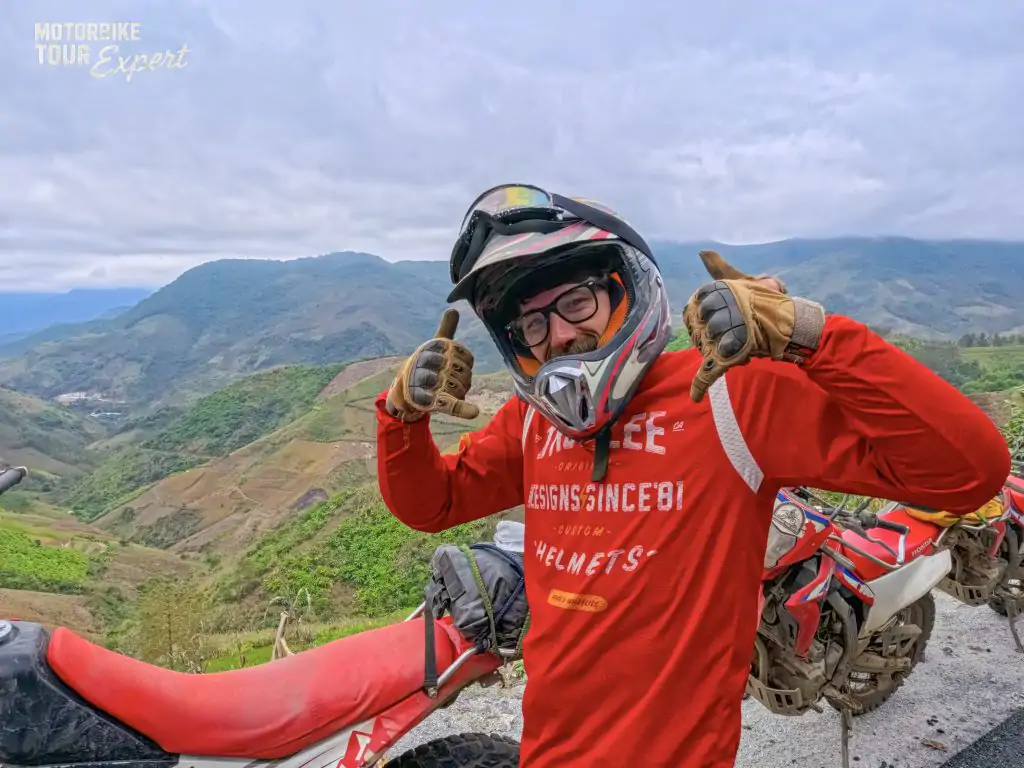
Your hands face wind, heat and rain all day. Sweaty palms, wet fingers or cold can make it harder to grip the handlebars and use the controls.
For warm weather, breathable full-finger gloves with palm and knuckle protection work well. Add waterproof gloves for the rainy season and insulated ones for winter in the north.
Whatever you choose, make sure they fit snugly and don’t restrict your fingers when braking or using the throttle.
|
Bring or rent: Many tours provide gloves, but your own pair gives a better fit, especially if you need waterproof or thermal protection. |
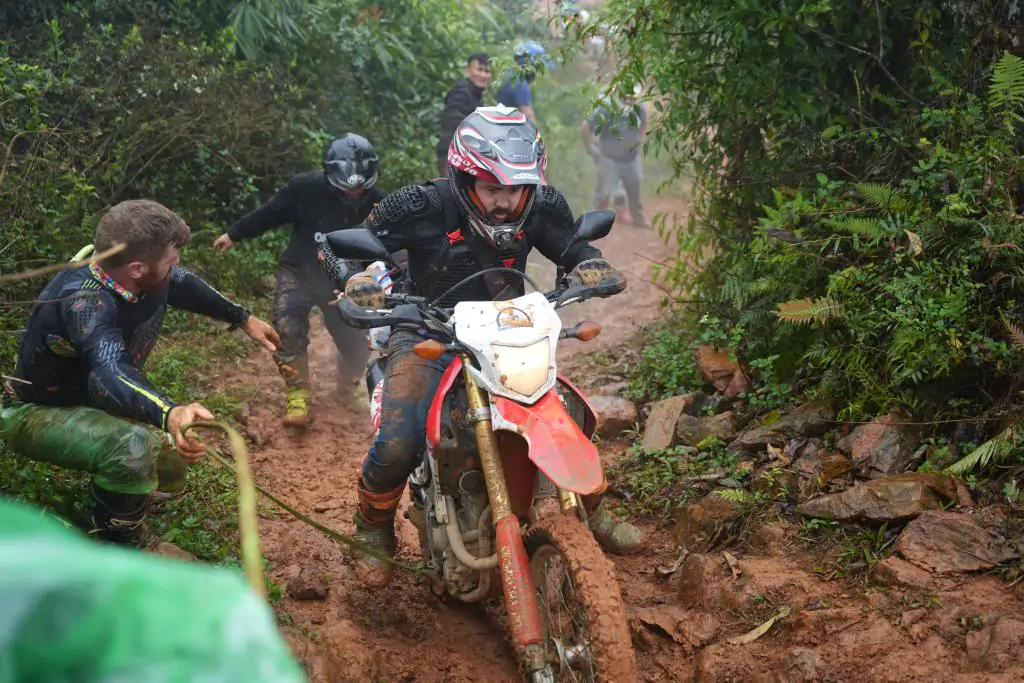
Wet roads, mud and uneven mountain ground make good footwear important in Vietnam. Your boots should protect your feet and ankles and still be comfortable for short walks at sightseeing stops.
Choose over-the-ankle motorcycle boots with slip-resistant soles and a secure fit. Waterproof boots are handy in the rain, though boot covers also do the job.
|
Bring or rent: Bring your own boots. Not every tour provides them, and larger sizes can be hard to find in Vietnam. |
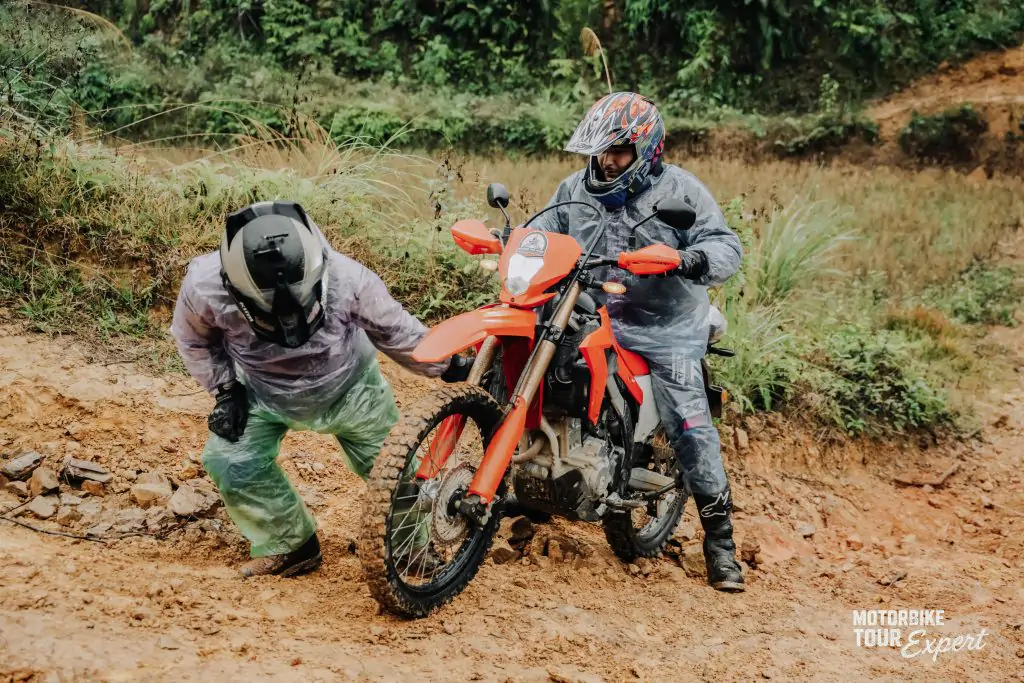
Tropical showers can arrive with little warning, especially in the rainy season in the north and south, and in autumn on the central coast. Keep your rain gear within easy reach so you can stay dry without long stops.
A two-piece waterproof motorcycle rain suit is the most practical choice. Pick a light one that fits over your riding gear, with adjustable cuffs and ankles to keep water out and reflective details for poor visibility.
Avoid loose ponchos that flap in the wind or catch on the bike. Boot covers and a dry bag will help protect your feet and belongings.
|
Bring or rent: Some tours provide rain suits, but quality and sizing vary, so confirm with your operator or bring your own. Try it on over your riding gear before the trip. |
Even in tropical Vietnam, northern mountain routes can get surprisingly cold in winter. Wind and damp air make it feel even colder, especially on exposed passes around Ha Giang and Sapa.
Instead of a bulky winter jacket, pack light thermal layers you can add or remove. A moisture-wicking base layer, a thin insulating top and a windproof outer shell work well together. A neck gaiter, warm socks and insulated gloves also make a big difference.
|
Bring or rent: Pack your own thermal clothing if you’re visiting Ha Giang or Sapa between November and March. These items are light, easy to carry and not always provided by tour operators. |
>> For a full overview of protective equipment, see our Motorcycle Gear Guide.
Once you know your route and dates, choosing gear gets much easier. The table below shows what to wear and which extra items to pack for each region and season.
Riding gear for Vietnam weather by route and season
|
Route / season |
What to wear |
What to pack |
|
Ha Giang / Sapa, Nov – Mar |
Armoured riding gear, thermal base layer, windproof jacket |
Warm gloves, neck gaiter, rain suit, thermal socks |
|
Ha Giang / Sapa, Apr – Oct |
Ventilated armoured jacket and pants, riding gloves and boots |
Rain suit, light windproof layer for mountain passes |
|
Central coast, Sep – Dec |
Protective riding gear with a waterproof outer layer |
Reliable rain suit, boot covers, waterproof gloves, dry bag |
|
South & Mekong Delta, all year |
Breathable mesh gear, full-finger gloves, ventilated boots |
Light rain suit, sun protection, spare dry clothes |
|
North-to-south trip |
Breathable protective gear with removable thermal and windproof layers |
Rain gear, warm layers, waterproof luggage covers |
Your core gear stays the same all year: a helmet, armoured jacket and pants, gloves and riding boots. What changes is the layer you add for heat, rain or cold. On longer trips, a few light layers are easier to carry than several bulky outfits.
Check the forecast for every stage of your route, not just your starting point, especially before mountain passes.
>> Not sure when to go? Our Best Time to Motorbike in Vietnam guide can help. Heading north? See our Ha Giang Packing List and Packing for a North Vietnam Motorbike Trip guide.
Having the right gear is half the job. Knowing how to combine it is the other half. Here’s what to wear in each situation.
Long hours in tropical heat call for breathable gear that lets air flow without cutting back on protection.
What to wear: A ventilated full-face helmet with a clear visor, a moisture-wicking base layer under an armoured mesh jacket, breathable riding pants, light full-finger gloves and ventilated boots.
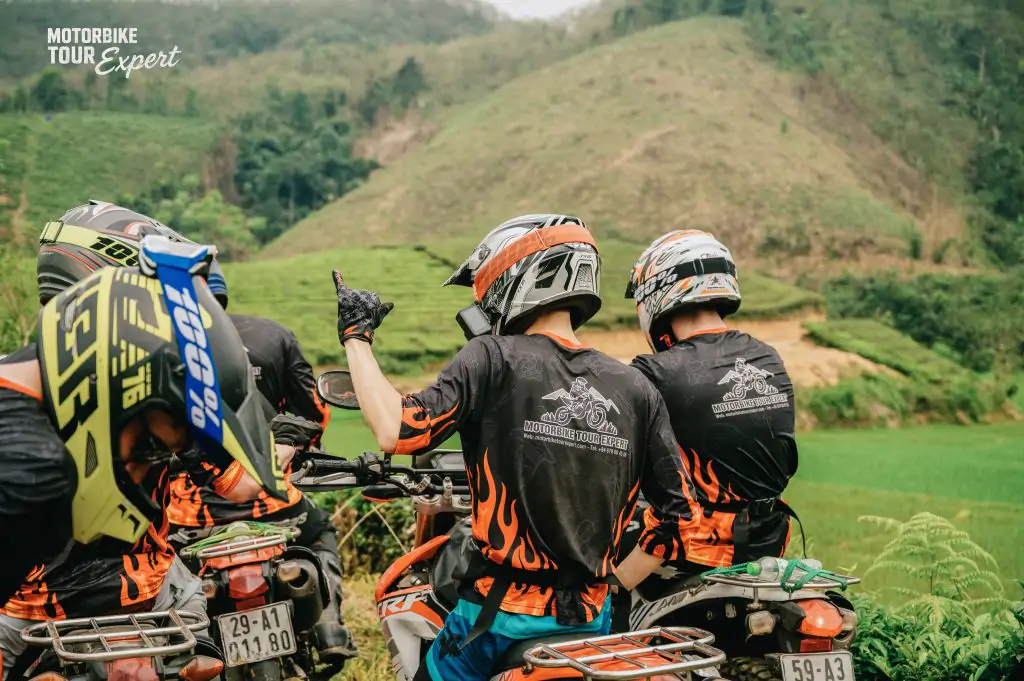
Riding tips: Drink water often and rest in the shade to avoid overheating. Plan longer rides for the cooler morning and late afternoon hours.
T-shirts and shorts may feel cooler at first, but breathable riding gear is far safer on long journeys.
Heavy rain makes roads slippery and cuts visibility, especially on winding mountain routes. Good waterproof gear keeps you dry and in control of your bike.
What to wear: A full-face helmet with a clear, anti-fog visor, a waterproof jacket and pants over your riding gear, and waterproof gloves and boots. If your boots aren’t fully waterproof, add boot covers.
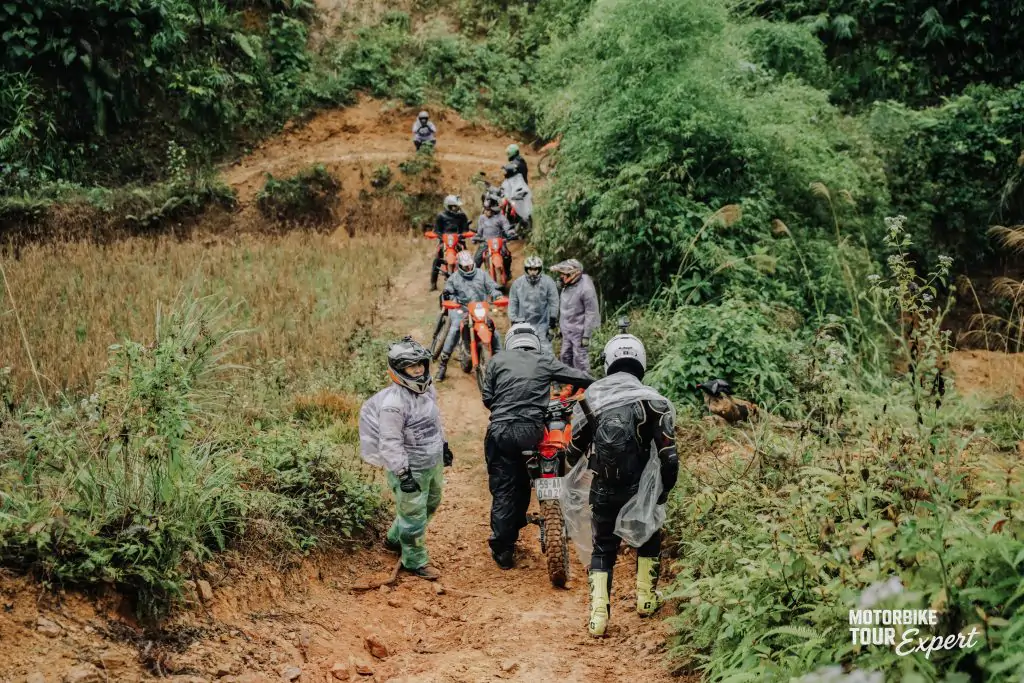
Riding tips: Slow down, leave more space and avoid sudden braking or sharp turns. Make sure your rain suit doesn’t cover the lights or catch on moving parts.
If heavy rain, flooding or landslides make the road unsafe, stop somewhere secure and wait. For more advice, read our Motorbike Safety Tips.
Winter rides through Ha Giang and Sapa can be surprisingly cold, especially up high, where strong wind and thick fog are common. You need to stay warm while keeping clear vision and free movement.
What to wear: A full-face helmet with an anti-fog visor, plus a thermal base layer, a light insulating top and an armoured jacket. Add a windproof or waterproof shell when needed.
Below the waist, wear thermal leggings under your riding pants. Finish with insulated gloves, warm socks, riding boots and a neck gaiter.
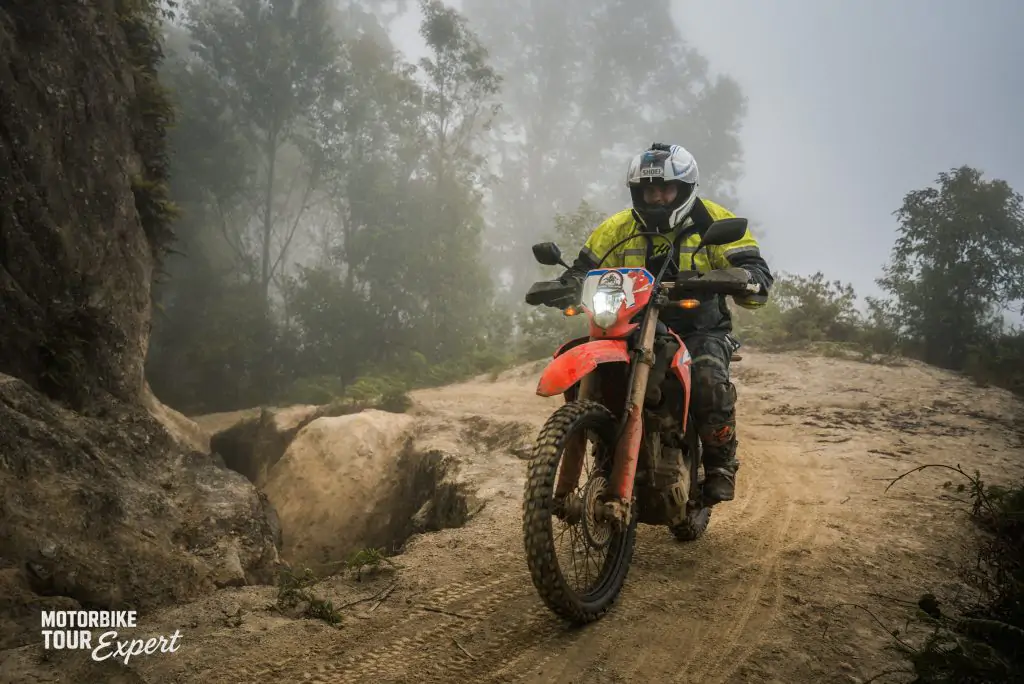
Riding tips: Wear layers you can take off when you ride down into warmer valleys. Keep your gloves and socks dry, and make sure your fingers stay warm enough to use the controls.
In fog, slow down. Stop if visibility becomes dangerously poor or the road turns icy. Planning a winter trip? Our Winter in Vietnam guide explains what to expect.
On routes like the Ha Giang Loop, you might start in a warm valley, meet cold wind on a pass and ride through rain later the same day. A flexible layering system handles all of it without bulky luggage.
What to wear: A ventilated helmet with a clear visor, a moisture-wicking base layer and a mesh or textile riding jacket with removable thermal and windproof liners. Add armoured riding pants, full-finger gloves and boots.
Keep a two-piece rain suit, boot covers and waterproof gloves close at hand.
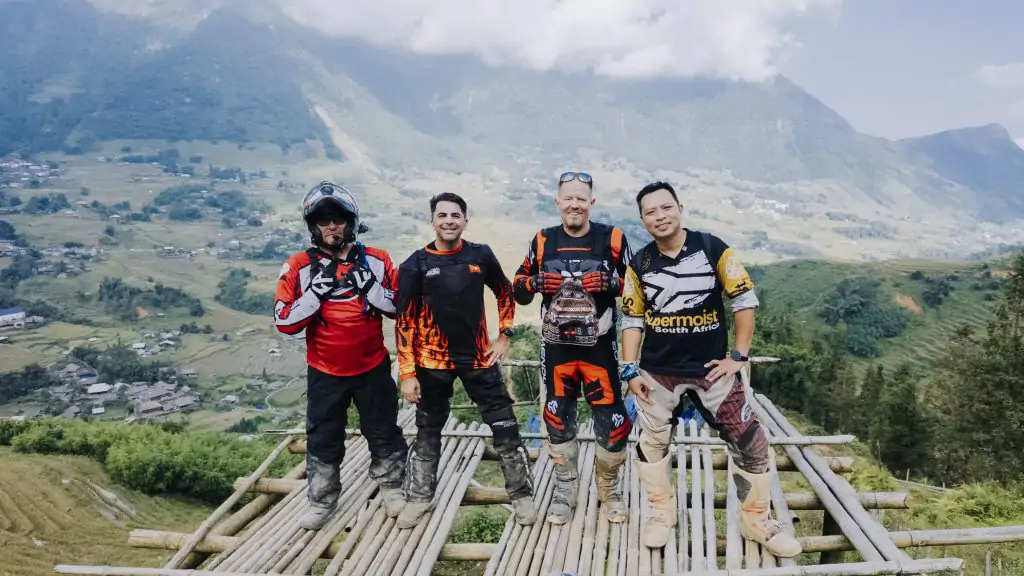
Riding tips: Build your outfit around your core protective gear, then add warmth or rain protection as needed. Store your rain suit, spare gloves and windproof layer where you can grab them quickly.
Check the forecast for each stage of the route and watch for changes in altitude. It’s always easier to change your clothes before a climb than halfway up a pass.
A few simple habits, from checking your gear to packing wisely, make a big difference on the road. Start by avoiding these common mistakes.
Common riding gear mistakes in Vietnam
|
Mistake |
What to do instead |
|
Skipping protective gear in the heat |
Wear breathable mesh riding gear instead of a T-shirt and shorts |
|
Using a loose rain poncho |
Wear a fitted two-piece rain suit that won’t flap or catch on the bike |
|
Underestimating the mountain cold |
Pack thermal layers, a windproof jacket and warm gloves for winter in Ha Giang or Sapa |
|
Riding in sandals or trainers |
Wear over-the-ankle riding boots |
|
Using rented gear without checking it |
Try on all tour-provided gear before you set off |
|
Packing rain gear deep in your bag |
Keep it at the top of your bag for sudden showers |
Should you bring gear from home or rent and buy in Vietnam? Many guided tours provide some protective gear, but a few personal items are worth bringing for fit and comfort. Use this table to decide.
Bringing vs renting or buying riding gear in Vietnam
|
Item |
Bring from home |
Rent / buy in Vietnam |
|
Helmet |
Recommended if you own a certified, well-fitting helmet |
Use a tour-provided helmet after checking its fit and condition |
|
Riding jacket / body armour |
Bring your own if it fits well |
Check what your tour provides or buy from a specialist shop |
|
Riding pants / knee pads |
Your own riding pants are best |
Some tours provide knee guards |
|
Gloves |
Best for a good fit or special weather protection |
Often provided by tours or sold in local shops |
|
Riding boots |
Best to bring your own |
Can be bought locally, but rentals are rare |
|
Rain suit |
Bring one if you already have a good set |
Some tours provide one; check before you go |
|
Thermal layers |
Recommended for winter mountain trips |
Sold locally, but buy them before heading to remote areas |
|
Neck gaiter / thermal socks |
Light and easy to pack |
Easy to find in larger towns and cities |
>> Need to buy gear locally? Check our Motorcycle Shops in Vietnam guide.
Before you set off, try on your helmet, gloves and protective clothing, and check all zips, straps and armour. Keep your rain suit, thermal layer and spare gloves where you can reach them quickly. Use waterproof bags for clothes, documents and electronics.
Ask your tour operator how your luggage will travel. With Vietnam Motorbike Tour Expert, a support vehicle is available as an optional extra at $150 per day. Review the forecast with your guide each day and change the route if heavy rain, fog, flooding or landslides make it unsafe.
Most importantly, pack light: a few versatile layers beat several bulky riding outfits. For a full list of what to bring, see our Vietnam Motorbike Packing Checklist.
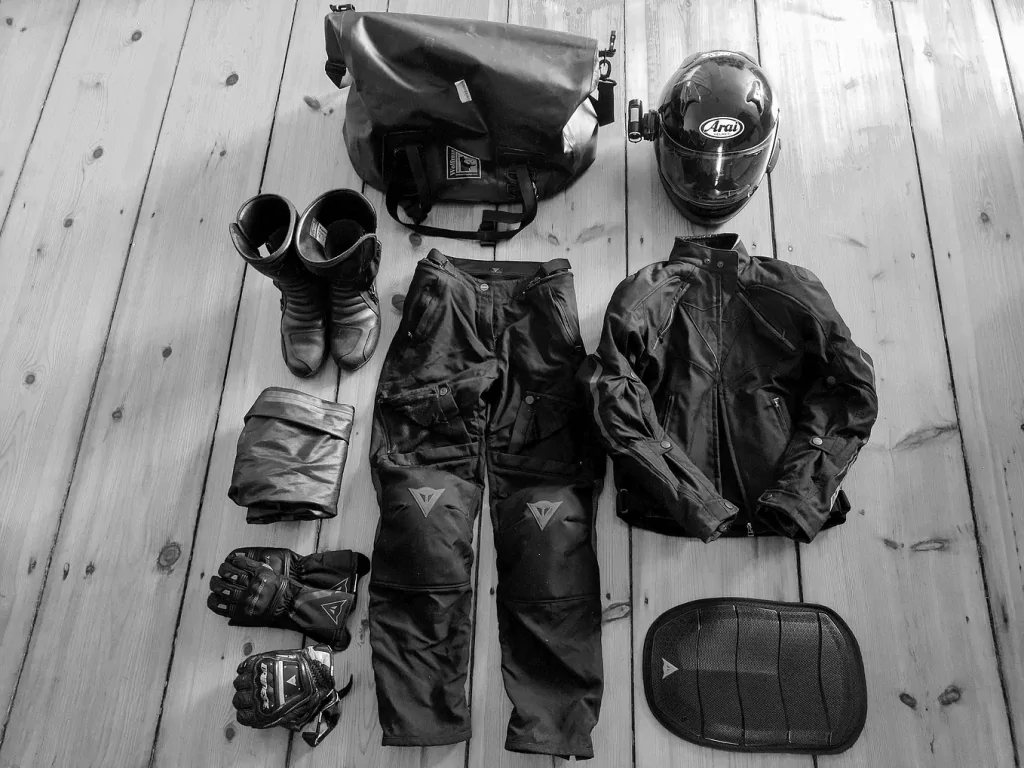
The right riding gear for Vietnam weather keeps you safe and comfortable in tropical heat, sudden rain and chilly mountain passes. Start with your core protective gear, add light layers for your route and season, and leave the extras at home.
Riding with Vietnam Motorbike Tour Expert? Helmets, gloves, knee and elbow pads, body armour and a riding jersey are already included in the tour price, so you can pack light and focus on the ride.
LET'S RIDE WITH US
 Duration:
4 Days/ 3 Nites
Destinations:
Hanoi - Vu Linh - Phu Yen - Moc Chau - Mai Chau - Hanoi.
Tour Level:
Chill Level Tours
 Duration:
9 Days / 8 Nites
Destinations:
Hanoi - Hanoi
Tour Level:
Chill Level Tours
 Duration:
8 Days/ 7 Nites
Destinations:
Hanoi - Ba Be lake
Tour Level:
Chill Level Tours
 Duration:
23 Days/22 Nights
Destinations:
Saigon - Hanoi
Tour Level:
Chill Level Tours
 Duration:
6 Days/ 5 Nights
Destinations:
Hanoi - Ha Giang
Tour Level:
Chill Level Tours
 Duration:
Day Trip
Destinations:
Hanoi
Tour Level:
Chill Level Tours
 Duration:
3 Days / 2 Nites
Destinations:
Hue - Hai Van Pass - Hoi An - Dong Giang - Hue
Tour Level:
Chill Level Tours
 Duration:
7 Days/ 6 Nites
Destinations:
Hoi An - Mai Chau
Tour Level:
Chill Level Tours
4-Day Northern Vietnam Motorbike Tour From Hanoi
 Duration:
4 Days/ 3 Nites
 Tour Level:
Chill Level Tours - Moderate Level Tours
Experience the authentic Vietnam
Ride off the beaten track
Visit beautiful Thac Ba Lake
Interact with lovely local people
Riding some scenic offroad tracks
Enjoy a variety of local foods
9-Day Northwest Loop – Vietnam Motorcycle Tour
Duration:
9 Days / 8 Nites
Tour Level:
Chill Level Tours - Moderate Level Tours
Visit all the "must see" of Northwest Vietnam
Ride off the beaten track
Experience the authentic Vietnam
Ride beautiful offroad tracks
Interact with lovely local people
Visit the historical Dien Bien Phu
8-Day Vietnam Motorbike Tour to Sapa and Ha Giang
Duration:
8 Days/ 7 Nites
Tour Level:
Challenging Level Tours - Moderate Level Tours
Explore the Real Vietnam
Interact with lovely local people
Ride off the beaten track
See amazing nature in North Vietnam
Scenic offroad tracks
Discover a variety of local culture
23-Day Top Gear Tour Through Vietnam
Duration:
23 Days/22 Nights
Tour Level:
Challenging Level Tours - Moderate Level Tours
Experience the authentic Vietnam
Visit all the most beautiful places in Vietnam
Interact with lovely local people
Ride scenic offroad trails & coastlines
Enjoy a variety of local foods
Ride off the beaten track
6-Day Offroad Motorbike Tour to Northeast Vietnam
Duration:
6 Days/ 5 Nights
Tour Level:
Challenging Level Tours - Moderate Level Tours
Ride beautiful Ha Giang loop
Interact with lovely local people
Experience authentic Vietnam
Enjoy scenic off-road trails
Ride off the beaten path
Visit all the "Must-See" in North Vietnam
Hanoi Motorbike Tours
Duration:
Day Trip
Tour Level:
- Off the beaten track
- Motobike tour with local driver
- Meeting more friend long life
- Try Vietnam cuisine
- Meditation/ swimming on waterfall
- Family Dinner and more
3-Day Central Vietnam Motorbike Tour from Hue
Duration:
3 Days / 2 Nites
Tour Level:
Chill Level Tours
Experience authentic Vietnam
Ride off the beaten path
Enjoy scenic off-road trails
Ride historical Ho Chi Minh trail
Interact with lovely local people
Discover the hidden charm of Hue
7-Day Motorbike Tour on Ho Chi Minh Trail from Hoi An
Duration:
7 Days/ 6 Nites
Tour Level:
Experience the authentic Vietnam
Explore the Ho Chi Minh trail
Ride off the beaten track
Interact with lovely local people
Beautiful Coastlines
Enjoy a variety of local foods