Your message has been sent. Thank you!
 Your message has been sent. Thank you!
I'm ready to book
Hmm, I still need more information
My information
Detailed information
From $ USD
Ho Chi Minh Trail Motorcycle Tour – 12 Days

Duration:
12 Days/ 11 Nites

Destinations:
Hanoi - Nha Trang

Tour Level:
More offroad (>40%)

Highlight:
Destination:
Ha Noi
Mai Chau
Tan Ky
Phong Nha
Ke Bang National park
Khe Sanh
Vinh Moc tunnels
Hue
Da Nang
Hoi An
Kon Tum
Buon Me Thuat
Lak Lake
Nha Trang
Pickup from:
Hanoi, Airport or any hotel in Ha Noi city
Suitable Bikes:
Honda XR150L, Honda CRF300L,


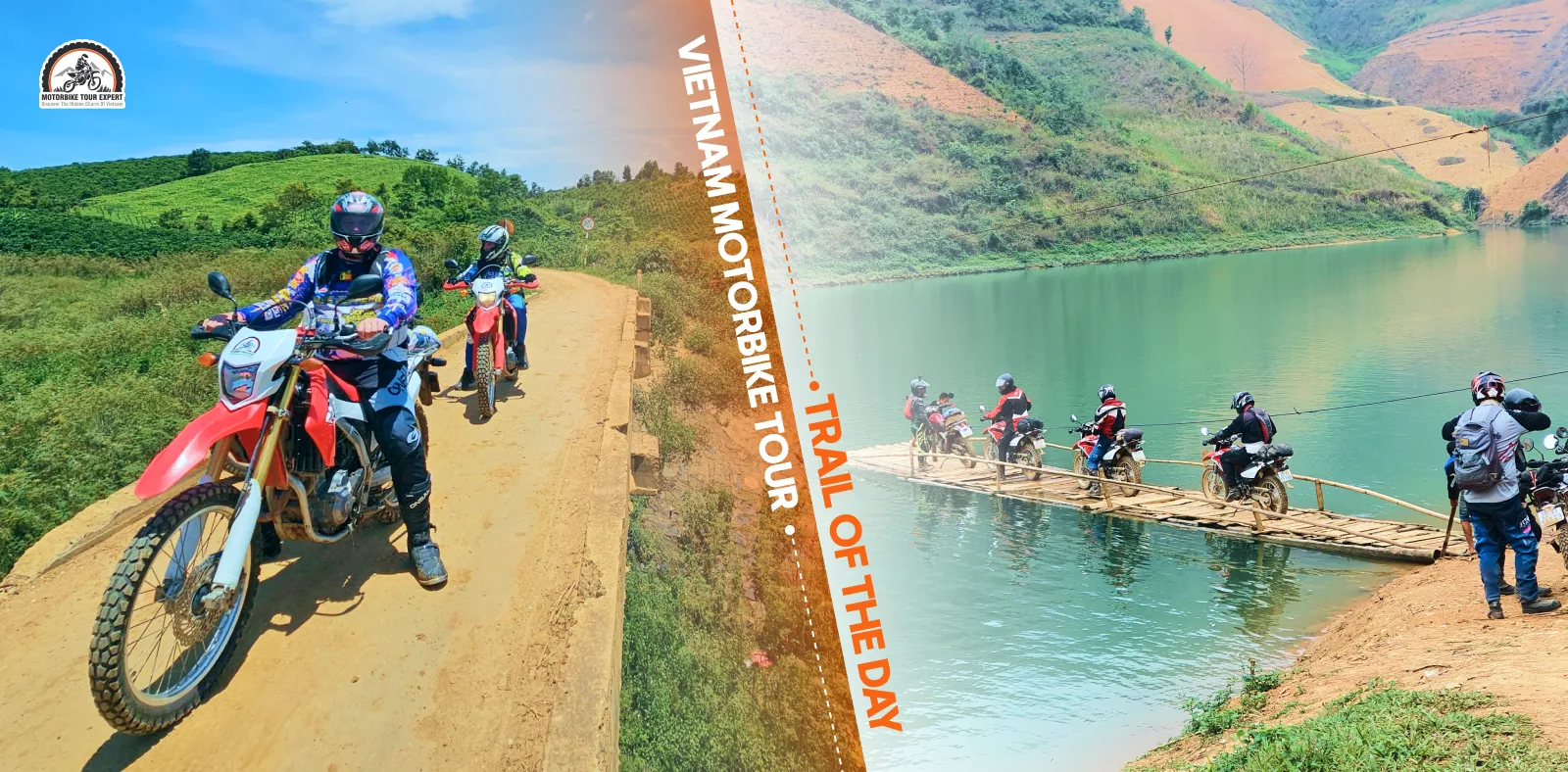

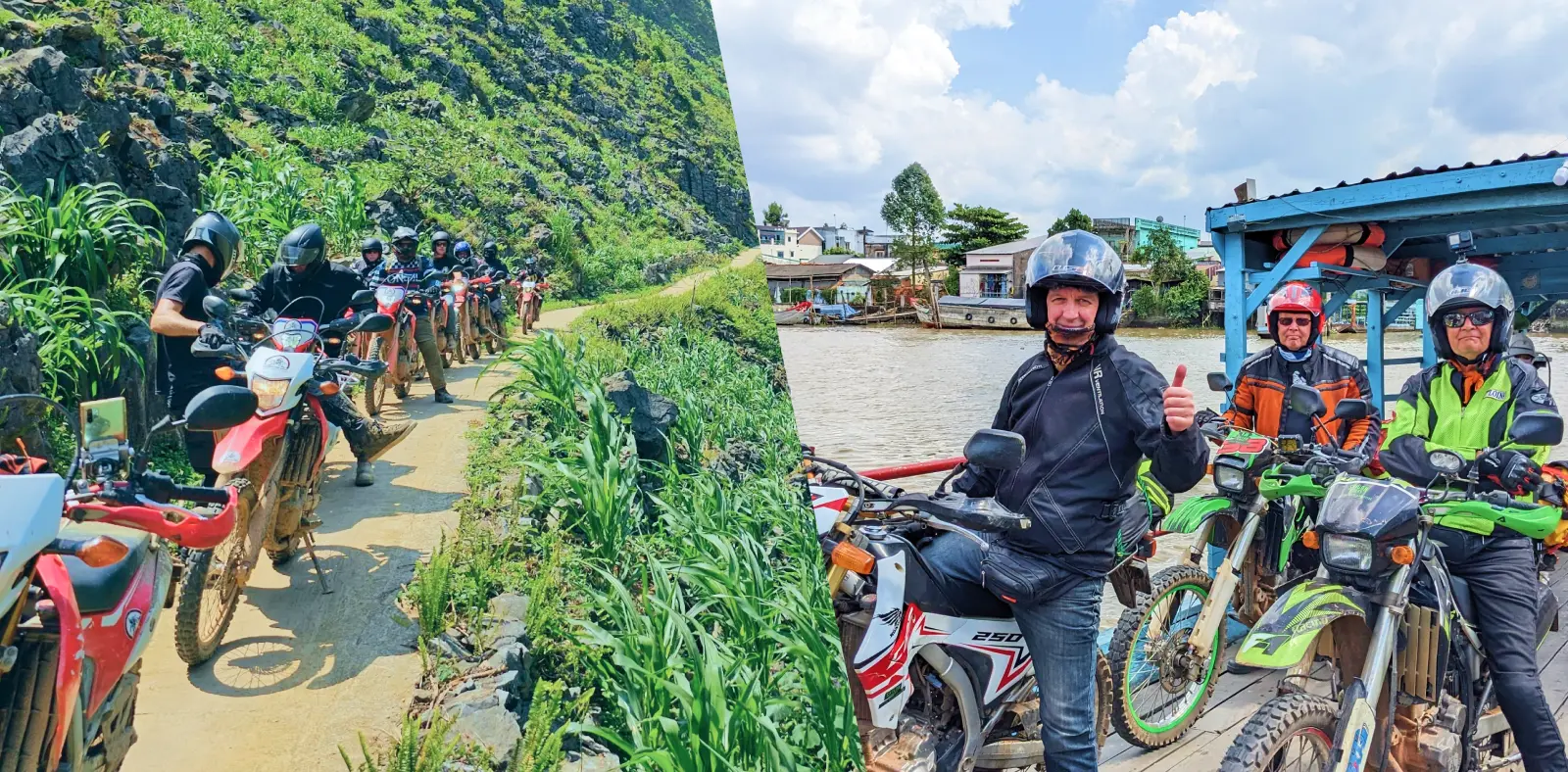

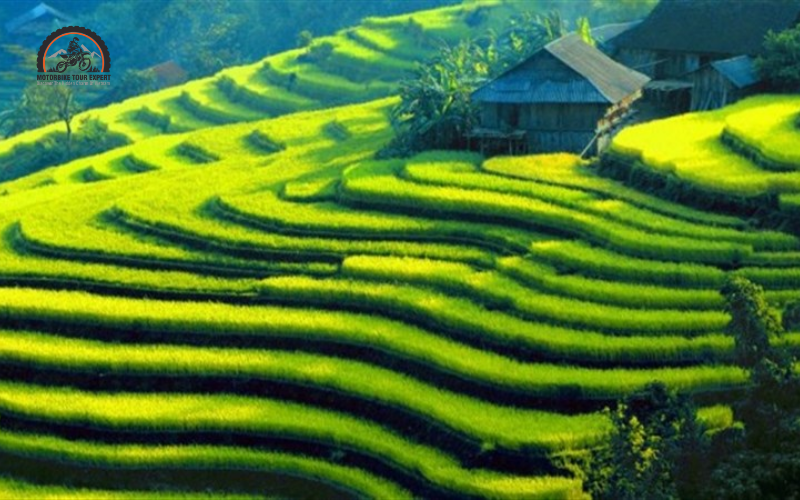
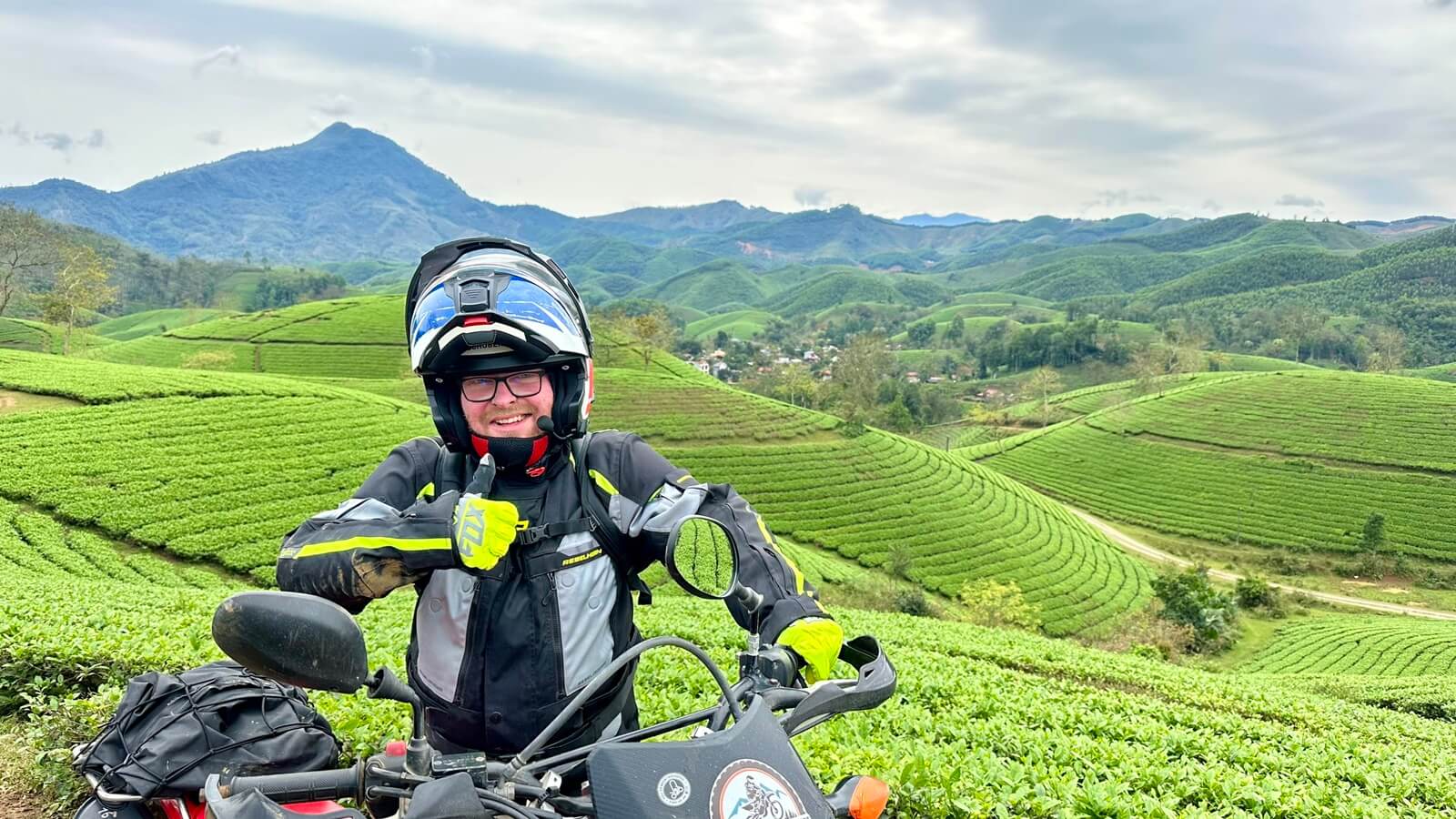
The magnificent terraced fields scattered across Vietnam’s northern mountains represent one of the country’s most breathtaking agricultural achievements. These stepped landscapes, carved into steep hillsides by generations of ethnic minority communities, showcase the remarkable harmony between human ingenuity and natural terrain. This comprehensive guide by Vietnam Motorbike Tour Expert will explore the beauty, history, and significance of these remarkable landscapes.
Terraced fields are agricultural landscapes created by cutting horizontal steps into steep mountain slopes. This technique allows farmers to cultivate crops, primarily rice, on land that would otherwise be unsuitable for farming. The terraces prevent soil erosion, and the intricate irrigation systems keep crops thriving by managing water flow from higher elevations down through the fields.
This agricultural practice is a remarkable feat of engineering, requiring precision and deep knowledge of local terrain, weather, and water systems. The traditional methods of building these fields are passed down through generations, ensuring that these landscapes are not only productive but also sustainable.
>>>Read more: Thien Phuc Duc Hill Dalat: Scenic Views & Cloud Hunting

The terraced fields of Vietnam’s northern mountains are not just agricultural marvels; they embody centuries of knowledge, adaptation, and a deep bond between ethnic minority communities and their land. These agricultural systems have evolved over time, serving as powerful symbols of creativity, resilience, and sustainability.
Ethnic groups such as the H’Mong, Dao, and Tay have transformed steep mountain slopes into thriving farmlands through generations of careful cultivation. The process of creating and maintaining terraced fields requires an intimate understanding of the local terrain, climate, and soil. This expertise, passed down through generations, is grounded in oral traditions and practical, hands-on experience.
Building and sustaining these terraced landscapes demands significant collective effort. Entire villages collaborate, strengthening communal bonds and fostering a sense of shared purpose. This spirit of cooperation extends beyond farming, influencing various aspects of social and cultural life.
>>>Read more: 10+ Top Things to Do Nha Trang for an Unforgettable Trip
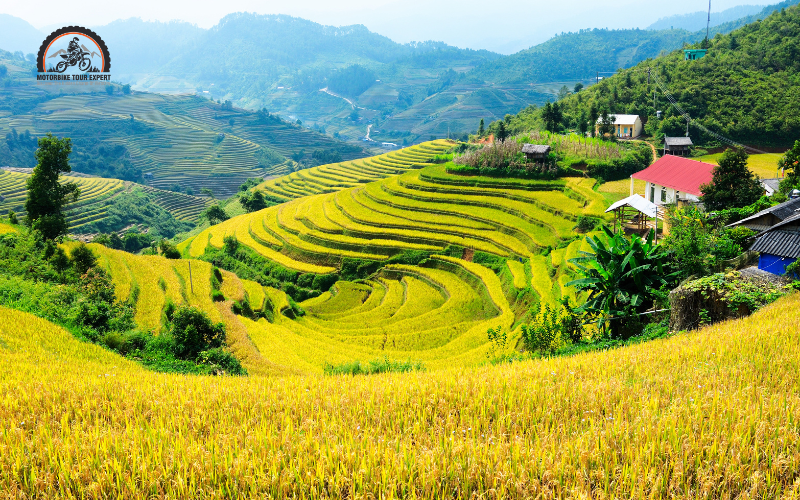
Traditional rituals and festivals associated with the terraced fields further highlight the spiritual connection these communities share with their land. These ceremonies express gratitude for the natural elements that ensure favorable weather, abundant harvests, and the continued fertility of the land.
Over time, terraced fields have become more than just a means of food production; they are central to regional cultural identity. They stand as living examples of how traditional knowledge can support sustainable agricultural practices while preserving the environmental integrity of the region. The terraced fields of northern Vietnam offer a profound insight into the harmony between humans and nature, reflecting both the ingenuity and the resilience of the communities that continue to cultivate them.
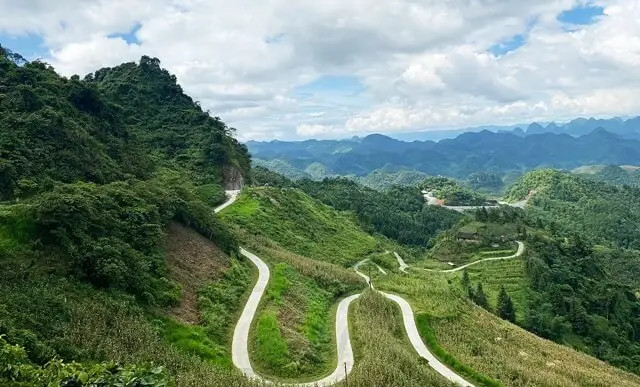
Exploring the terraced fields of northern Vietnam offers a unique opportunity to experience both natural beauty and local culture. Travelers can choose between guided tours or independent exploration, with many opting to navigate the winding mountain roads by motorbike. This mode of travel provides access to remote villages and breathtaking viewpoints, offering a sense of freedom and adventure.
For those interested in a more immersive cultural experience, trekking tours present an excellent option. These guided excursions take you through the terraced fields, while also offering valuable insights into the farming practices and cultural traditions of the local ethnic communities. These tours provide a deeper understanding of how the terraces are built and maintained, and how they reflect the people’s connection to their land.
>>>Read more: Visit Street Food Market Ho Chi Minh City for Food Lovers

When visiting these working landscapes, it’s crucial to be respectful of both local customs and the environment. The terraced fields are not just picturesque sites—they are vital to the livelihood of the people. As such, visitors should refrain from disrupting farming activities. Additionally, always ask for permission before taking photographs of people, their homes, or their land to ensure cultural sensitivity. This mindful approach will enrich your experience, allowing you to appreciate not only the beauty of the fields but also the deep-rooted traditions of the communities that sustain them.
Mu Cang Chai is one of the most famous locations to see terraced rice fields in Vietnam. Located about 280 kilometers from Hanoi, this district is home to 500 hectares of terraced fields, primarily in the La Pan Tan, Che Cu Nha, and De Xu communes. The H’Mong people, who inhabit these areas, have created a spectacular landscape that is now a National Heritage site.
The best time to visit Mu Cang Chai is during the harvest season (from late September to early October), when the fields are bathed in golden hues. The sight of rice terraces stretching across the hillsides is truly mesmerizing, and it’s a photographer’s dream. Visitors can also enjoy trekking tours through the terraces, offering a unique way to experience the landscape and local culture.
>>>Read more: Top 5 Most Famous Ho Chi Minh Night Market

Sapa, famous for its misty landscapes and cool climate, offers some of the most intricate and extensive terraced fields in the country. Located in the Muong Hoa valley, Sapa’s terraced fields cover more than 1,000 hectares and are maintained by several ethnic groups, including the H’Mong and Ha Nhi peoples.
The terraced fields in Sapa are especially beautiful during two distinct seasons: the water-pouring season in May, when the fields turn into giant mirrors reflecting the sky, and the harvest season from late September to early October, when the fields turn golden. A trek through the fields is a great way to explore Sapa’s rural life and witness the agricultural practices that sustain the local communities.
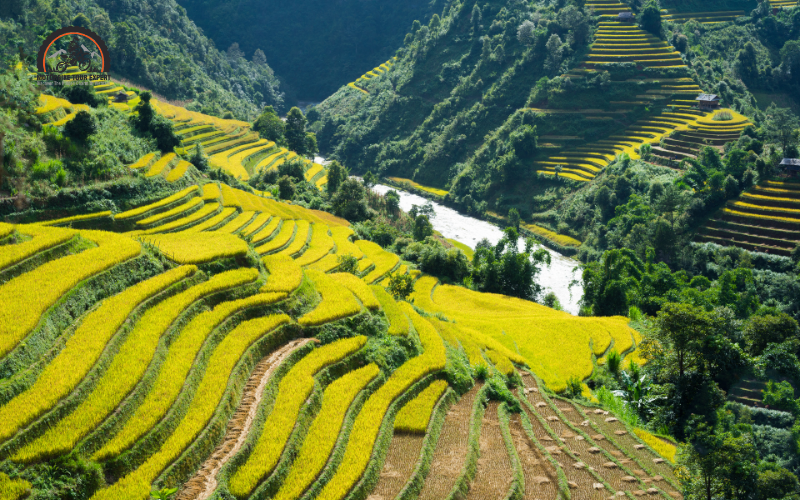
Hoang Su Phi, located in Ha Giang Province, is another must-visit destination for those interested in terraced fields. This area is known for its stunning landscapes and the brilliant golden colors of the rice terraces during harvest time. The Ban Phung and Ban Luoc communes in particular offer breathtaking views of terraced landscapes that cascade down the mountains.
The terraces here are not only beautiful but also a testament to the hard work of the local people. The intricate irrigation systems and careful design reflect the deep agricultural knowledge passed down through generations. Hoang Su Phi’s terraced fields are less touristy than those in Sapa or Mu Cang Chai, offering a more authentic and peaceful experience.
Vietnam Motorbike Tour Expert hopes this comprehensive exploration of terraced fields has provided valuable insights into these remarkable landscapes and their cultural significance. For travelers seeking authentic experiences of Vietnam’s mountain regions and traditional agricultural communities, terraced fields offer unforgettable opportunities to witness the harmonious relationship between human communities and their natural environment.
LET'S RIDE WITH US
 Duration:
4 Days/ 3 Nites
Destinations:
Hanoi - Vu Linh - Phu Yen - Moc Chau - Mai Chau - Hanoi.
Tour Level:
Chill Level Tours
Duration:
4 Days/ 3 Nites
Destinations:
Hanoi - Vu Linh - Phu Yen - Moc Chau - Mai Chau - Hanoi.
Tour Level:
Chill Level Tours
 Duration:
11 Days / 10 Nites
Destinations:
Hanoi - Hoi An.
Tour Level:
Chill Level Tours
Duration:
11 Days / 10 Nites
Destinations:
Hanoi - Hoi An.
Tour Level:
Chill Level Tours
 Duration:
4 Days / 3 Nites
Destinations:
Hanoi - Vu Linh
Tour Level:
Chill Level Tours
Duration:
4 Days / 3 Nites
Destinations:
Hanoi - Vu Linh
Tour Level:
Chill Level Tours
 Duration:
6 Days/ 5 Nites
Destinations:
Hanoi - Thac Ba lake
Tour Level:
Chill Level Tours
Duration:
6 Days/ 5 Nites
Destinations:
Hanoi - Thac Ba lake
Tour Level:
Chill Level Tours
 Duration:
7 Days / 6 Nites
Destinations:
Hanoi - Sapa
Tour Level:
Chill Level Tours
Duration:
7 Days / 6 Nites
Destinations:
Hanoi - Sapa
Tour Level:
Chill Level Tours
 Duration:
7 Days/ 6 Nights
Destinations:
Hanoi - Moc Chau - Sapa
Tour Level:
Chill Level Tours
Duration:
7 Days/ 6 Nights
Destinations:
Hanoi - Moc Chau - Sapa
Tour Level:
Chill Level Tours
 Duration:
15 Days/ 14 Nites
Destinations:
Hanoi - Ha Long bay
Tour Level:
Chill Level Tours
Duration:
15 Days/ 14 Nites
Destinations:
Hanoi - Ha Long bay
Tour Level:
Chill Level Tours
 Duration:
4 Days/ 3 Nites
Destinations:
Hanoi - Thac Ba lake
Tour Level:
Chill Level Tours
Duration:
4 Days/ 3 Nites
Destinations:
Hanoi - Thac Ba lake
Tour Level:
Chill Level Tours
4-Day Northern Vietnam Motorbike Tour From Hanoi
 Duration:
4 Days/ 3 Nites
Duration:
4 Days/ 3 Nites
 Tour Level:
Chill Level Tours - Moderate Level Tours
Tour Level:
Chill Level Tours - Moderate Level Tours
Experience the authentic Vietnam
Ride off the beaten track
Visit beautiful Thac Ba Lake
Interact with lovely local people
Riding some scenic offroad tracks
Enjoy a variety of local foods
11-Day Top Vietnam Motorbike Tour
Duration:
11 Days / 10 Nites
Tour Level:
Chill Level Tours - Moderate Level Tours
Discover the legendary Ho Chi Minh trail
Learn a lot about Vietnam war history
Ride off the beaten track
Experience the authentic Vietnam
Interact with lovely local people
Ride some beautiful coastlines
4-Day Short North Vietnam Motorbike Tour
Duration:
4 Days / 3 Nites
Tour Level:
Chill Level Tours - Moderate Level Tours
Experience the authentic Vietnam
Interact with lovely local people
Visit beautiful Thac Ba lake
Ride off the beaten track
Enjoy a variety of local foods
Ride some scenic offroad tracks
6-Day Northwest Loop Motorbike Tour Vietnam
Duration:
6 Days/ 5 Nites
Tour Level:
Chill Level Tours - Moderate Level Tours
Experience the authentic Vietnam
Explore the hidden gems in Northwest
Visit beautiful Sapa
Ride off the beaten track
Enjoy great local food
Interact with lovely local people
7-Day Motorbike Tour In North Vietnam
Duration:
7 Days / 6 Nites
Tour Level:
Chill Level Tours - Moderate Level Tours
Experience authentic Vietnam
Interact with lovely local people
Ride off the beaten path
Visit all the "Must-See" in North
Enjoy scenic off-road trails
Learn about Vietnamese culture
7-Day Amazing Motorbike Tour To The Hidden Lands Vietnam
Duration:
7 Days/ 6 Nights
Tour Level:
Chill Level Tours - Moderate Level Tours
Discover hidden charms of Northwest Vietnam
Ride fun offroad
Experience the authentic Vietnam
Experience beautiful Sapa
Interact with lovely local people
Ride off the beaten track
Hanoi Street Food Tour
Duration:
15 Days/ 14 Nites
Tour Level:
Experience the authentic Vietnam
Explore beautiful nature in North Vietnam
Interact with lovely local people
Ride scenic offroad trails
Ride off the beaten track
Visit Natural Heritage Ha Long Bay
4-Day Northwest Vietnam Motorbike Tour
Duration:
4 Days/ 3 Nites
Tour Level:
Chill Level Tours - Moderate Level Tours
Experience the authentic Vietnam
Visit beautiful Thac Ba lake
Interact with lovely local people
See the quiet countryside Vietnam
Ride off the beaten track E
Enjoy great local food