Your message has been sent. Thank you!
 Your message has been sent. Thank you!
I'm ready to book
Hmm, I still need more information
My information
Detailed information
From $ USD
Ho Chi Minh Trail Motorcycle Tour – 12 Days

Duration:
12 Days/ 11 Nites

Destinations:
Hanoi - Nha Trang

Tour Level:
More offroad (>40%)

Highlight:
Destination:
Ha Noi
Mai Chau
Tan Ky
Phong Nha
Ke Bang National park
Khe Sanh
Vinh Moc tunnels
Hue
Da Nang
Hoi An
Kon Tum
Buon Me Thuat
Lak Lake
Nha Trang
Pickup from:
Hanoi, Airport or any hotel in Ha Noi city
Suitable Bikes:
Honda XR150L, Honda CRF300L,


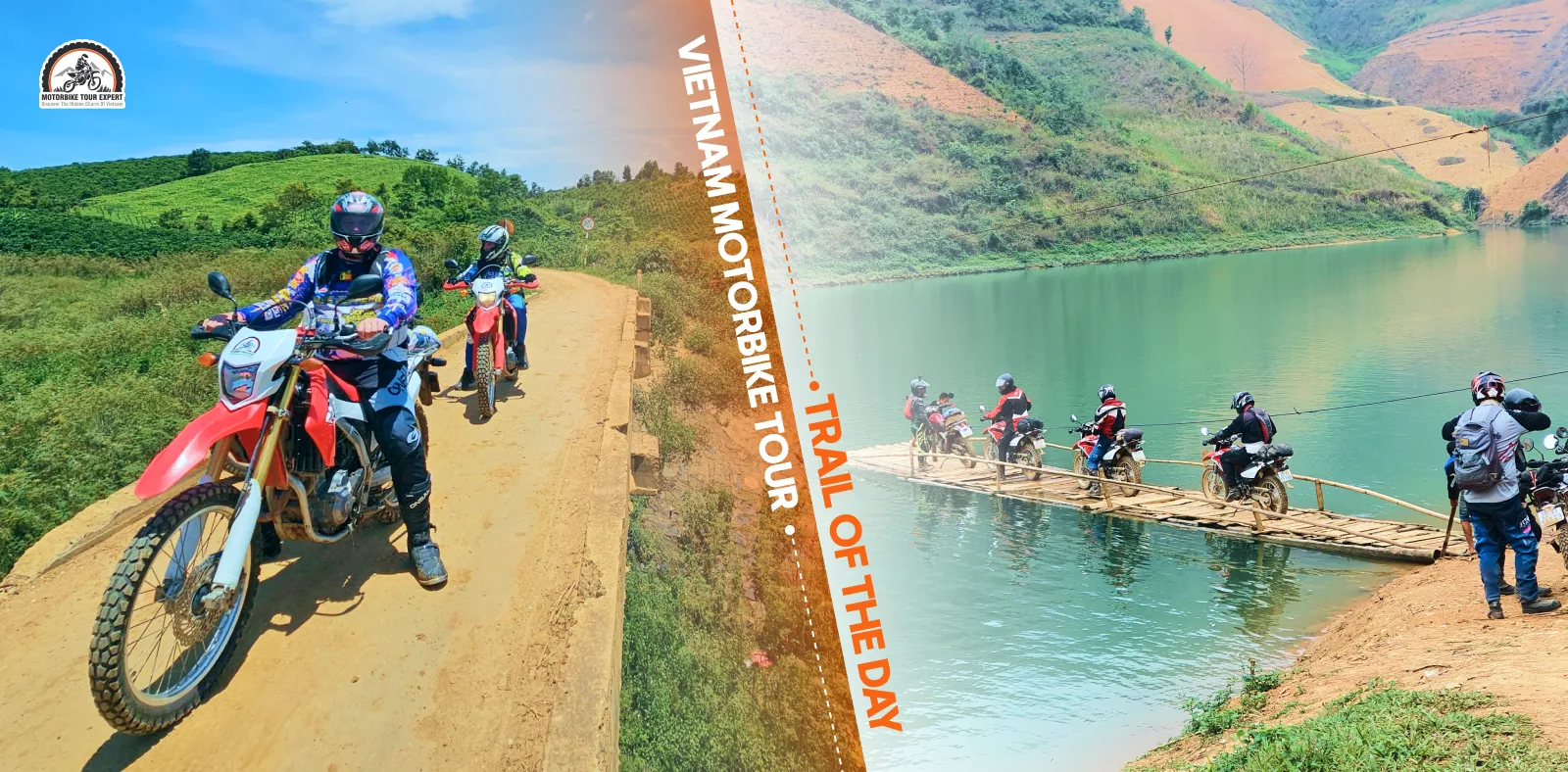



Phu Lang pottery village is a 13th-century craft village in Bac Ninh Province renowned for its unglazed stoneware and unique eel-skin glazes. For travelers seeking an authentic alternative to commercialized tourist spots, Vietnam Motorbike Tour Expert recommends this destination as a prime example of living heritage.
| Category | Key Information |
|---|---|
| Location | Phu Lang Commune, Que Vo District, Bac Ninh Province |
| Distance from Hanoi and Transportation Options |
|
| Historical Significance | Founded in the 13th century (Tran Dynasty); recognized as National Intangible Cultural Heritage in 2016 |
| Famous For | Red clay pottery with “Eel Skin” glaze (da lươn); traditional wood-fired ceramics |
| Main Products | Garden pots, decorative tiles, ceremonial jars, “Tu Linh” (sacred animal) statues |
| Best Time to Visit | October to April (dry season) for outdoor pottery displays and optimal photography |
| Main Activities | Hands-on pottery workshops, village photography walks, direct shopping from artisans |
| Ideal For | Cultural travelers, photographers, families, “slow travel” enthusiasts |
| Entry Fee | Free (individual workshops may charge for hands-on classes) |
| Tips | Always ask permission before photographing artisans or entering family homes |
At Vietnam Motorbike Tour Expert, we often explain to our riders that Phu Lang pottery village is one of the three ancient pottery centers of Northern Vietnam, standing proudly alongside Bat Trang and Tho Ha. While Bat Trang creates polished porcelain and Tho Ha was known for blue stoneware, Phu Lang has carved its own path with rustic, durable stoneware that reflects the earthiness of the Red River Delta.
The village’s lineage is deeply rooted in Vietnamese history. According to local records and oral traditions we have verified, the craft was founded in the 13th century during the Tran Dynasty. The progenitor of the craft, Luu Phong Tu, was an envoy sent to China. During his time there, he learned advanced pottery techniques and, upon his return, taught these skills to the villagers on the banks of the Luc Dau River.
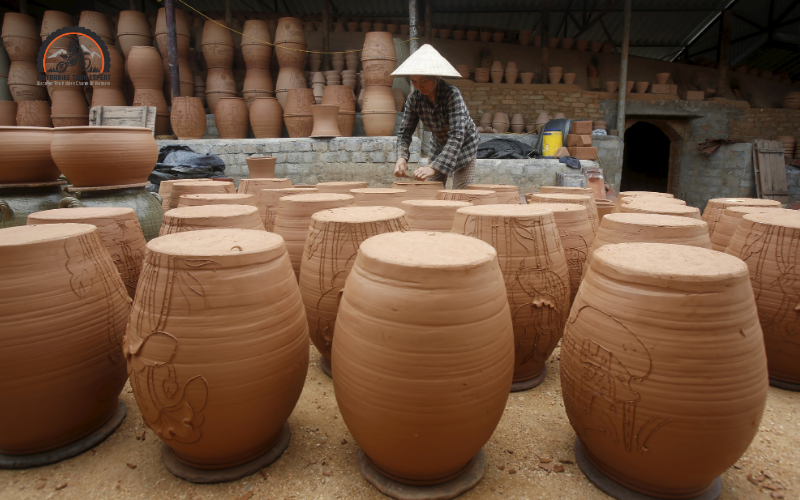
The cultural significance of Phu Lang pottery village was formally recognized when it was designated as a National Intangible Cultural Heritage in 2016. This isn’t just a title; it validates the centuries of skill passed down through families. We have seen artifacts from this village dating back to the 17th and 19th centuries displayed in the Vietnam National Museum of History, proving the enduring quality of these works.
Today, while many households still produce traditional functional jars (om, vại), a new wave of artisans like Vu Huu Nhung is revitalizing the craft. They blend modern artistic sensibilities with the village’s ancient techniques, ensuring Phu Lang pottery village remains a living, breathing artistic community rather than just a relic of the past.
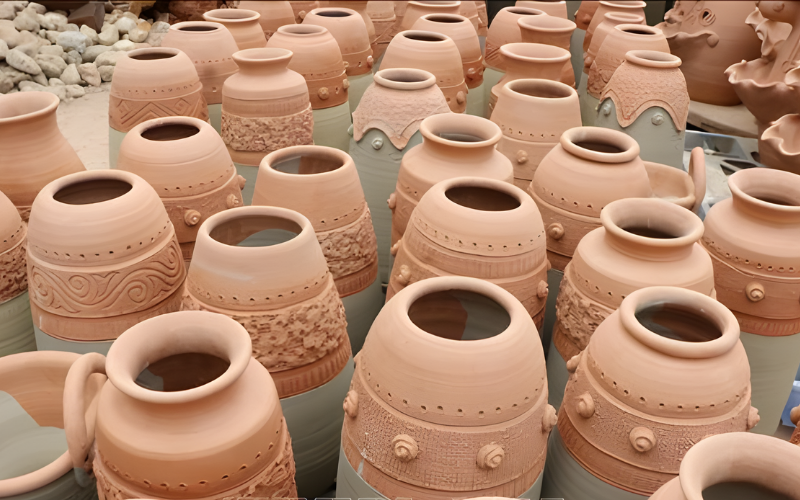
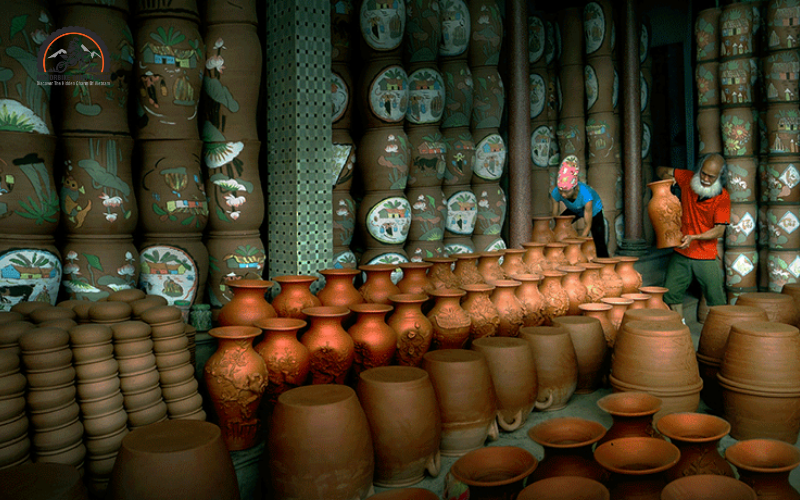
When you hold a piece of ceramics from Phu Lang pottery village, you notice immediately that it feels different from the smooth, white cups you might buy in Hanoi. The distinctiveness comes from three specific factors that our guides love to point out during visits.
Reaching Phu Lang pottery village is an adventure in itself. Many of our guests enjoy the journey as much as the destination, as it takes you out of the urban sprawl and into the quieter countryside.
At Vietnam Motorbike Tour Expert, we often incorporate stops like this into our broader Northern Vietnam itineraries, ensuring you get there safely without worrying about navigation.
When you arrive, don’t expect a theme park. The charm of Phu Lang pottery village lies in its daily rhythms. Here are the best ways to engage with the village.
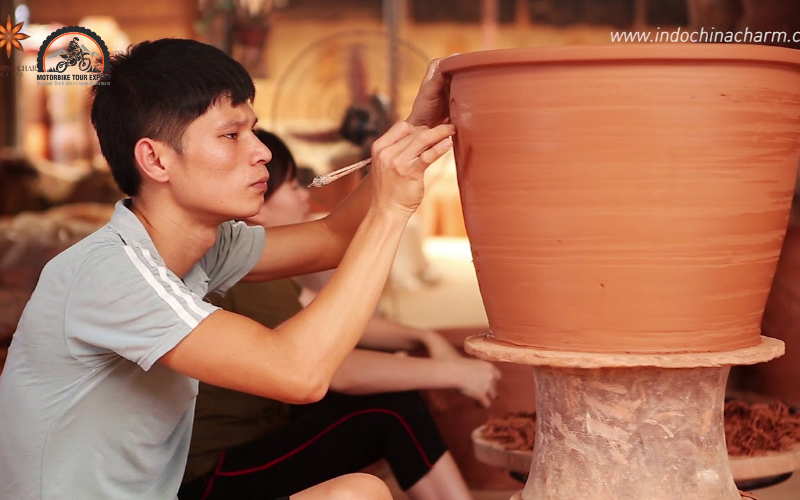
While less commercial than other places, several local families in Phu Lang Village open their doors to visitors. Here, you don’t just sign up for a generic class; you step directly into the family courtyards where artisans live and work.
For photographers, Phu Lang pottery village is a paradise. The visual texture of the village is incredible.
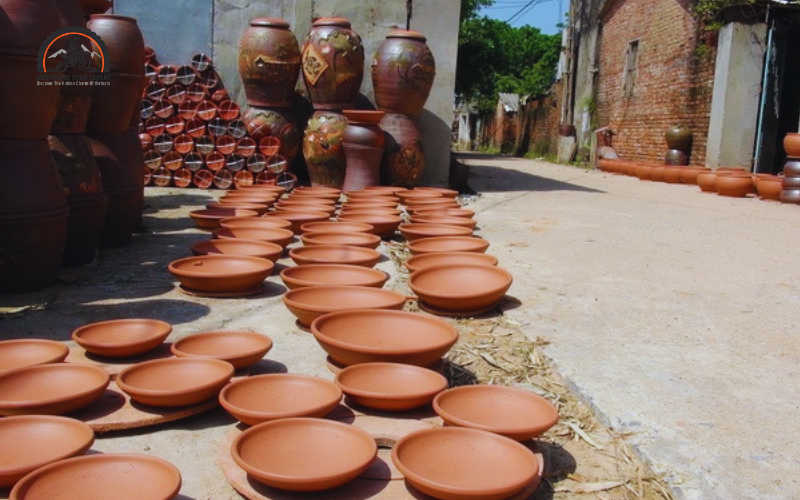
You will see walls built entirely from failed pottery pieces—ceramic shards stacked with mortar to create fences. The narrow lanes are lined with thousands of drying jars and vases, creating repetitive patterns that look stunning through a lens. The stacks of dry firewood used for the kilns are piled high against red brick walls, offering a warm, rustic color palette that captures the essence of the Vietnamese countryside.
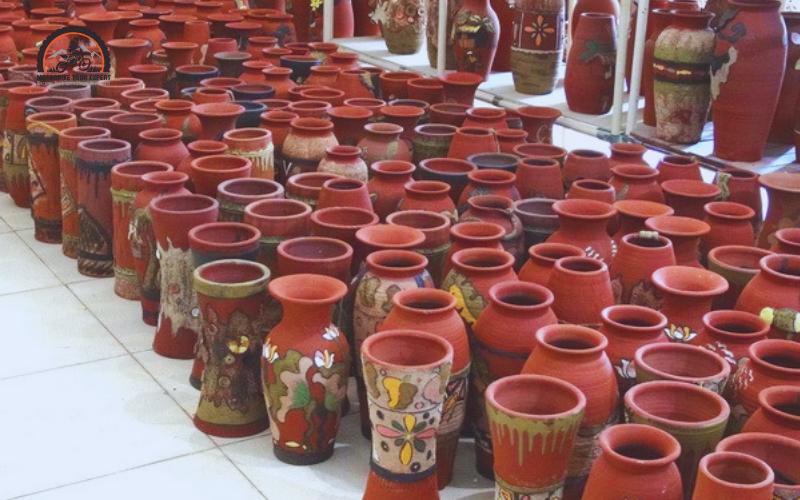
Shopping in Phu Lang pottery village is a direct-to-consumer experience that supports the local economy without middlemen. You aren’t browsing air-conditioned boutiques; you are often negotiating directly with the artisan in the very yard where the items were fired.
From our perspective as travel providers, Phu Lang pottery village is absolutely worth the trip, but with a caveat: it is for the “slow traveler.”
If you are looking for air-conditioned shopping malls or luxury amenities, this is not the place for you. However, our clients who love authenticity consistently rate this as a highlight of their trip. It serves as a “living museum” where you witness the actual labor of pottery making—the dust, the heat of the kilns, and the piles of clay. It is real, unpolished, and deeply atmospheric.
We also recommend combining your visit with other nearby heritage sites in Bac Ninh, such as the But Thap Pagoda or the Dong Ho Painting Village. This creates a full day of cultural exploration that provides a deep look into the traditions of the Red River Delta.
>>READ MORE: Thanh Ha Pottery Village: Location & Travel Guide
To ensure your visit to Phu Lang pottery village is smooth, keep these practical tips in mind, drawn from our years of guiding groups here.
We hear this question constantly from travelers: “I only have one day—should I go to Bat Trang or Phu Lang pottery village?”
Based on the feedback we receive from hundreds of riders, the answer depends entirely on what kind of experience you want. Bat Trang is closer to Hanoi and very developed, which some find convenient and others find overwhelming. Phu Lang pottery village, by contrast, feels like stepping back in time.
Here is a direct comparison to help you decide:
| Feature | Bat Trang Pottery Village | Phu Lang Pottery Village |
|---|---|---|
| Atmosphere | Busy, commercial, tourist-heavy. | Quiet, rustic, peaceful, authentic. |
| Primary Product | Polished white porcelain, colorful designs. | Rough red clay, brown “eel skin” glaze, terracotta. |
| Shopping | Large pottery markets, malls, fixed prices. | Buy directly from family workshops, piles of pottery in yards. |
| Experience | Structured tours, paved streets, museums. | Walking narrow alleys, seeing firewood stacks, open kilns. |
| Accessibility | Very easy (city bus, Grab). | Moderate (requires specific travel planning). |
Phu Lang pottery village offers a rare glimpse into Vietnam’s enduring artistic soul. It is a place where fire, earth, and human hands have collaborated for over 700 years. Whether you are a photographer, a history buff, or simply someone wanting to escape the noise of the city, this village welcomes you with its quiet charm and red-brick alleys. For those ready to explore the hidden corners of Northern Vietnam on two wheels, contact Vietnam Motorbike Tour Expert. We are ready to guide you to these authentic destinations.
LET'S RIDE WITH US
 Duration:
4 Days/ 3 Nites
Destinations:
Hanoi - Vu Linh - Phu Yen - Moc Chau - Mai Chau - Hanoi.
Tour Level:
Chill Level Tours
Duration:
4 Days/ 3 Nites
Destinations:
Hanoi - Vu Linh - Phu Yen - Moc Chau - Mai Chau - Hanoi.
Tour Level:
Chill Level Tours
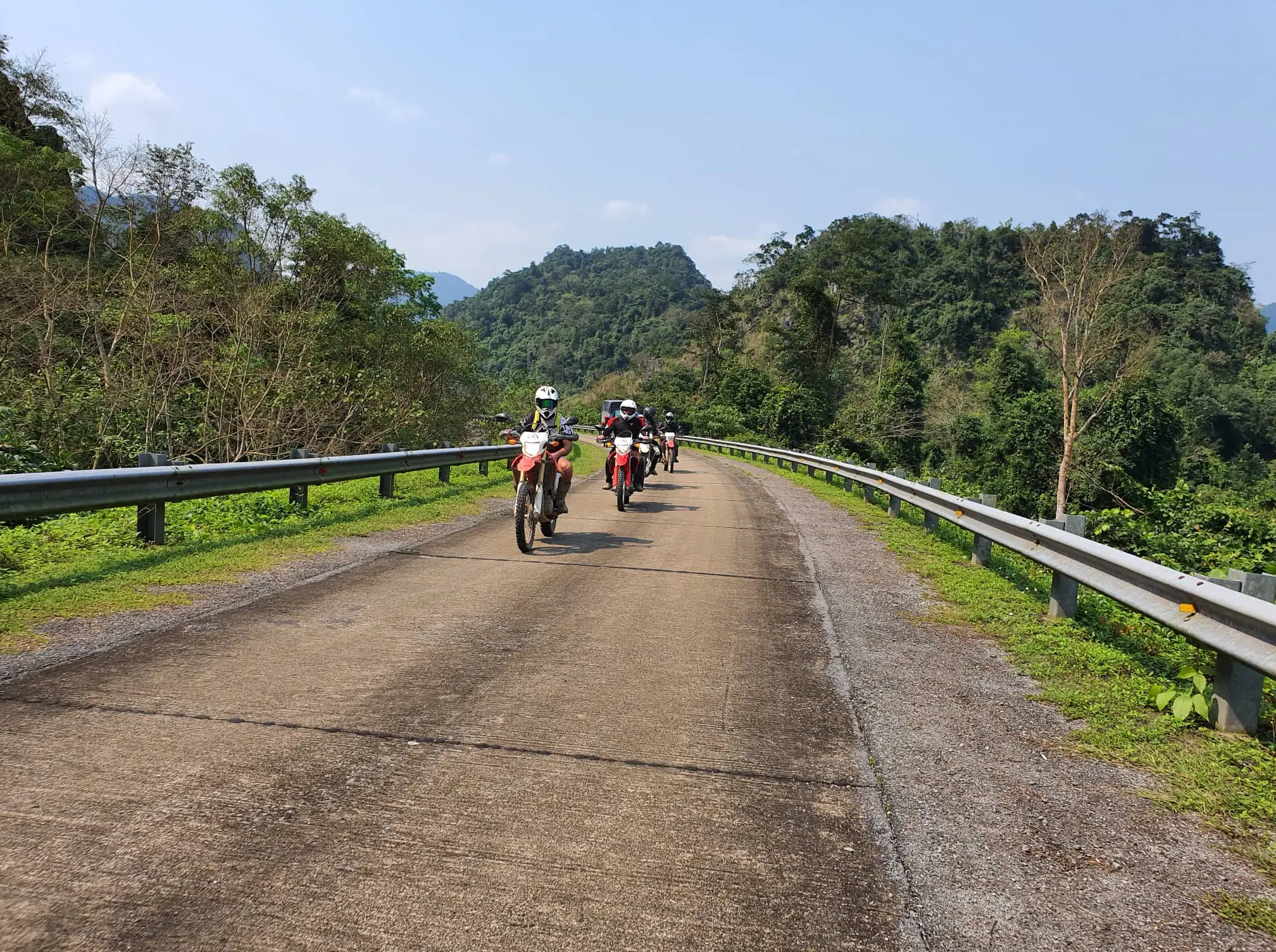 Duration:
11 Days / 10 Nites
Destinations:
Hanoi - Hoi An.
Tour Level:
Chill Level Tours
Duration:
11 Days / 10 Nites
Destinations:
Hanoi - Hoi An.
Tour Level:
Chill Level Tours
 Duration:
4 Days / 3 Nites
Destinations:
Hanoi - Vu Linh
Tour Level:
Chill Level Tours
Duration:
4 Days / 3 Nites
Destinations:
Hanoi - Vu Linh
Tour Level:
Chill Level Tours
 Duration:
6 Days/ 5 Nites
Destinations:
Hanoi - Thac Ba lake
Tour Level:
Chill Level Tours
Duration:
6 Days/ 5 Nites
Destinations:
Hanoi - Thac Ba lake
Tour Level:
Chill Level Tours
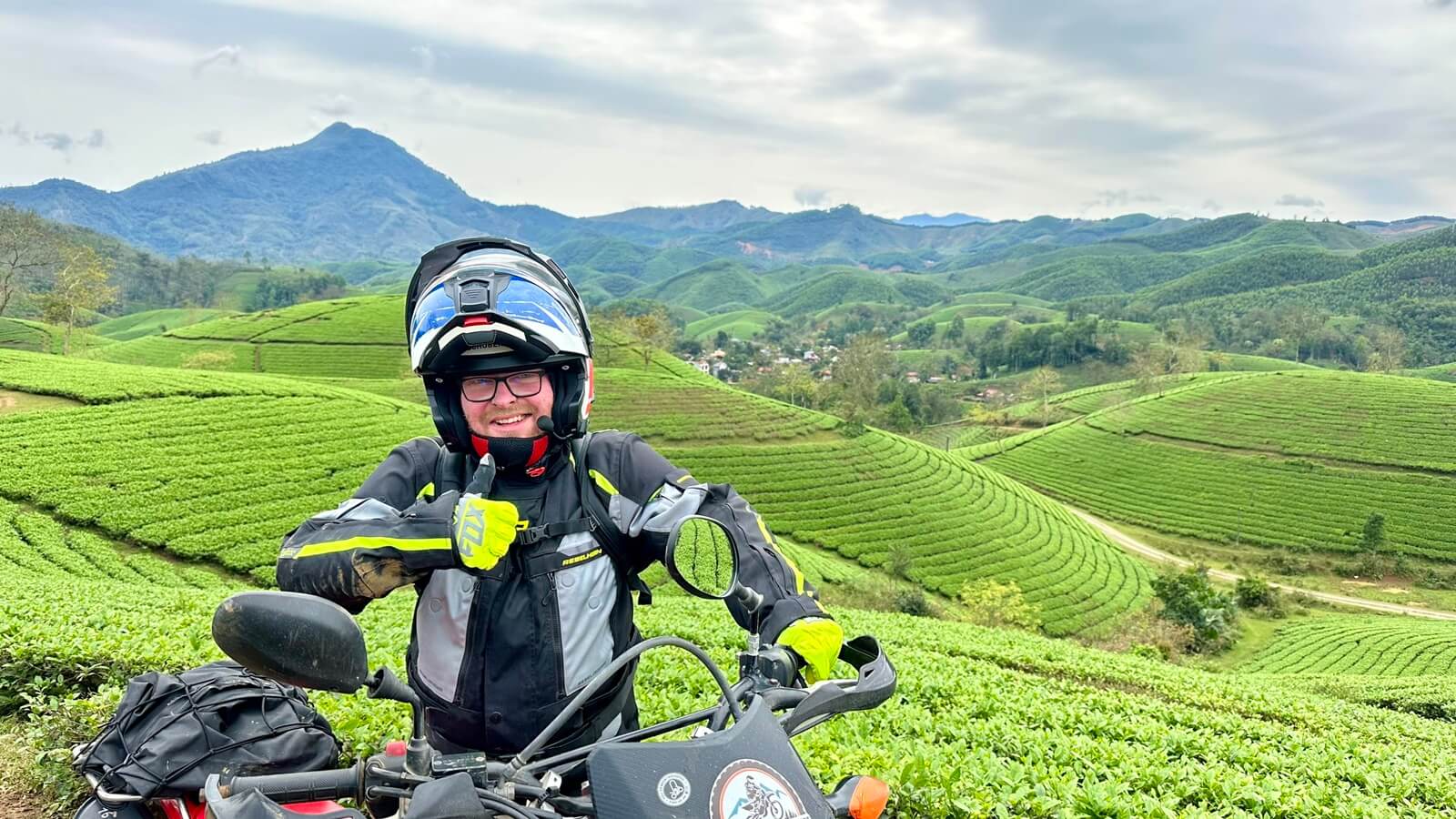 Duration:
7 Days / 6 Nites
Destinations:
Hanoi - Sapa
Tour Level:
Chill Level Tours
Duration:
7 Days / 6 Nites
Destinations:
Hanoi - Sapa
Tour Level:
Chill Level Tours
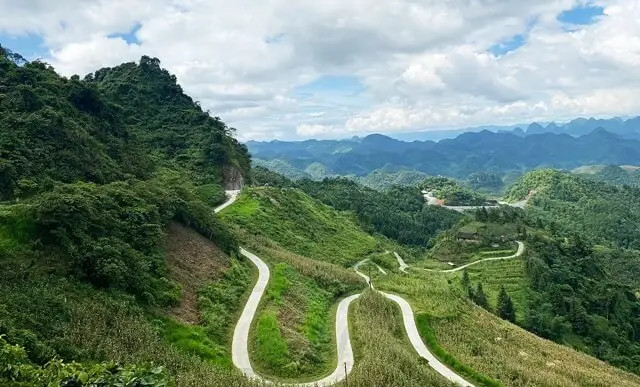 Duration:
7 Days/ 6 Nights
Destinations:
Hanoi - Moc Chau - Sapa
Tour Level:
Chill Level Tours
Duration:
7 Days/ 6 Nights
Destinations:
Hanoi - Moc Chau - Sapa
Tour Level:
Chill Level Tours
 Duration:
15 Days/ 14 Nites
Destinations:
Hanoi - Ha Long bay
Tour Level:
Chill Level Tours
Duration:
15 Days/ 14 Nites
Destinations:
Hanoi - Ha Long bay
Tour Level:
Chill Level Tours
 Duration:
4 Days/ 3 Nites
Destinations:
Hanoi - Thac Ba lake
Tour Level:
Chill Level Tours
Duration:
4 Days/ 3 Nites
Destinations:
Hanoi - Thac Ba lake
Tour Level:
Chill Level Tours
4-Day Northern Vietnam Motorbike Tour From Hanoi
 Duration:
4 Days/ 3 Nites
Duration:
4 Days/ 3 Nites
 Tour Level:
Chill Level Tours - Moderate Level Tours
Tour Level:
Chill Level Tours - Moderate Level Tours
Experience the authentic Vietnam
Ride off the beaten track
Visit beautiful Thac Ba Lake
Interact with lovely local people
Riding some scenic offroad tracks
Enjoy a variety of local foods
11-Day Top Vietnam Motorbike Tour
Duration:
11 Days / 10 Nites
Tour Level:
Chill Level Tours - Moderate Level Tours
Discover the legendary Ho Chi Minh trail
Learn a lot about Vietnam war history
Ride off the beaten track
Experience the authentic Vietnam
Interact with lovely local people
Ride some beautiful coastlines
4-Day Short North Vietnam Motorbike Tour
Duration:
4 Days / 3 Nites
Tour Level:
Chill Level Tours - Moderate Level Tours
Experience the authentic Vietnam
Interact with lovely local people
Visit beautiful Thac Ba lake
Ride off the beaten track
Enjoy a variety of local foods
Ride some scenic offroad tracks
6-Day Northwest Loop Motorbike Tour Vietnam
Duration:
6 Days/ 5 Nites
Tour Level:
Chill Level Tours - Moderate Level Tours
Experience the authentic Vietnam
Explore the hidden gems in Northwest
Visit beautiful Sapa
Ride off the beaten track
Enjoy great local food
Interact with lovely local people
7-Day Motorbike Tour In North Vietnam
Duration:
7 Days / 6 Nites
Tour Level:
Chill Level Tours - Moderate Level Tours
Experience authentic Vietnam
Interact with lovely local people
Ride off the beaten path
Visit all the "Must-See" in North
Enjoy scenic off-road trails
Learn about Vietnamese culture
7-Day Amazing Motorbike Tour To The Hidden Lands Vietnam
Duration:
7 Days/ 6 Nights
Tour Level:
Chill Level Tours - Moderate Level Tours
Discover hidden charms of Northwest Vietnam
Ride fun offroad
Experience the authentic Vietnam
Experience beautiful Sapa
Interact with lovely local people
Ride off the beaten track
Hanoi Street Food Tour
Duration:
15 Days/ 14 Nites
Tour Level:
Experience the authentic Vietnam
Explore beautiful nature in North Vietnam
Interact with lovely local people
Ride scenic offroad trails
Ride off the beaten track
Visit Natural Heritage Ha Long Bay
4-Day Northwest Vietnam Motorbike Tour
Duration:
4 Days/ 3 Nites
Tour Level:
Chill Level Tours - Moderate Level Tours
Experience the authentic Vietnam
Visit beautiful Thac Ba lake
Interact with lovely local people
See the quiet countryside Vietnam
Ride off the beaten track E
Enjoy great local food