Your message has been sent. Thank you!
 Your message has been sent. Thank you!
I'm ready to book
Hmm, I still need more information
My information
Detailed information
From $ USD
Ho Chi Minh Trail Motorcycle Tour – 12 Days

Duration:
12 Days/ 11 Nites

Destinations:
Hanoi - Nha Trang

Tour Level:
More offroad (>40%)

Highlight:
Destination:
Ha Noi
Mai Chau
Tan Ky
Phong Nha
Ke Bang National park
Khe Sanh
Vinh Moc tunnels
Hue
Da Nang
Hoi An
Kon Tum
Buon Me Thuat
Lak Lake
Nha Trang
Pickup from:
Hanoi, Airport or any hotel in Ha Noi city
Suitable Bikes:
Honda XR150L, Honda CRF300L,


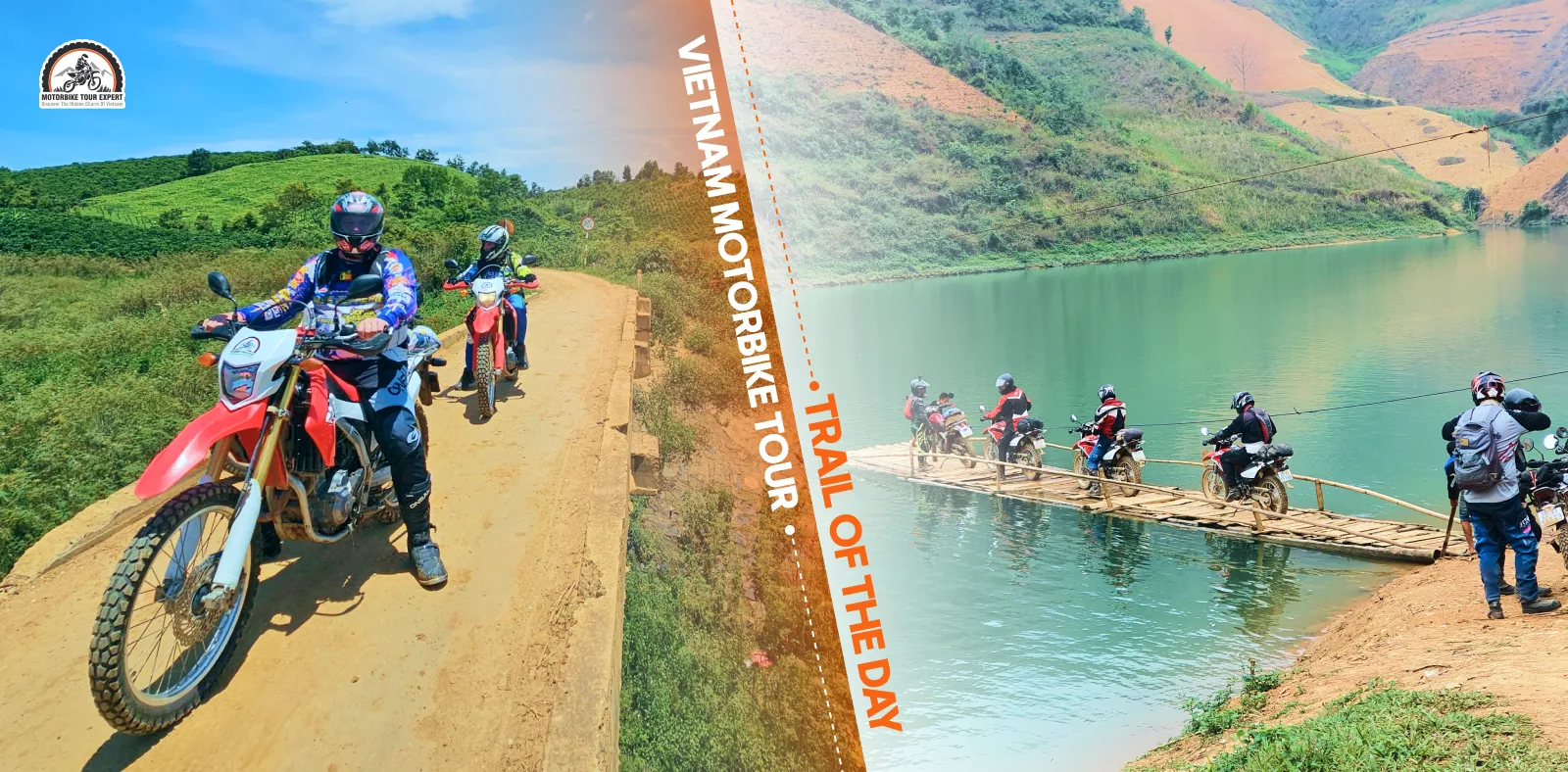
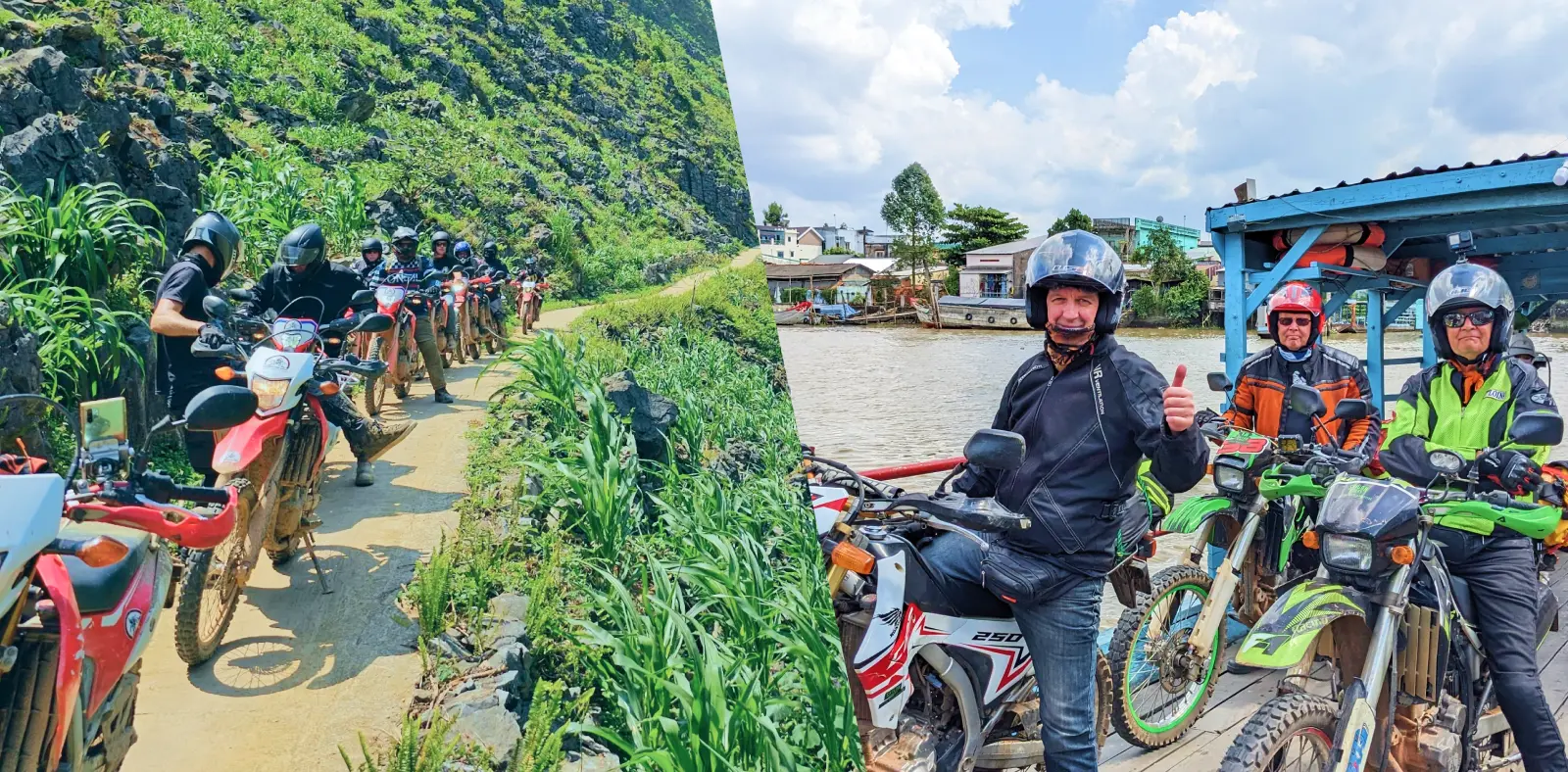

Ha Giang food represents the culinary heritage of 19 ethnic minorities in Vietnam’s northernmost mountains, featuring distinctive dishes like Thang Co soup, buckwheat cakes, and five-colored sticky rice. At Vietnam Motorbike Tour Expert, we’ve guided hundreds of travelers through the Ha Giang Loop, and we can confirm that the region’s cuisine is as memorable as its landscapes.
Thắng Cố stands as the signature dish of Ha Giang, originating from the H’mong people who have prepared this hearty soup for centuries. The name translates simply to “meat soup,” but there’s nothing simple about its complex flavor profile.
What truly defines Thang Co is the broth—a rich, deeply flavored liquid simmered from bones and organs for hours, then infused with 12 distinctive spices including star anise, cardamom, and lemon leaves. The result is a warming, almost medicinal soup that locals swear by during cold mountain mornings.
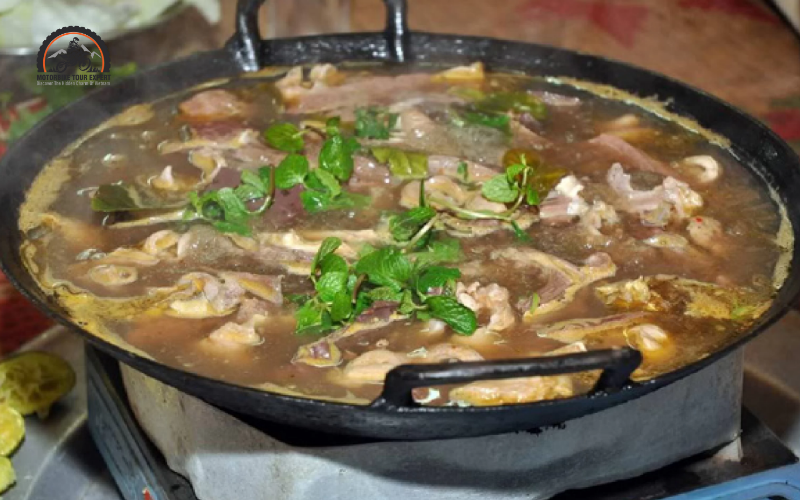
Thang Co is rarely eaten alone. The proper experience involves pairing it with Mén Mèn and traditional corn wine. At Vietnam Motorbike Tour Expert, we often arrange stops at family-run Thang Co restaurants where travelers can watch the preparation process and learn about the cultural significance of this communal dish.
This preserved meat represents one of the most ingenious food preservation techniques developed by mountain communities, particularly the Thai ethnic group. The smoking process involves thin slices of buffalo meat marinated with salt, garlic, ginger, and lemongrass, then hung above kitchen fires for weeks or even months.
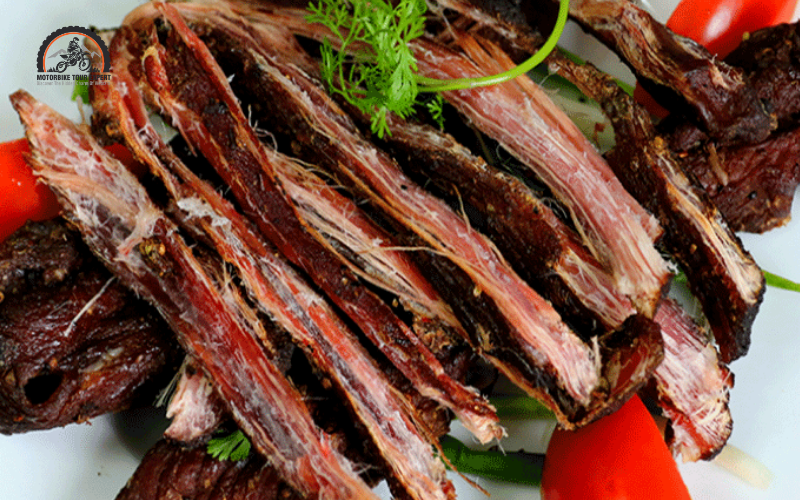
The choice of wood matters tremendously. Traditional smokers use a combination of bamboo, lychee, and chestnut woods, each contributing subtle flavor notes to the final product. The meat develops a deep mahogany color and a texture that’s simultaneously chewy and tender.
Smoked buffalo meat isn’t just practical—it carries ceremonial importance. Families prepare it for festivals and use it to welcome honored guests. When you’re offered this delicacy at a homestay, you’re participating in a tradition of hospitality that spans generations.
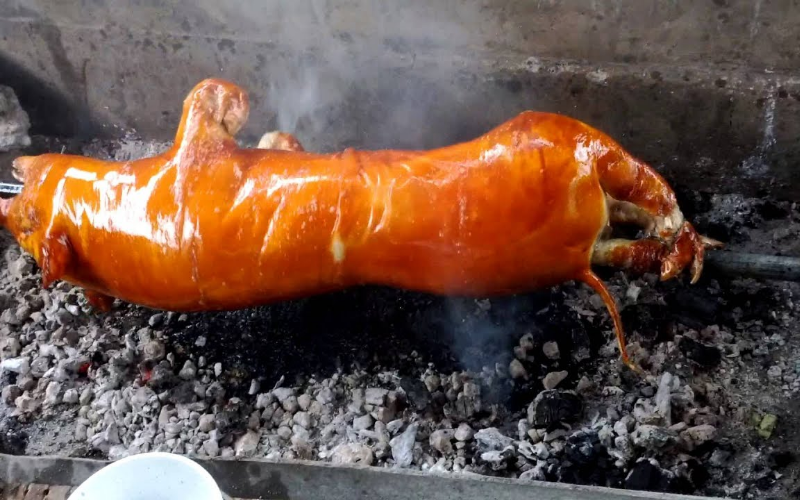
The name alone sparks curiosity, but it’s accurate: these indigenous pigs are so small when young that farmers literally carry them under their arms to market. This local breed, raised primarily by ethnic minorities, thrives in Ha Giang’s free-range conditions where pigs forage in mountain forests.
The meat is prized for its distinctive flavor—more intense and less fatty than commercial pork. You’ll find it prepared in various ways: grilled whole, turned into traditional sausages, or incorporated into other local dishes. The limited supply and specialized raising methods make this one of the more expensive local specialties.
This visually striking dish embodies Vietnamese spiritual philosophy through food. Each color represents one of the five elements: yellow for earth, green for plant life, red for fire, white for metal, and black for water. What’s remarkable is that all colors come from natural plant extracts—no artificial dyes touch this traditional preparation.
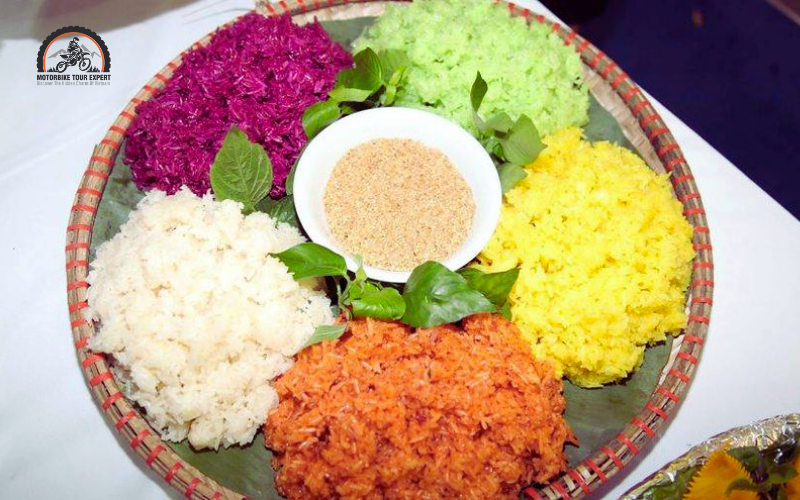
Local cooks use specific leaves to achieve each hue: magenta plant leaves for red, ginger for yellow, pandan leaves for green, and ash from burned plants for black. The rice itself remains sticky and fragrant, with each color layer maintaining its distinct flavor from the natural colorants.
While you’ll find five-colored sticky rice across northern Vietnam, Ha Giang’s version stands out for its continued use in festivals, weddings, and Lunar New Year celebrations. We often see this served at homestays during special occasions on our motorbike tours.
When buckwheat flowers blanket Ha Giang’s plateaus in pink and white from late September to early December, the culinary opportunities multiply. The triangular buckwheat cake represents just one of many products made from these seeds.
Buckwheat flour creates cakes with a distinctive earthy, slightly nutty flavor and a texture unlike wheat-based products. But the buckwheat harvest enables much more: locals produce buckwheat pho, beer, noodles, dry rice vermicelli, and even wine. Each product carries that characteristic buckwheat taste—an acquired flavor that grows on you.
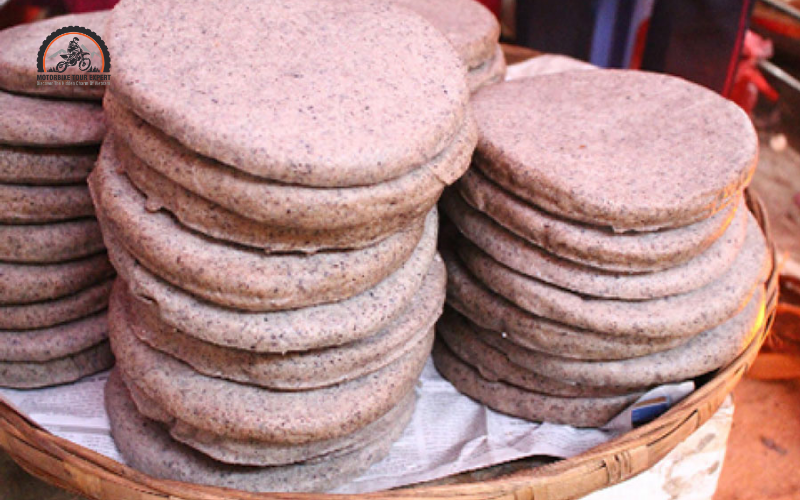
Visitors timing their Ha Giang Loop during buckwheat season get double the reward: stunning flower fields and the freshest buckwheat dishes. Vietnam Motorbike Tour Expert schedules specific departures to coincide with peak blooming periods.
Au Tau porridge tells a story of indigenous knowledge and food safety. The au tau tuber, found in Ha Giang’s northern mountains, contains natural toxins that make it inedible when raw. The H’mong people developed a precise detoxification process: soaking the tubers in rice water, then simmering them for 4-5 hours.
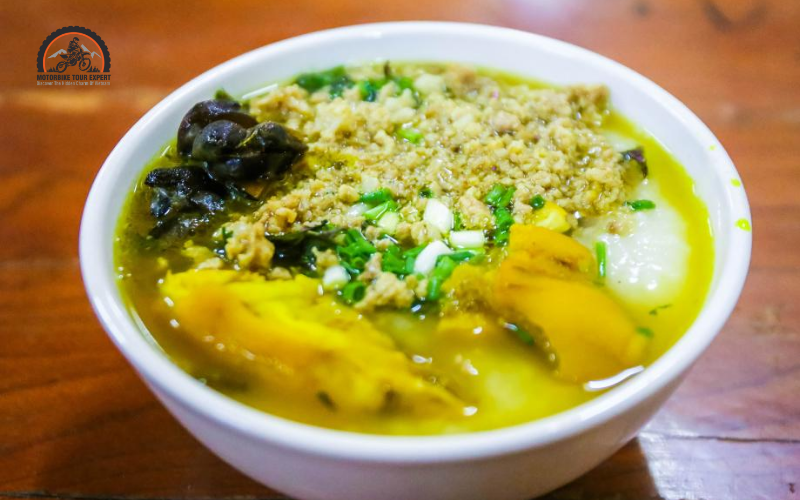
The result is a medicinal porridge believed to cure colds, aches, and pains—essential medicine during harsh mountain winters. The taste remains somewhat bitter even after proper preparation, typically balanced with pork, herbs, and local spices.
Enjoying a hot bowl of Au Tau porridge on a cold morning in the rocky mountains creates an unforgettable experience. It’s not comfort food in the conventional sense, but it represents the resilience and resourcefulness of mountain communities.
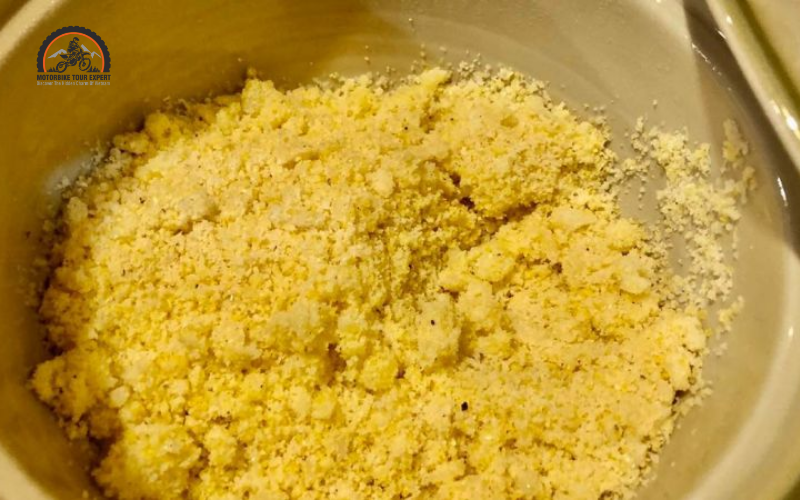
In Ha Giang’s high-altitude environment, corn thrives where rice cannot. This agricultural reality shaped Men Men into a dietary staple. Ground corn mixed with water creates a sticky, porridge-like substance that fills stomachs and provides lasting energy for mountain work.
The texture takes adjustment for rice-accustomed palates—grainier, denser, with corn’s natural sweetness coming through. Men Men frequently accompanies Thang Co, with diners using the corn cakes to soak up the flavorful broth. Grilled Men Men develops a pleasant char and crunch that contrasts with the soft interior.
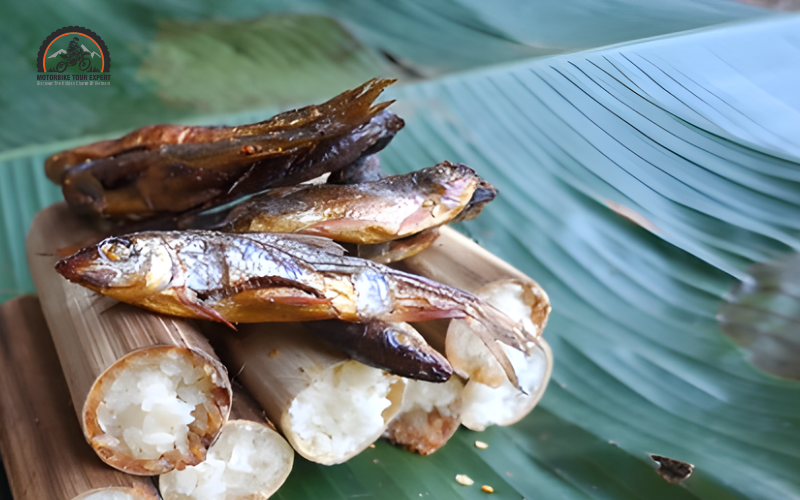
The Tay ethnic group perfected bamboo-tube cooking, a technique that imparts unmistakable flavor. Fresh bamboo tubes are stuffed with sticky rice mixed with local ingredients like pork, chicken, or mountain herbs, then slowly cooked over open flames.
As the rice steams inside the sealed bamboo, it absorbs moisture and flavor from the bamboo itself. The result is rice with a subtle, smoky aroma and a texture that’s perfectly sticky. Breaking open the bamboo reveals layers of rice with a slight crust at the edges—considered the best part.
>>READ MORE: Hanoi Cuisine: 18 Must-Try Dishes & Best Food Streets Guide
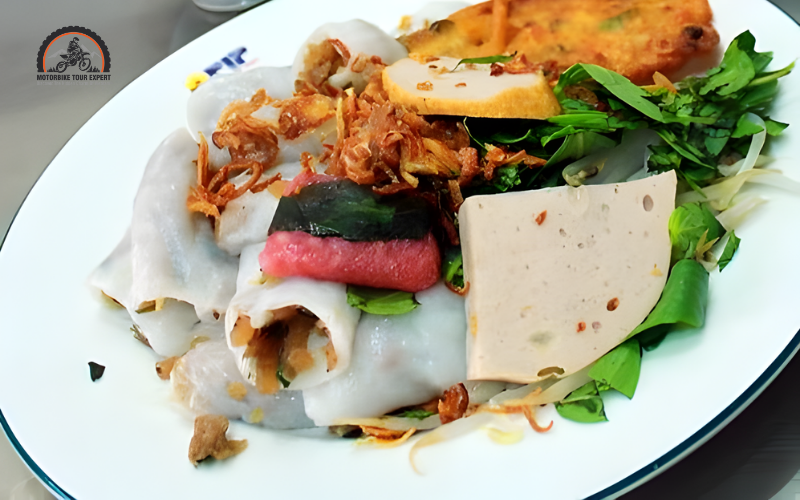
While banh cuon exists throughout Vietnam, Dong Van’s egg-stuffed variation stands apart. These delicate steamed rice pancakes are filled with egg, pork, and mushrooms, then topped with crispy dried shallots and served with a savory broth.
The eating technique matters: place a portion of the pancake on your spoon and dip it in the broth, allowing the thin rice sheet to absorb the flavors before eating. Eaten this way, the dish achieves perfect harmony—silky texture, savory filling, crispy garnish, and rich broth.
Dong Van’s morning food stalls serve the freshest banh cuon, prepared continuously as customers arrive. The mountain cold makes this hot breakfast especially satisfying.
Ha Giang’s unique take on Vietnam’s national dish surprises first-time visitors. Unlike traditional pho with its clear, aromatic broth, Sour Pho features a distinctive tangy flavor profile created with tomatoes, fermented ingredients, and local herbs.
The noodles, pork, and bean sprouts remain familiar, but the sour broth transforms the entire experience. Various local spices and herbs create complexity beyond simple sourness—each spoonful reveals layers of flavor.
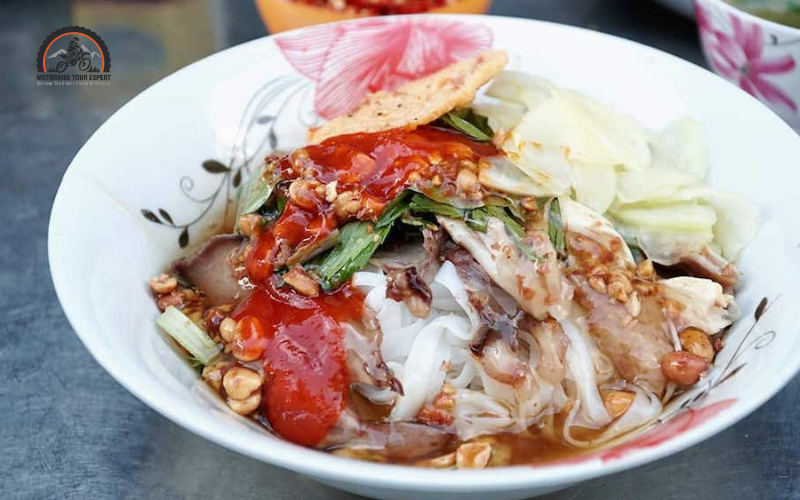
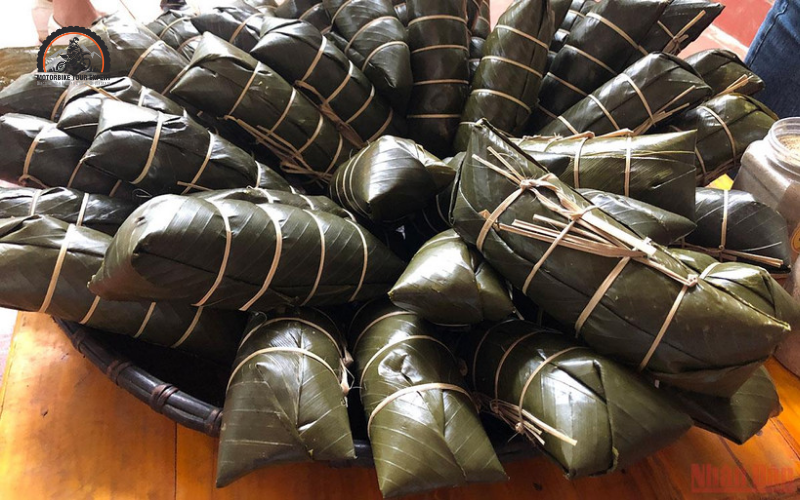
The Red Dao people’s specialty gets its memorable name from its distinctive curved shape. Unlike the perfectly square banh chung eaten during Tet throughout Vietnam, the hunchback version uses different ingredients and preparation methods.
Inside dong leaves, cooks layer upland sticky rice, small green beans, and black pork—the same carried-under-arm variety mentioned earlier. The crucial difference comes in the cooking: 8-10 hours of boiling over wood fires creates a cake with deeper, smokier flavors than standard versions.
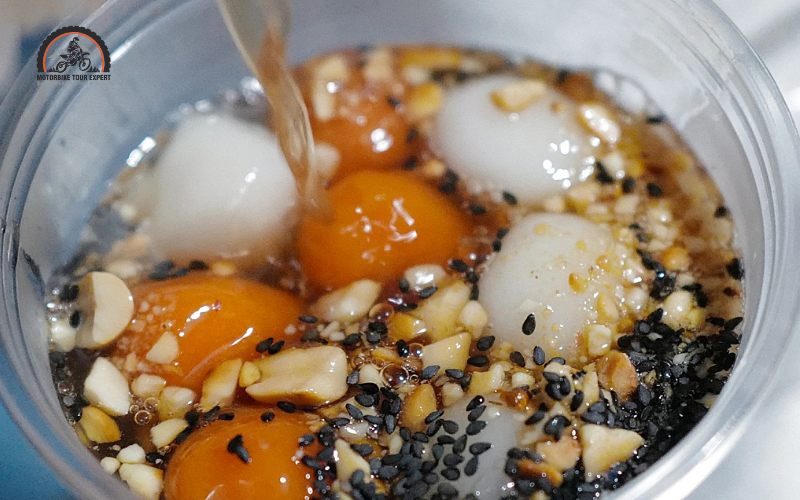
This dessert provides sweet relief after savory mountain meals. Glutinous rice balls filled with sweetened green beans or red beans float in a fragrant soup made from apricot blossom sugar, coconut, and ginger.
The contrast works beautifully—chewy rice exterior, smooth sweet filling, warm aromatic soup. At approximately 10,000 VND per bowl, Thang Den represents affordable indulgence. You’ll find vendors in Dong Van Old Town, at weekly fairs, and along busy streets in Ha Giang city center.
1. What are the best tips for food adventurers in Ha Giang?
2. How does Ha Giang cuisine differ from other Northern Vietnam regions (like Sapa or Hanoi)?
>>READ MORE: Best Vietnamese Food in Da Nang: Top Restaurants & Dishes
3. Where can I find the best Ha Giang food experiences?
4. What are typical food prices in Ha Giang?
Ha Giang remains remarkably affordable.
5. Are there vegetarian food options in Ha Giang?
Vegetarian options exist but require communication. Ha Giang’s cuisine centers heavily on meat, reflecting the protein needs of mountain agricultural work. However, several traditional dishes work for vegetarians: five-colored sticky rice, Men Men corn rice, buckwheat cakes, and various vegetable stir-fries.
6. What is the best time to experience Ha Giang food culture?
Buckwheat season from late September to early December offers unique culinary opportunities.
Ha Giang food offers far more than sustenance—it provides direct connection to ethnic minority cultures, mountain adaptation strategies, and centuries-old culinary wisdom. From Thang Co’s complex twelve-spice broth to buckwheat cakes, each dish tells stories of resilience and tradition. Contact Vietnam Motorbike Tour Expert to craft your culinary adventure through Vietnam’s most culturally rich mountain region.
LET'S RIDE WITH US
 Duration:
4 Days/ 3 Nites
Destinations:
Hanoi - Vu Linh - Phu Yen - Moc Chau - Mai Chau - Hanoi.
Tour Level:
Chill Level Tours
Duration:
4 Days/ 3 Nites
Destinations:
Hanoi - Vu Linh - Phu Yen - Moc Chau - Mai Chau - Hanoi.
Tour Level:
Chill Level Tours
 Duration:
11 Days / 10 Nites
Destinations:
Hanoi - Hoi An.
Tour Level:
Chill Level Tours
Duration:
11 Days / 10 Nites
Destinations:
Hanoi - Hoi An.
Tour Level:
Chill Level Tours
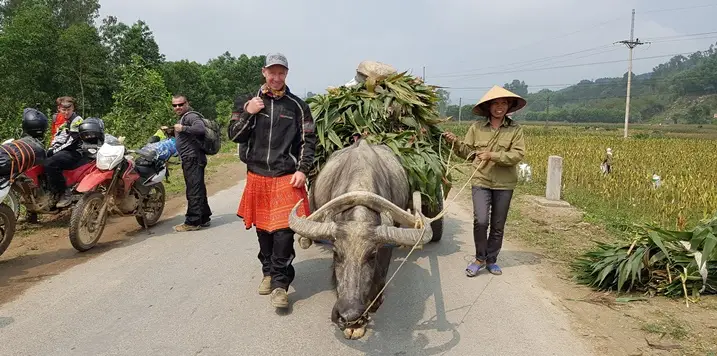 Duration:
4 Days / 3 Nites
Destinations:
Hanoi - Vu Linh
Tour Level:
Chill Level Tours
Duration:
4 Days / 3 Nites
Destinations:
Hanoi - Vu Linh
Tour Level:
Chill Level Tours
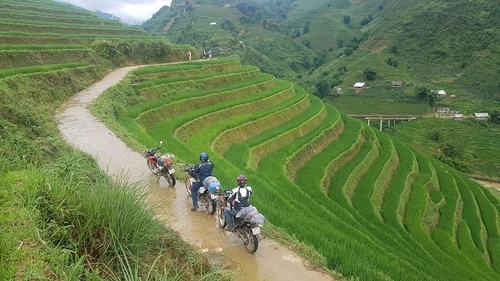 Duration:
6 Days/ 5 Nites
Destinations:
Hanoi - Thac Ba lake
Tour Level:
Chill Level Tours
Duration:
6 Days/ 5 Nites
Destinations:
Hanoi - Thac Ba lake
Tour Level:
Chill Level Tours
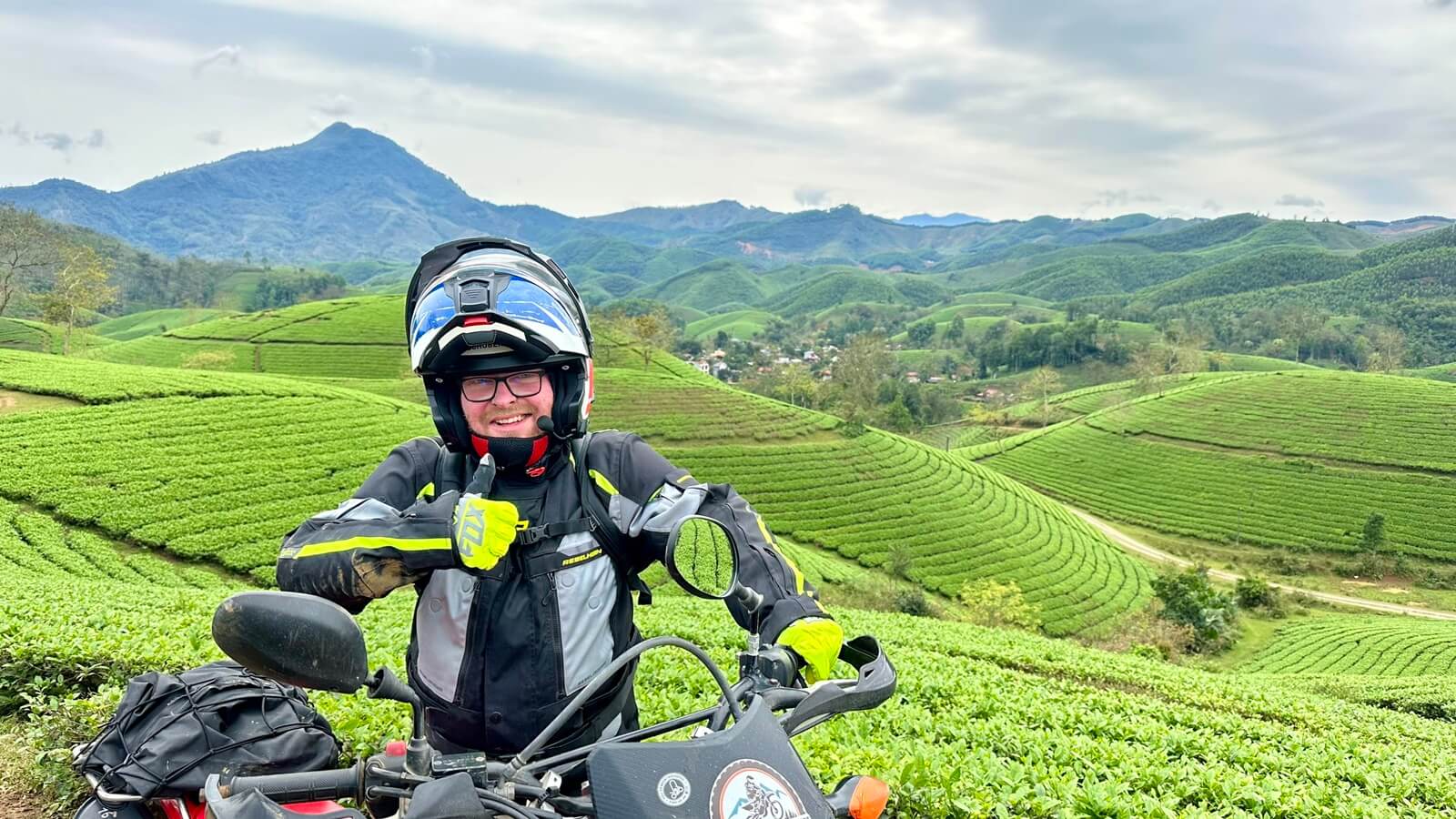 Duration:
7 Days / 6 Nites
Destinations:
Hanoi - Sapa
Tour Level:
Chill Level Tours
Duration:
7 Days / 6 Nites
Destinations:
Hanoi - Sapa
Tour Level:
Chill Level Tours
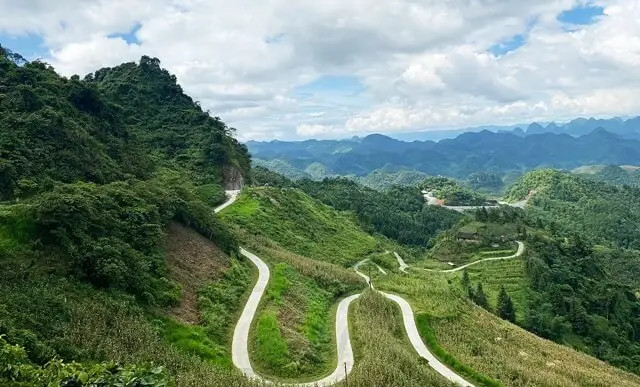 Duration:
7 Days/ 6 Nights
Destinations:
Hanoi - Moc Chau - Sapa
Tour Level:
Chill Level Tours
Duration:
7 Days/ 6 Nights
Destinations:
Hanoi - Moc Chau - Sapa
Tour Level:
Chill Level Tours
 Duration:
15 Days/ 14 Nites
Destinations:
Hanoi - Ha Long bay
Tour Level:
Chill Level Tours
Duration:
15 Days/ 14 Nites
Destinations:
Hanoi - Ha Long bay
Tour Level:
Chill Level Tours
 Duration:
4 Days/ 3 Nites
Destinations:
Hanoi - Thac Ba lake
Tour Level:
Chill Level Tours
Duration:
4 Days/ 3 Nites
Destinations:
Hanoi - Thac Ba lake
Tour Level:
Chill Level Tours
4-Day Northern Vietnam Motorbike Tour From Hanoi
 Duration:
4 Days/ 3 Nites
Duration:
4 Days/ 3 Nites
 Tour Level:
Chill Level Tours - Moderate Level Tours
Tour Level:
Chill Level Tours - Moderate Level Tours
Experience the authentic Vietnam
Ride off the beaten track
Visit beautiful Thac Ba Lake
Interact with lovely local people
Riding some scenic offroad tracks
Enjoy a variety of local foods
11-Day Top Vietnam Motorbike Tour
Duration:
11 Days / 10 Nites
Tour Level:
Chill Level Tours - Moderate Level Tours
Discover the legendary Ho Chi Minh trail
Learn a lot about Vietnam war history
Ride off the beaten track
Experience the authentic Vietnam
Interact with lovely local people
Ride some beautiful coastlines
4-Day Short North Vietnam Motorbike Tour
Duration:
4 Days / 3 Nites
Tour Level:
Chill Level Tours - Moderate Level Tours
Experience the authentic Vietnam
Interact with lovely local people
Visit beautiful Thac Ba lake
Ride off the beaten track
Enjoy a variety of local foods
Ride some scenic offroad tracks
6-Day Northwest Loop Motorbike Tour Vietnam
Duration:
6 Days/ 5 Nites
Tour Level:
Chill Level Tours - Moderate Level Tours
Experience the authentic Vietnam
Explore the hidden gems in Northwest
Visit beautiful Sapa
Ride off the beaten track
Enjoy great local food
Interact with lovely local people
7-Day Motorbike Tour In North Vietnam
Duration:
7 Days / 6 Nites
Tour Level:
Chill Level Tours - Moderate Level Tours
Experience authentic Vietnam
Interact with lovely local people
Ride off the beaten path
Visit all the "Must-See" in North
Enjoy scenic off-road trails
Learn about Vietnamese culture
7-Day Amazing Motorbike Tour To The Hidden Lands Vietnam
Duration:
7 Days/ 6 Nights
Tour Level:
Chill Level Tours - Moderate Level Tours
Discover hidden charms of Northwest Vietnam
Ride fun offroad
Experience the authentic Vietnam
Experience beautiful Sapa
Interact with lovely local people
Ride off the beaten track
Hanoi Street Food Tour
Duration:
15 Days/ 14 Nites
Tour Level:
Experience the authentic Vietnam
Explore beautiful nature in North Vietnam
Interact with lovely local people
Ride scenic offroad trails
Ride off the beaten track
Visit Natural Heritage Ha Long Bay
4-Day Northwest Vietnam Motorbike Tour
Duration:
4 Days/ 3 Nites
Tour Level:
Chill Level Tours - Moderate Level Tours
Experience the authentic Vietnam
Visit beautiful Thac Ba lake
Interact with lovely local people
See the quiet countryside Vietnam
Ride off the beaten track E
Enjoy great local food